
Table of Contents
Introduction
Standard pallet size is one of the first specifications considered when planning warehouse storage, industrial shipping, packaging, and material handling. A familiar pallet footprint can simplify forklift operations, rack planning, carton arrangement, and repeated logistics processes, but choosing a standard dimension simply because it is widely used does not guarantee that it is the right choice for every load.
A pallet must support the actual packaged product while fitting the equipment and storage systems around it. Product overhang, excessive unused deck area, fork-entry clearance, rack support, conveyor geometry, load distribution, and stacking conditions can all influence whether a particular standard pallet size works efficiently.
The general pallet concept provides a stable platform for moving goods as a unit, but pallet dimensions are only one part of the complete design. Two pallets with identical length and width can perform differently because their deck structure, ribs, legs, runners, materials, and manufacturing methods are different.
For industrial users, standardization is most valuable when the pallet size fits the product and the logistics system at the same time. This guide explains how to evaluate common pallet dimensions and when a standard footprint should be kept, adjusted, or replaced with a more application-specific solution.
What Does Standard Pallet Size Actually Mean?
Standard pallet size usually refers to a commonly adopted pallet footprint used repeatedly within logistics, manufacturing, warehousing, or distribution systems. The term does not mean that there is one universal pallet dimension suitable for every product or handling environment.
Different industries and logistics systems use different rectangular and square footprints. Common industrial dimensions can include configurations such as 1100 × 1100 mm, 1200 × 1000 mm, 1200 × 1100 mm, and other sizes selected around packaging, storage equipment, and handling requirements.
The advantage of using a commonly established footprint is predictability. Packaging can be planned around a known deck area, warehouse locations can be designed for consistent pallet dimensions, and forklift operators become familiar with the same handling geometry.
However, standardization becomes less useful when the product fits poorly. A technically standard pallet that regularly creates cargo overhang or substantial unused deck area may be less efficient than a different dimension that better matches the actual load.
The correct question is therefore not simply “What is the standard pallet size?” but “Which standardized pallet dimension works best for this product and logistics process?”
Common Industrial Pallet Dimensions
Pallet dimensions should be treated as application choices rather than rankings. A larger pallet is not automatically stronger or more useful, and a compact pallet is not automatically more efficient.
The table below shows several dimensions commonly seen in industrial molded pallet applications and the main issues that should be evaluated before selection.
| Pallet Size | Footprint Type | Typical Selection Focus | Key Point to Check |
|---|---|---|---|
| 1050 × 1050 mm | Square | Compact industrial loads | Cargo footprint and handling clearance |
| 1100 × 900 mm | Rectangular | Narrower packaged loads | Carton arrangement and product support |
| 1100 × 1100 mm | Square | Balanced unit loads | Deck utilization and load distribution |
| 1200 × 1000 mm | Rectangular | Larger industrial loads | Forklift, storage and packaging compatibility |
| 1200 × 1100 mm | Rectangular | Wide industrial cargo | Product footprint and structural support |
| 1200 × 1200 mm | Square | Larger square loads | Storage space and weight distribution |
| 1300 × 1100 mm | Extended rectangular | Oversized industrial products | Warehouse and equipment compatibility |
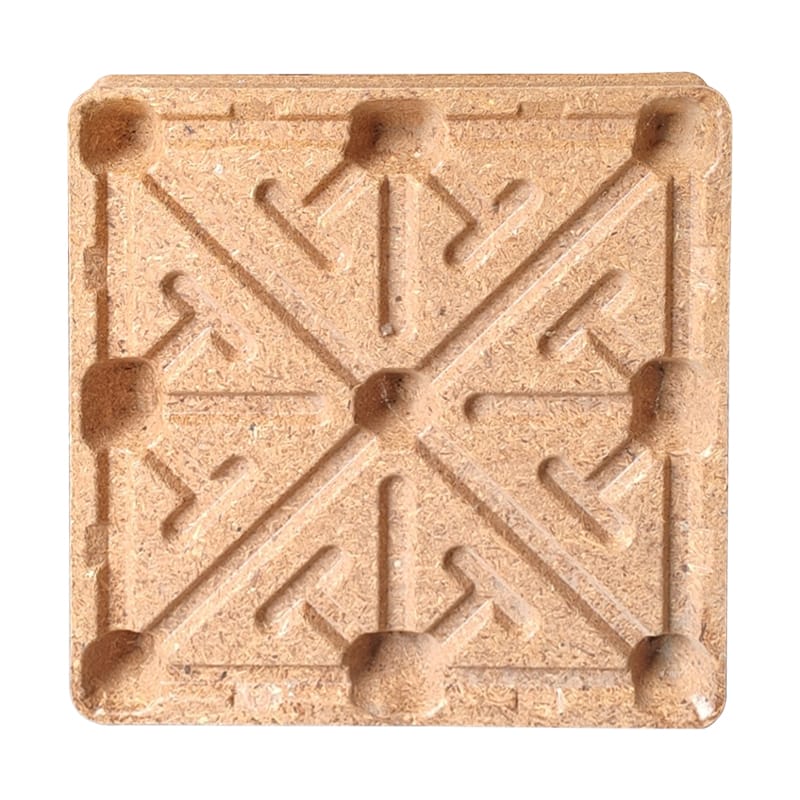
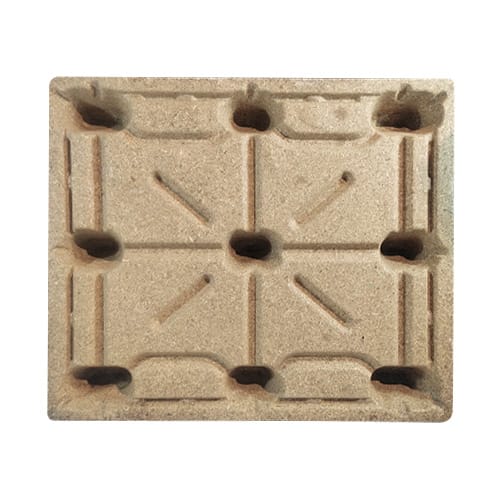
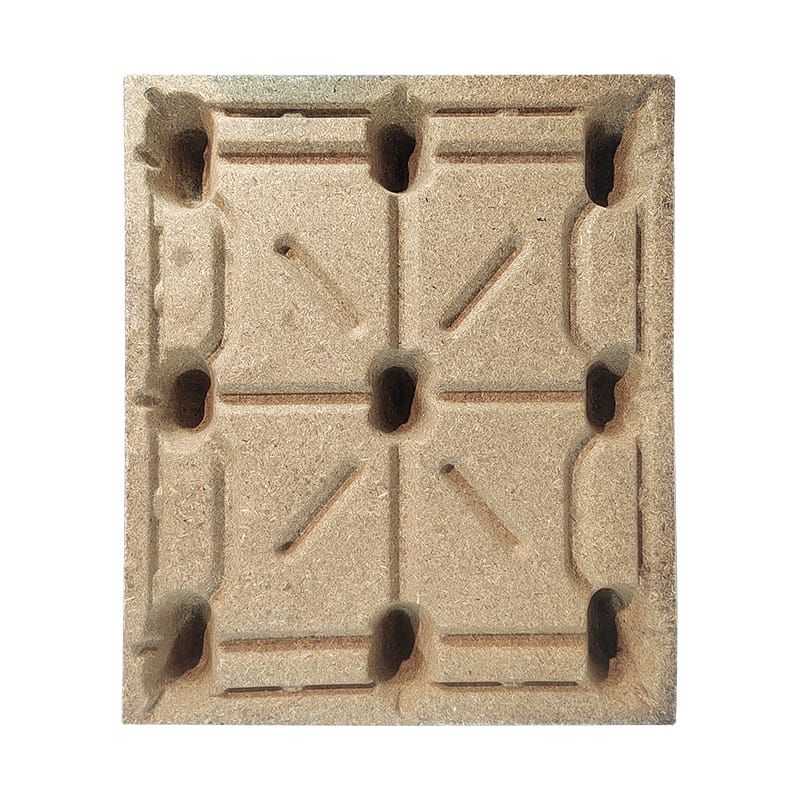
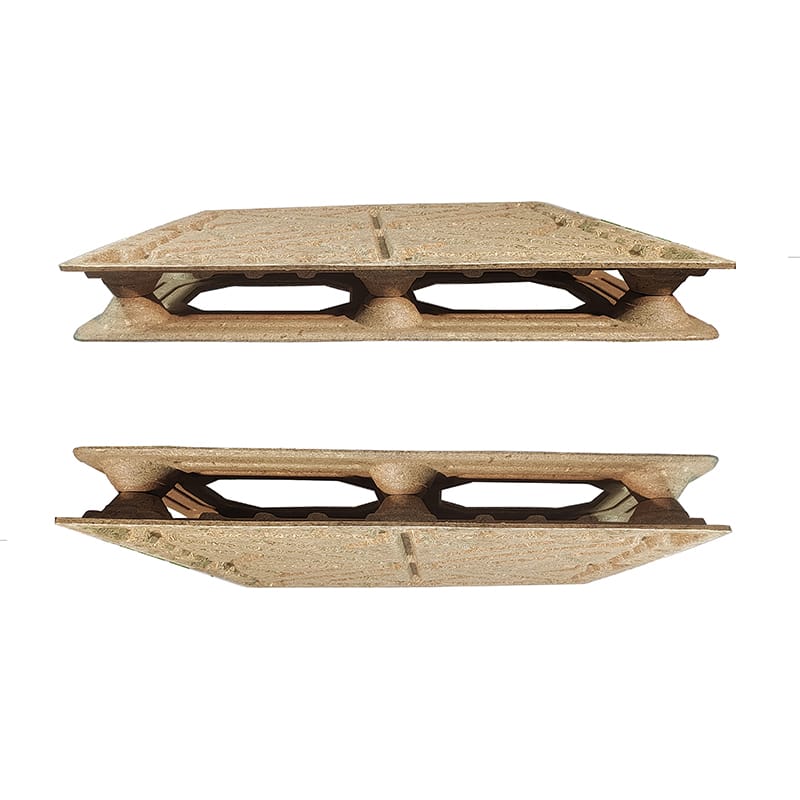
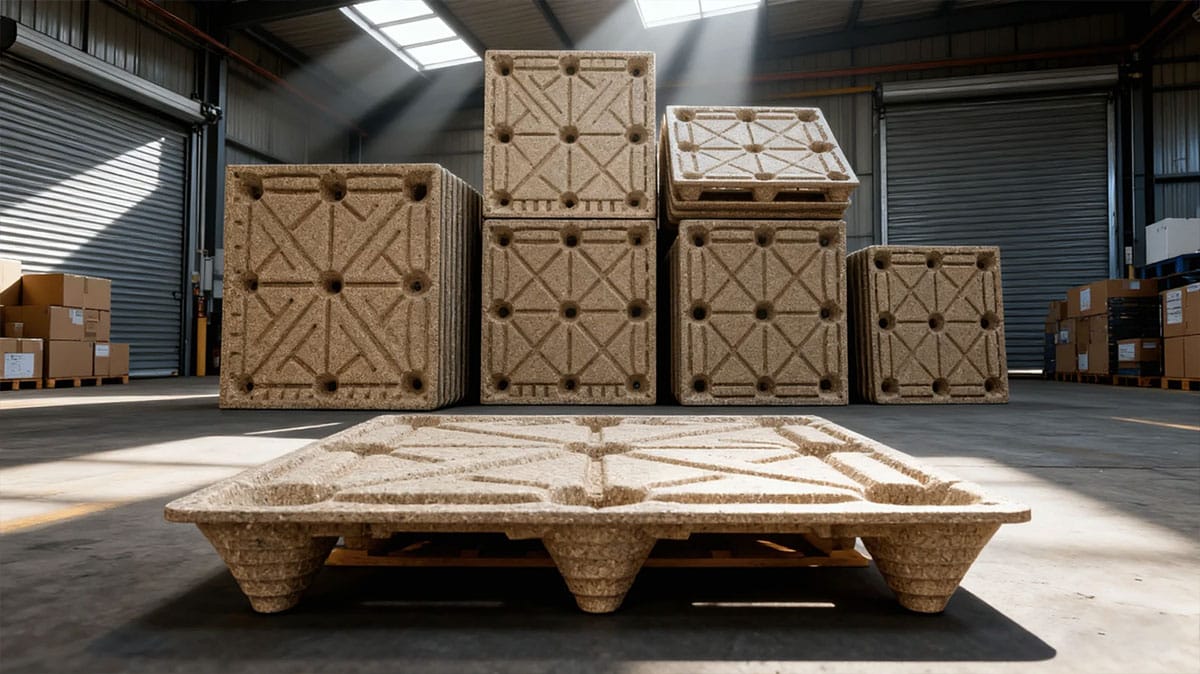
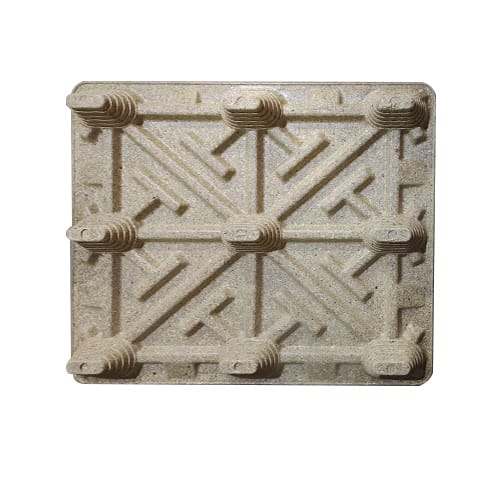
Xinyi Pallet’s double-deck square-grid pallet range includes multiple molded pallet dimensions, allowing size to be considered together with deck structure and load-support geometry rather than as an isolated specification.
Standard Pallet Size Should Start With the Product Footprint
The packaged product should be one of the main references when selecting pallet dimensions.
Choosing the pallet before reviewing the final shipping configuration can produce avoidable problems because the bare product dimensions may differ from the final palletized footprint.
Protective packaging, cartons, wrapping, corner protection, containers, straps, and spacing between units can all increase the area required on the deck.
An efficient standard pallet size should support most or all of the cargo footprint without leaving large amounts of unnecessary deck area.
For carton loads, pallet planning should also consider the layer pattern. Rotating cartons or changing the number of units across the deck can sometimes improve space utilization without changing the pallet itself.
Industrial equipment requires a different approach. A machine may occupy most of the pallet surface but transfer its weight through only several feet or mounting points. In that case, external pallet size needs to be considered together with the location of structural ribs, legs, or other supporting areas.
This is why product footprint and product contact area are related but not identical specifications.
Why Product Overhang Can Become a Problem
Overhang occurs when part of the product extends beyond the edge of the pallet.
It may appear minor when only a small portion of a carton extends past the deck, but repeated overhang across multiple layers can affect packaging support and load consistency.
Unsupported carton edges are more vulnerable to deformation. Products extending beyond the pallet are also more exposed to contact with nearby loads, warehouse structures, forklifts, and loading equipment.
Overhang can become particularly troublesome during stacking. If palletized units do not maintain consistent external dimensions, aligning loads becomes more difficult and pressure may not transfer evenly through the packaging below.
For this reason, a standard pallet size should generally provide sufficient support for the intended load rather than forcing products to fit a footprint that is too small.
However, eliminating overhang should not lead to unnecessary oversizing.
Why a Pallet Can Also Be Too Large
Choosing a larger standard pallet size may seem like a simple way to improve product support, but excessive pallet area creates another form of inefficiency.
If a product occupies only part of the deck, the remaining area still consumes warehouse and logistics space.
Unused pallet footprint can affect floor storage, rack utilization, staging areas, aisle clearance, and the number of palletized units that can be positioned within a defined space.
The problem becomes more significant in repetitive operations. A small amount of wasted deck area on one pallet may seem insignificant, but the same inefficiency repeated across large volumes can influence warehouse utilization.
A practical pallet footprint should therefore strike a balance. It should be large enough to support the product properly but not significantly larger than the cargo without a structural or operational reason.
How Standard Pallet Size Affects Load Distribution
Dimensions influence the distance between supporting areas and the way loads travel through the pallet structure.
A 1200 × 1200 mm pallet is not simply a larger version of a smaller pallet. Its longer structural spans may require different reinforcing geometry, deck thickness, or support locations depending on the material and manufacturing method.
The nature of the cargo matters as well.
An evenly distributed carton load can spread pressure across a large area of the pallet. Heavy machinery, containers, drums, or industrial components may concentrate much of their weight into limited deck locations.
If a concentrated load sits between major structural supports, simply increasing pallet length and width may not improve performance. Reinforcement may need to be positioned beneath the actual contact areas instead.
This is particularly important when evaluating molded pallets because ribs, legs, grids, and deck geometry can be designed around expected load patterns.
Standard pallet size should therefore always be considered together with structural design.
Static, Dynamic, and Racking Capacity Depend on Support Conditions
Pallet size alone cannot tell you how much weight a pallet can safely support.
The way the pallet is supported changes its structural behavior.
When a loaded pallet sits on a sufficiently supportive warehouse floor, much of the base can transfer force directly downward. This is commonly described as static loading and is generally a favorable condition.
Once a forklift lifts the pallet, support becomes concentrated around the fork blades. Movement also introduces vibration, braking, turning, acceleration, and minor handling impacts. This dynamic condition can place different stresses on the same pallet.
Rack storage creates another situation. The pallet may be supported mainly by beams while part of the structure bridges an unsupported span. Pallet dimensions become particularly important here because the distance between supports influences bending.
This means a standard pallet size and a stated load capacity should never be considered separately from the intended support condition.
For rack applications, the pallet supplier should understand beam spacing, pallet orientation, cargo distribution, storage duration, and expected unit-load weight.
How Pallet Dimensions Affect Forklift Handling
External dimensions are important, but forklift compatibility depends just as much on the spaces inside and underneath the pallet.
A suitable pallet needs enough clearance for fork blades to enter without repeatedly contacting legs, runners, ribs, or deck sections.
Important handling dimensions include fork-opening height, opening width, spacing between structural supports, ground clearance, and entry direction.
A standard pallet size may fit the product and warehouse perfectly while still being inconvenient to handle if the entry geometry does not suit the equipment being used.
Two-way entry can be suitable where pallet orientation remains predictable. Four-way entry can provide greater flexibility in warehouses or production areas where operators approach loads from different directions.
Neither entry style is automatically better. The design should follow the workflow and available equipment.
In high-frequency warehouse operations, good fork clearance can also contribute to pallet durability by reducing repeated handling impacts.
Standard Pallet Size for Warehouse Racks
Warehouse rack design can strongly influence which pallet size is appropriate.
A pallet should fit the storage position with sufficient operational clearance while maintaining the required support on rack beams.
If the pallet footprint is poorly matched to the rack, operators may experience difficult positioning, excessive unsupported spans, or inefficient use of rack width.
The relationship between pallet dimensions and rack beams should be reviewed before a new pallet configuration is introduced.
Pallet orientation is also important. Some structures may behave differently depending on which direction spans the rack supports. This matters particularly for pallets with ribs, runners, or lower decks that are not structurally identical in every direction.
In warehouse planning, the standard pallet size should therefore be evaluated with the rack rather than treated as an independent specification.
Standard Pallet Size for Conveyors and Automation
Modern logistics systems increasingly use conveyors, automated storage, robotic movement, and other forms of mechanized pallet handling.
These applications place greater emphasis on dimensional repeatability.
A human forklift operator can compensate for relatively small differences in pallet position or dimensions. Automated equipment generally relies on pallets arriving within predictable tolerances.
For conveyor applications, pallet length and width need to match the equipment, but the lower structure is equally important. Rollers or chains need appropriate contact areas, and the pallet must remain stable when moving across transfer sections.
Automated systems may also depend on consistent overall height, fork openings, leg positions, deck geometry, and pallet orientation.
This is one reason standardized pallet dimensions can be valuable: they create a repeatable physical interface for handling equipment.
However, the manufacturer must be able to maintain those dimensions consistently across production batches.
Does Pallet Material Change Standard Pallet Size?
The external footprint can remain the same across different pallet materials, but the structure needed to support that footprint may vary.
Traditional wooden pallets use boards, blocks, runners, and fasteners. As the pallet becomes larger or the load becomes more demanding, board dimensions, joint locations, runner spacing, and lumber characteristics become increasingly important.
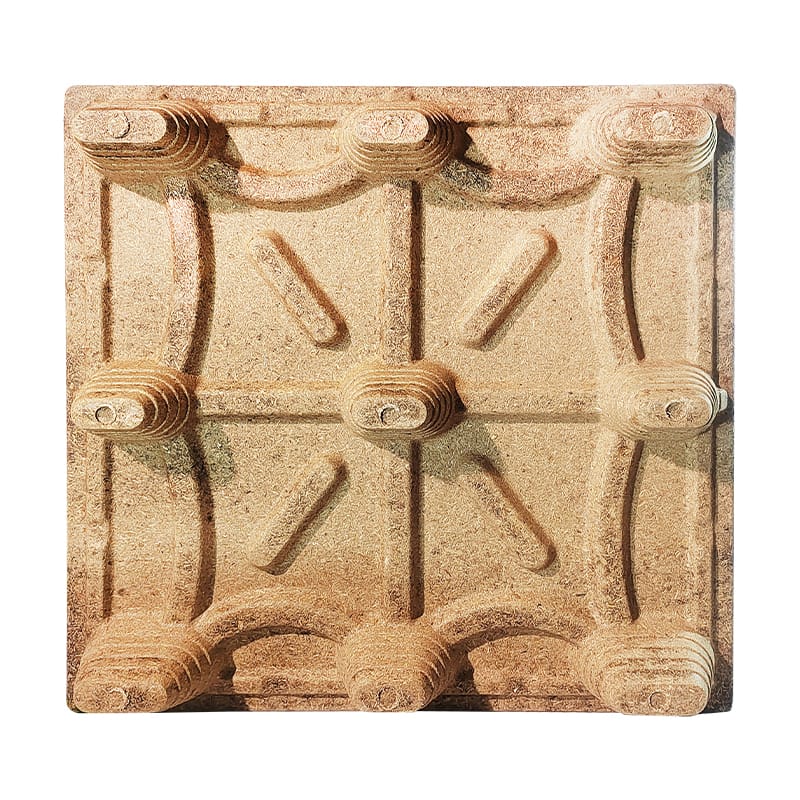
Molded wood pallets use a different manufacturing approach. Processed plant-fiber materials can be formed into integrated deck, rib, leg, and support structures. The mold defines much of the geometry, allowing dimensions and reinforcement to be engineered together.
Plastic and other engineered pallets rely on their own structural methods and material properties.
For this reason, two pallets with the same standard pallet size should not automatically be assumed to have the same load behavior.
Dimensions describe the footprint. Structural design determines how that footprint supports the load.
The broader Xinyi article on types of pallets provides additional context for comparing different pallet structures when dimensions, handling method, and load conditions all need to be evaluated together.
Pallet Height Is Also Part of the Size Decision
Length and width dominate discussions of standard pallet size, but overall height also influences industrial logistics.
Pallet height affects forklift entry, total unit-load height, stacking, storage clearance, and automated equipment.
If a warehouse has fixed vertical storage positions, even a modest change in pallet height can alter the space available for the cargo above it.
Height also matters when empty pallets are stored.
Non-nestable pallets add most of their individual height to a stack. Some molded pallet designs allow the legs of one unit to fit partially into another, reducing the additional height created by each empty pallet.
For high-volume warehouses, empty pallet storage can become an important part of overall space utilization.
This does not mean pallet height should be minimized at all costs. Structural requirements and fork-entry clearance still come first.
Standard Pallet Size and Packaging Efficiency
Packaging and pallet dimensions should ideally be planned together.
If carton dimensions consistently fit poorly within a standard pallet footprint, large amounts of deck space can be wasted or product overhang may occur.
Before changing pallet dimensions, it can be useful to test different carton orientations. A different layer pattern may improve deck coverage and distribute weight more evenly.
Load height should also be considered.
A highly efficient deck pattern can still create a poor palletized unit if too many layers produce an unstable load. Length, width, height, packaging strength, and center of gravity should therefore be considered as a complete arrangement.
When packaging is still being developed, aligning carton dimensions with an appropriate pallet footprint can improve logistics efficiency before the product enters regular production.
When Should You Use a Custom Pallet Size?
A standard pallet size is useful when it fits the operation well. Custom sizing becomes valuable when a recurring mismatch creates a clear logistics or structural problem.
Large machinery and industrial components may require a footprint that provides support beyond standard dimensions. Bulk containers or unusual packaging may also need different deck geometry.
Custom dimensions can be particularly useful when a high-volume product consistently wastes substantial pallet area or creates unavoidable overhang on existing pallets.
Specialized conveyors, automated handling systems, and rack configurations may provide another reason for customization.
The goal should not be to create a unique pallet unnecessarily. Custom sizing makes sense when it produces measurable improvements in product support, handling compatibility, storage utilization, or equipment integration.
How to Select a Standard Pallet Size
A practical selection process starts with the final packaged cargo rather than a pallet catalog.
Measure the product footprint and identify any areas where weight is concentrated. Confirm the maximum unit-load weight and determine whether the center of gravity is likely to create handling concerns.
Next, review the warehouse and handling environment. Check forklift entry requirements, rack dimensions, conveyor support, stacking conditions, and storage clearances.
Then compare available pallet footprints against the product arrangement. Look for unnecessary overhang, excessive underused deck area, and poor alignment between heavy product contact points and structural supports.
Finally, evaluate the pallet material and structural design. Confirm that the selected size is supported by appropriate ribs, legs, runners, decks, or other reinforcing features.
This approach prevents pallet dimensions from being chosen independently from the conditions that ultimately determine performance.
Common Mistakes When Choosing Standard Pallet Size
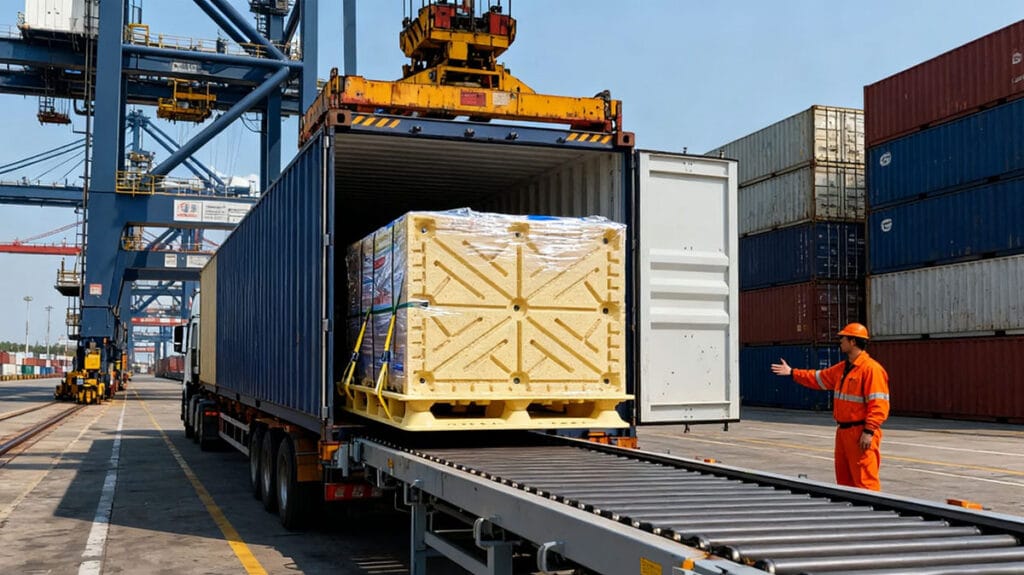
One common mistake is assuming that the most widely recognized pallet dimension must also be the most efficient. Standardization is useful only when the chosen footprint suits the actual product and handling system.
Another mistake is choosing a larger pallet simply because the cargo is heavy. Load capacity depends on structural geometry and support conditions, not deck area alone.
Ignoring product overhang can create packaging and stability problems, while excessive underhang wastes warehouse and logistics space.
Forklift openings are also easy to overlook. External dimensions can be correct while internal clearances remain unsuitable for equipment.
Rack support presents another risk. A pallet may physically fit within a rack location while its structure is poorly matched to the beam spacing.
Finally, companies introducing automated handling sometimes focus on nominal dimensions without considering manufacturing tolerances. Consistency across pallets is often just as important as the target dimensions themselves.
Conclusion
Standard pallet size provides a useful foundation for industrial logistics, but it should never be treated as a universal answer.
The most suitable pallet footprint is the one that supports the final packaged product, minimizes unnecessary overhang and unused deck area, works with forklifts and warehouse equipment, and remains compatible with storage and handling systems.
Dimensions also need to be evaluated together with structural design. A larger pallet is not automatically stronger, and two pallets with identical external measurements can have very different performance because of differences in materials, ribs, legs, runners, deck geometry, and manufacturing consistency.
For warehouse and industrial applications, pallet size should therefore be selected as part of the complete unit-load design.
When product footprint, load distribution, handling equipment, rack support, automation, and empty-pallet storage are considered together, a standard pallet size becomes more than a familiar measurement. It becomes a practical tool for improving repeatability, product support, and logistics efficiency.
FAQ
What is a standard pallet size?
A standard pallet size is a commonly used pallet footprint adopted for repeatable logistics, warehousing, and material handling. There is no single size suitable for every application. The correct dimension depends on product footprint, storage equipment, forklifts, load distribution, and handling conditions.
How do I choose the right standard pallet size?
Start with the final packaged product dimensions and check how well the load fits the pallet deck. Then consider overhang, unused deck space, forklift entry, rack dimensions, conveyors, stacking, and load distribution. The best size should fit both the cargo and the surrounding logistics system.
Does standard pallet size affect load capacity?
Yes. Pallet dimensions influence structural spans and the relationship between the load and supporting areas. However, size alone does not determine capacity. Material, deck design, ribs, runners, legs, load distribution, and whether the pallet is on a floor, forklift, or rack also matter.
Should the product be smaller than the pallet?
The product should generally fit within the pallet footprint without unnecessary overhang. Some unused space may be acceptable depending on packaging and handling requirements, but excessive underused deck area reduces storage efficiency. Cargo support and logistics utilization should be balanced.
Can standard pallet dimensions be customized?
Yes. Custom dimensions can be useful when common pallet footprints create repeated overhang, wasted deck space, poor equipment compatibility, or inadequate support for unusual products. Custom sizing should solve a specific handling, storage, packaging, or structural requirement.