
Table of Contents
Introduction
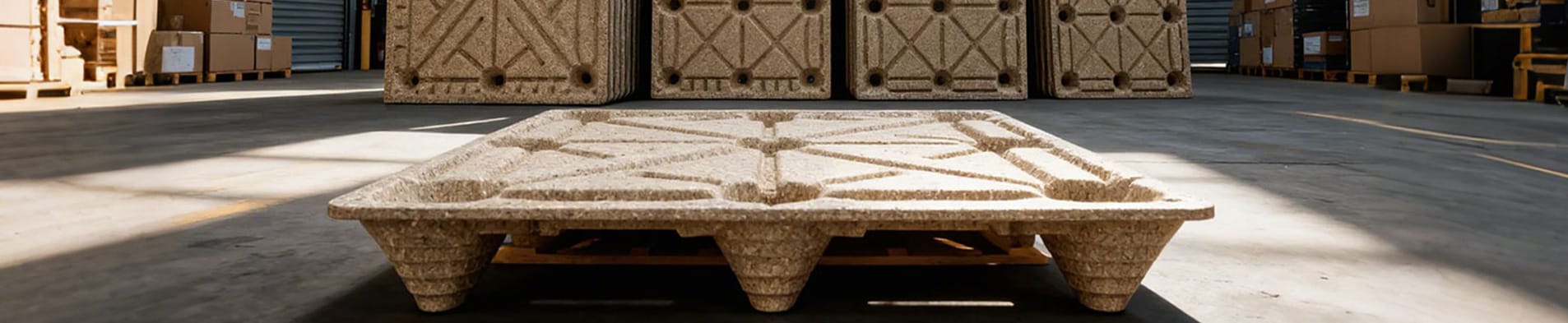
A reusable pallet is designed to support repeated handling, storage, transportation, and return cycles instead of serving only a single movement of goods. For manufacturers, warehouses, distribution centers, and closed-loop supply chains, this can make pallet selection more closely connected with long-term logistics efficiency.
However, reusability depends on much more than whether a pallet remains physically intact after one shipment. Structural consistency, load conditions, forklift handling, storage practices, moisture exposure, inspection procedures, and return logistics all influence how effectively a pallet can remain in service.
For companies evaluating reusable pallet systems, the most useful approach is to consider the pallet as part of the complete material-handling process rather than as an isolated transport platform.
What Is a Reusable Pallet?
A reusable pallet is a pallet intended to complete multiple handling or transportation cycles while continuing to provide stable support for the goods placed on it.
Unlike expendable packaging that is discarded after a single movement, reusable systems are normally planned around repeated use. This may involve circulation within one factory, transfers between production and warehouse areas, movement between distribution centers, or a controlled return process between business partners.
Reusable packaging is commonly associated with durable transport systems designed for multiple trips. A broader explanation of this concept can be found in the overview of reusable packaging, which describes how returnable transport packaging can remain in circulation when suitable inspection, handling, and reverse-logistics systems are available.
Reusable Pallets vs Single-Use Pallets
The main distinction between reusable and single-use pallets is not simply the material from which they are made. Their intended logistics role is different.
| Factor | Reusable Pallet | Single-Use Pallet |
|---|---|---|
| Intended service | Multiple handling cycles | Limited or one-way movement |
| Inspection | Usually required between cycles | Often limited after shipment |
| Return planning | Frequently needed | Usually not required |
| Structural consistency | Important for repeated handling | Depends on the application |
| Storage management | Part of the logistics system | Often secondary |
| Tracking | Can be useful in closed loops | Less commonly required |
| Best suited for | Repeated distribution and internal logistics | One-way or limited-use shipments |
Neither option is automatically better for every operation. The correct choice depends on how the pallet will move through the supply chain and whether a practical reuse system actually exists.
Why Pallet Structure Matters for Reuse
Repeated use exposes pallets to a wider range of stresses than a single transportation cycle.
During each movement, a pallet may be lifted by forklifts, transferred by pallet trucks, placed on warehouse floors, stacked, loaded into vehicles, unloaded at another facility, and returned for another cycle. Small structural weaknesses can become more important as these movements accumulate.
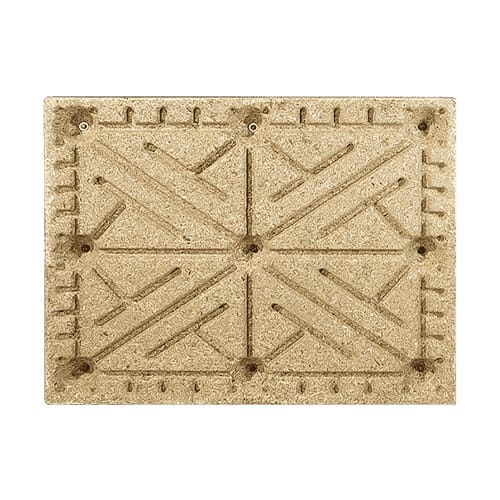
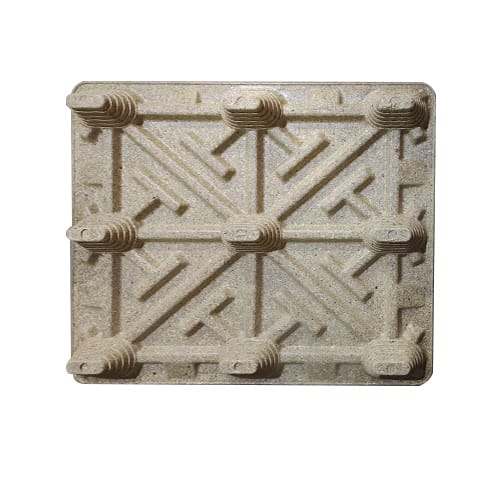
For this reason, reusable pallet selection should consider the deck, support feet, runners, reinforcement, fork-entry areas, and overall geometry. Consistent dimensions are especially important when the pallet will repeatedly interact with the same material-handling equipment.
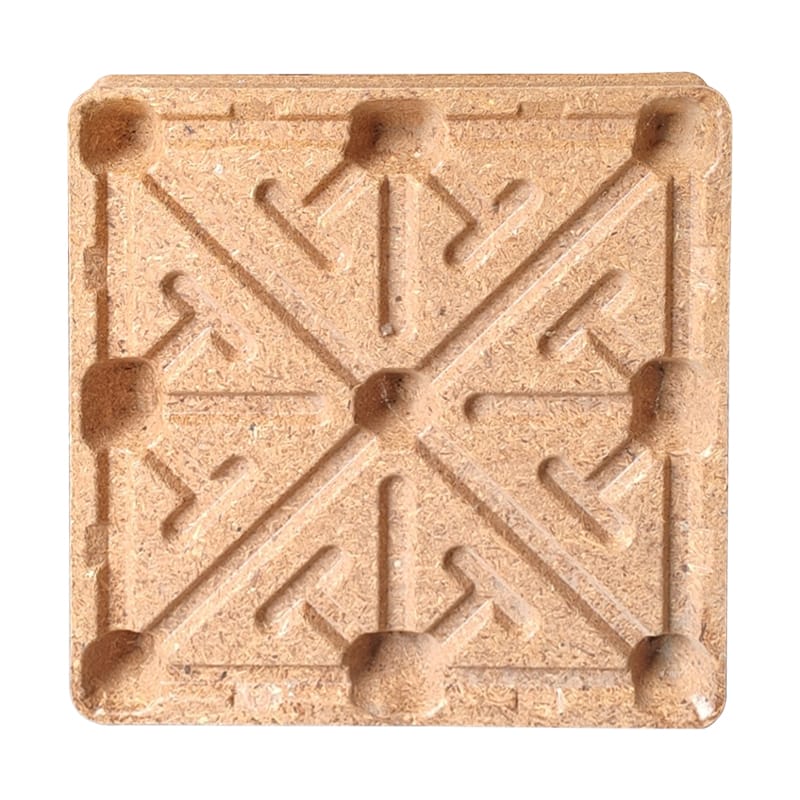
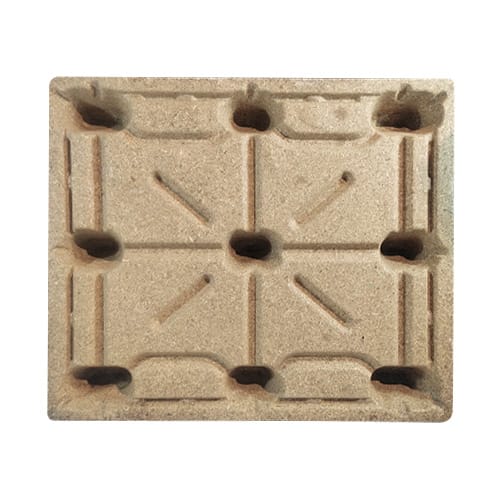
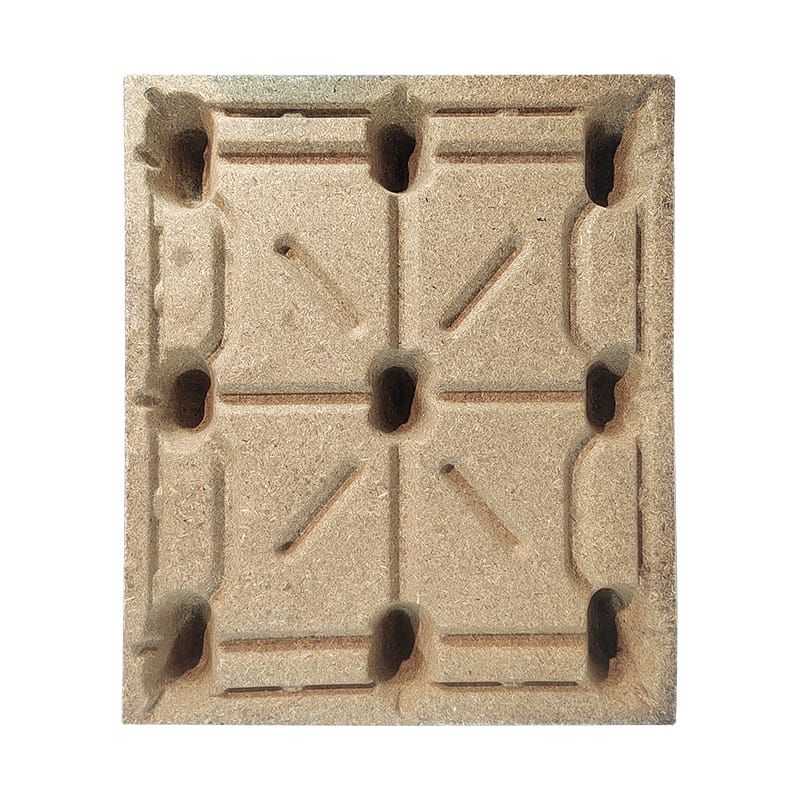
Xinyi’s molded pallet product range includes multiple single-layer, double-layer, reinforced, and integrated molded structures that can be evaluated according to different handling and logistics requirements.
Closed-Loop Logistics and Pallet Reuse
Reusable pallets are particularly effective when the supply chain creates a predictable circulation route.
A typical closed-loop arrangement may involve a manufacturer sending goods to a distribution center, after which empty pallets are collected and returned for another shipment cycle. Similar systems can operate between component suppliers and assembly plants or between warehouses within the same organization.
The more controlled the loop, the easier it becomes to manage pallet availability, inspection, storage, and return.
By contrast, pallets sent through an uncontrolled one-way distribution network may be difficult to recover. In that situation, the theoretical ability to reuse the pallet may provide little practical benefit because the pallet never returns to the original logistics system.
Therefore, companies should evaluate both the physical pallet and the reverse-logistics process when planning reuse.
Forklift Handling and Repeated Pallet Cycles
Forklift interaction is one of the most important factors affecting pallet service life.
Forks that enter too high, too low, or at an angle can strike deck sections or support structures. Repeated impacts can gradually damage even a pallet that is otherwise suitable for the load.
Operators should therefore verify fork-entry direction, opening dimensions, ground clearance, and the relationship between pallet geometry and the equipment used on site.
Four-way entry can improve operational flexibility in facilities where loads must be approached from different directions, but the actual pallet structure still needs to provide adequate support around the entry areas.
Consistent operator training can also reduce avoidable pallet damage during repeated handling.
Load Distribution Is More Important Than Load Weight Alone
A reusable pallet should never be evaluated only by a single load-capacity figure.
Two loads with identical total weight may create very different stresses. Uniformly distributed cartons spread force across the deck, while machinery, drums, containers, or concentrated industrial goods may apply much greater pressure to smaller areas.
Static and dynamic conditions also need to be considered separately. A pallet resting on a warehouse floor experiences different forces from the same pallet being lifted and moved by a forklift.
For repeated logistics cycles, companies should evaluate the actual load shape, contact points, center of gravity, packaging stability, and lifting method before selecting a pallet structure.
Storage Conditions Affect Reusability
Storage practices can significantly influence how long pallets remain suitable for repeated service.
Empty pallets should be stored in a way that minimizes unnecessary impact, deformation, contamination, and exposure to unsuitable environmental conditions. Where stacking or nesting is used, the pallet geometry should support that storage method.
Space efficiency can also become increasingly important in reusable systems because empty pallets may accumulate while waiting for their next circulation cycle.
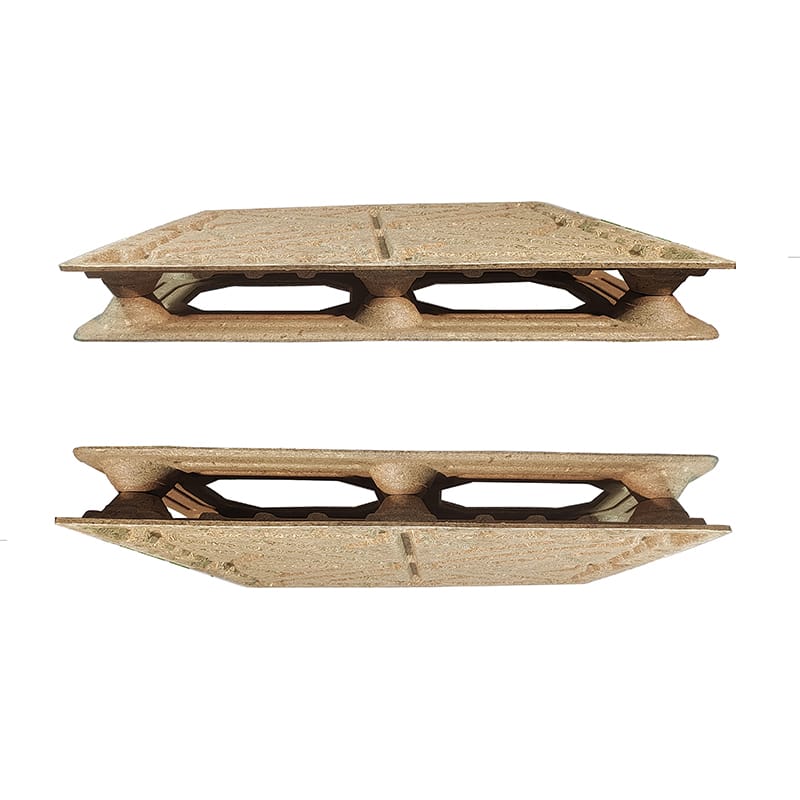
Certain molded pallet structures can support more efficient empty-pallet storage. Xinyi currently describes its molded pallet range as using space-saving designs for warehousing and repeated logistics applications.
Stackable and Nestable Designs in Reusable Systems
Stackability and nestability can improve empty-pallet management, but they solve different logistics problems.
Stackable pallets are designed so that empty units can be placed securely one above another. Nestable pallets allow portions of one pallet to fit into another, reducing the vertical space occupied by multiple empty pallets.
For reusable operations, these features can simplify temporary storage and return transportation because empty units consume less operational space.
However, the best structure depends on the logistics route. A facility using fixed-height storage may prefer one arrangement, while a return operation focused on maximizing empty transport efficiency may benefit more from another.
The selection should therefore consider both loaded performance and what happens after the pallet becomes empty.
When Reinforced Pallet Structures Are Useful
Some reusable applications expose pallets to frequent movement, concentrated loads, or repeated handling conditions that justify additional reinforcement.
Reinforced structures can help distribute stresses across the pallet and maintain stability where the operating environment places greater demands on the support geometry.
For example, Xinyi’s Strip-Reinforced Molded Pallet incorporates additional wooden strips into a single-layer molded structure, creating another configuration for applications where reinforcement is required.
The need for reinforcement should always be evaluated against the actual load and handling environment rather than treated as a universal requirement.
Reusable Pallets in Manufacturing
Manufacturing environments are particularly suitable for reusable pallet systems because movement routes are often predictable.
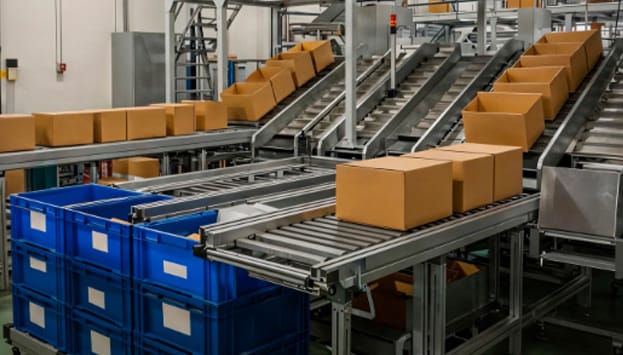
A pallet may carry components from incoming storage to production, move semi-finished goods between work areas, or transport finished products to an internal warehouse. Because these movements remain within a controlled network, pallets can often be recovered, inspected, and returned to service efficiently.
Dimensional consistency is also valuable in manufacturing because pallets may interact repeatedly with forklifts, conveyors, loading stations, or designated storage positions.
For this reason, reusable pallet selection in manufacturing should focus not only on cargo support but also on compatibility with the wider production and material-handling system.
Reusable Pallets in Warehouse Operations
Warehouses often handle pallets through repeated short-distance cycles.
Goods may be unloaded, moved into storage, transferred to picking or staging areas, repositioned, and eventually loaded for outbound transportation. A pallet can therefore experience many handling events even when the transportation distance itself is relatively short.
Reusable pallet systems can work effectively in these environments when pallet condition is monitored and damaged units are removed from service before they create handling problems.
Warehouse teams should establish clear inspection criteria covering deck condition, support points, visible deformation, contamination, fork-entry areas, and overall structural stability.
Inspection Before Reuse
Inspection is one of the most important parts of a reusable pallet program.
Before a pallet enters another cycle, operators should check whether its structure remains suitable for the next load. Visible cracks, damaged supports, deformation, loose components, or substantial surface damage can indicate that the pallet should not immediately return to service.
The inspection process should also reflect the application. Pallets used with sensitive packaged goods may require different cleanliness standards from pallets used for general industrial materials.
A consistent inspection routine makes reusable pallet systems safer and more predictable because pallet condition is evaluated before problems occur during handling.
Pallet Tracking and Inventory Control
When reusable pallets circulate through several locations, tracking can become useful.
Basic systems may identify pallets by batch, location, or ownership, while more advanced operations can use barcodes, RFID, or warehouse-management records to monitor circulation.
Tracking helps answer practical questions such as how many pallets are currently in use, how many are waiting for return, where losses are occurring, and which pallets require inspection.
This can be especially valuable when pallets form part of a closed-loop supply chain involving several facilities.
Sustainability and Reusable Pallets
Reusable pallets can contribute to resource efficiency when they are used within a properly managed system.
The sustainability benefit does not come simply from labeling a pallet as reusable. Actual performance depends on how many cycles the pallet completes, how efficiently it is returned, what resources are required for inspection and handling, and how the material is managed at the end of its useful life.
For this reason, sustainability should be assessed across the complete logistics system rather than only at the moment the pallet is manufactured.
Molded pallets made from processed plant-fiber materials can also provide another route for utilizing recovered wood and agricultural residues. When this material strategy is combined with efficient handling, storage, and reuse practices, it can support broader resource-efficiency goals.
When a Reusable Pallet May Not Be the Best Choice
Reusable systems are not ideal for every supply chain.
If pallets are sent to many unrelated destinations with no practical return system, recovery may be difficult. A reusable pallet may also provide limited value when shipment frequency is very low or when the logistics route makes empty-pallet returns inefficient.
Certain highly specialized loads may also require packaging configurations that change frequently, reducing the advantage of maintaining a standardized reusable pallet fleet.
Therefore, companies should first determine whether the supply chain itself supports reuse before focusing on pallet construction.
How to Select a Reusable Pallet
A practical selection process should begin with the complete circulation route.
Companies should evaluate the cargo dimensions, total weight, load distribution, forklift entry requirements, static and dynamic handling conditions, warehouse layout, storage method, environmental exposure, and expected number of handling cycles.
The return route should then be reviewed. If pallets are expected to circulate repeatedly, the business should define how empty units will be collected, stored, inspected, and reintroduced into service.
Finally, the pallet structure should be matched to these requirements. The most suitable reusable pallet is not necessarily the strongest or heaviest option, but the one that performs consistently throughout the intended logistics cycle.
Conclusion
A reusable pallet can support efficient industrial logistics when pallet design and supply-chain management are considered together.
Repeated service requires structural consistency, appropriate load distribution, compatible handling equipment, controlled storage, regular inspection, and a practical return process. In closed-loop manufacturing, warehousing, and distribution environments, these factors can allow pallets to remain part of the material-handling system across multiple cycles.
Rather than selecting a pallet simply because it is described as reusable, businesses should evaluate how it will move, where it will be stored, how it will return, and what conditions it will face during each cycle.
FAQ
What is a reusable pallet?
A reusable pallet is designed to complete multiple handling, storage, or transportation cycles while continuing to provide suitable support for goods.
Are reusable pallets suitable for warehouses?
Yes. They can be particularly suitable for warehouses where pallet circulation, forklift handling, storage, and inspection can be managed within a controlled operating environment.
What is the difference between a reusable and returnable pallet?
Reusable describes the pallet’s ability and intended purpose to be used multiple times. Returnable usually emphasizes the logistics process through which the pallet is recovered and sent back into circulation.
How should reusable pallets be inspected?
Inspection should cover the deck, supports, runners, fork-entry areas, visible deformation, damaged components, contamination, and overall structural stability before another use cycle.
Can molded pallets be reused?
Molded pallets may be suitable for repeated logistics applications when their structure, condition, load requirements, storage environment, and handling process support continued use.
Need Help Evaluating a Reusable Pallet Configuration?
Reusable pallet performance depends on the complete logistics cycle, including cargo, handling equipment, warehouse conditions, storage, and return processes. Explore Xinyi’s molded pallet products to compare different structural configurations for manufacturing, warehousing, transportation, and repeated handling applications.