
Table of Contents
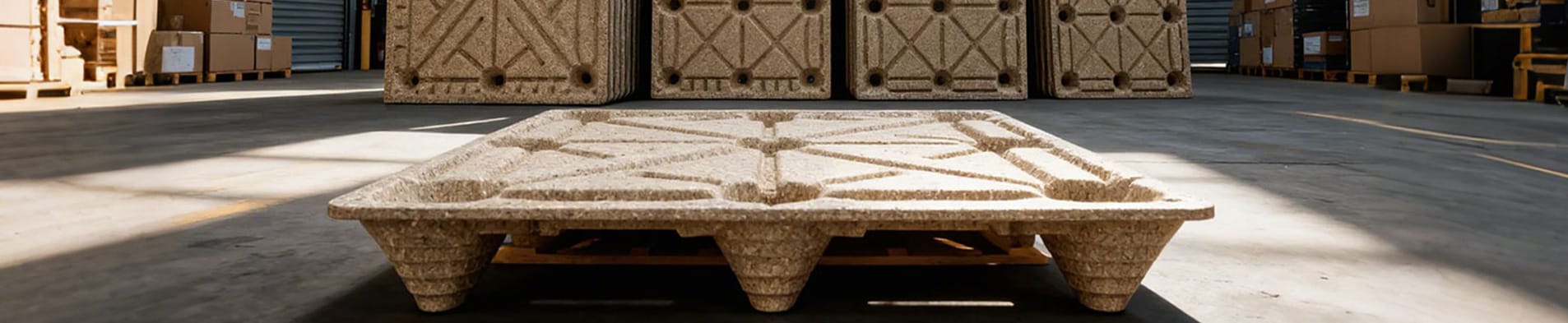
A useful assessment of nestable pallet starts with the cargo, equipment and receiving conditions of a defined job. Empty pallets occupy receiving space long before they carry a saleable product. A nesting proposal therefore needs a measured stack, a safe separation method and a route for replenishing the packing line. A photograph of a tall stack cannot tell a buyer how much usable floor space the operation will recover.
This guide develops a purchasing and trial plan around Xinyi’s 1200x1000x130mm Presswood Pallets. Use a nestable pallet as the starting point for the inquiry, then confirm the actual model and operating requirements. For nestable pallet, the steps below are evaluation guidance, not a report of a completed customer trial.
Define the nestable pallet requirement
Measure the first pallet height and the incremental height of each additional nested unit. Build a short representative stack and record the outer dimensions, separation effort and access needed by the handling truck. Reserve space for extracting a pallet, rather than dividing the warehouse area by the stack footprint alone.
Match the product construction to the job
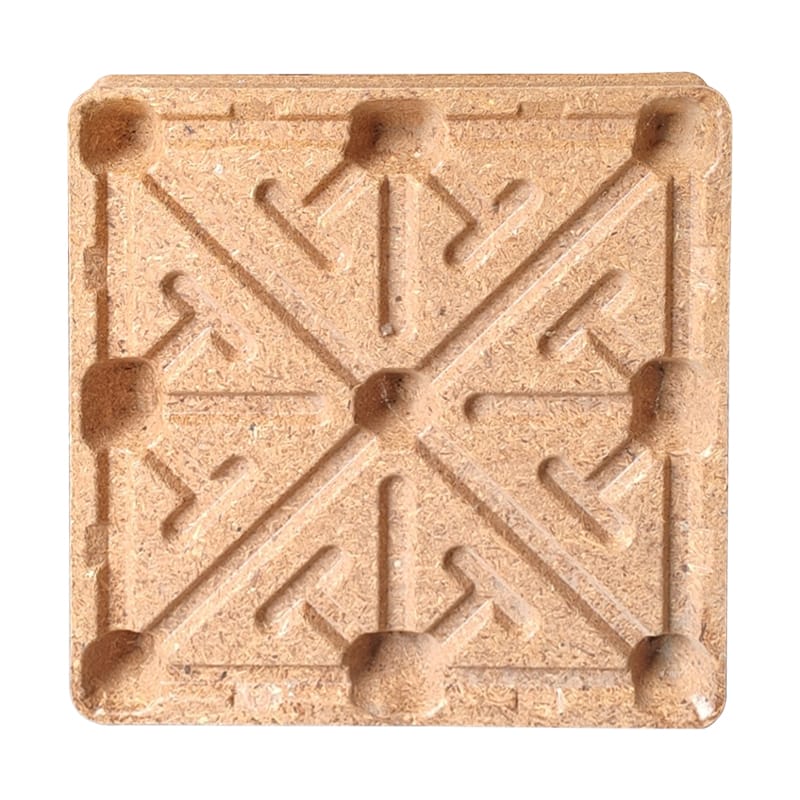
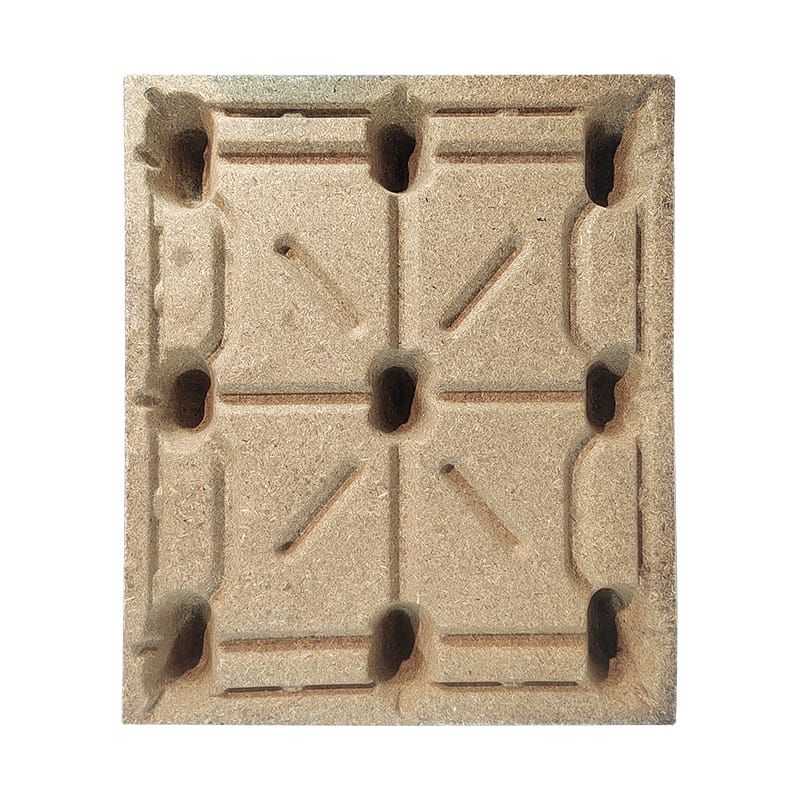
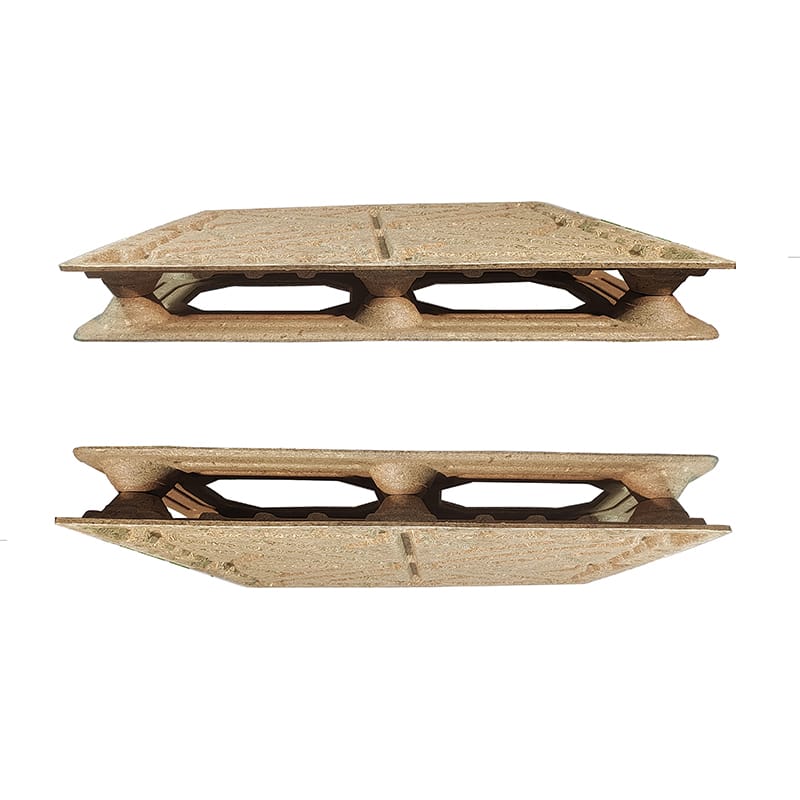
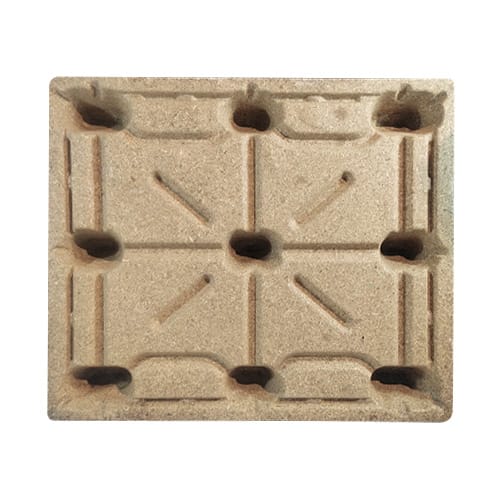
Xinyi describes this family as an integral molded deck with nine supporting feet. That construction makes the positions of the feet and the shape of the underside relevant to handling, stacking and equipment support. Review the exact model drawing rather than transferring a detail from a similar-looking size. Product photographs help identify the structure, but they do not establish tolerances or a load rating for the buyer’s application.
The relevant range for nestable pallet is Single-Deck Nine-Legged Pallet. Confirm the selected model’s current dimensions and supplied condition with Xinyi. When assessing a nestable pallet, use the product drawing as the dimensional reference; image filenames and older promotional tables may describe another revision. Any quoted capability must be tied to the actual load and support conditions.
Run the application-specific comparison
Compare the existing empty-stock arrangement with a trial using the same number of pallets. Record occupied bays at the same time of day and include waiting stock. If nesting saves a bay but creates repeated manual separation work, put that labor into the business case before changing the replenishment method.
Calculate stack space from measured geometry
For a nestable pallet, distinguish nesting from ordinary stacking. Nesting means one empty unit occupies part of the space within another. The first pallet therefore establishes the starting height, while each additional unit adds a smaller increment. Measure that increment on the actual supplied configuration. Added runners, different mold geometry or packing restraints can change the result, so a measurement from another pallet family is not a reliable substitute.
A simple planning calculation is first-unit height plus the number of additional units multiplied by measured nesting pitch. Use it to estimate a proposed stack and then verify the result physically within the supplier’s handling limits. Include clearance above the stack and enough room to remove units. The resulting storage estimate describes the chosen empty arrangement; it does not establish a permissible loaded stacking height.
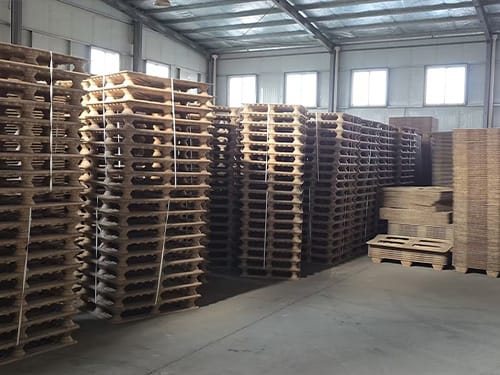
Plan how nestable pallet units will be separated and fed to production. Record any sticking, awkward reaching or extra equipment needed during the trial. Keep mixed sizes out of the same stack unless the manufacturer explicitly supports the combination. Mark stock locations by model and accepted condition so the space saving does not create sorting work every time the packing team needs another pallet.
Compare cost per accepted usable unit
A useful nestable pallet comparison starts with the same load, route and supply condition. List purchase price, inbound transport, receiving labor, preparation, inspection, protective materials and disposal or recovery costs where they apply. Keep quoted values separate from estimates and measured trial results. This makes it possible to revisit the decision when freight, order quantity or labor requirements change.
Use accepted usable units as the denominator. If a shipment contains damaged, incomplete or unsuitable pallets, dividing by the number ordered hides part of the cost. For a return program, also calculate cost per completed service cycle using observed recoveries and losses. Do not assign an assumed long life to a new design simply to make its price look more attractive.
Build a low-volume and a larger-volume scenario for a nestable pallet using the same specification. Separate one-time engineering or tooling from recurring expenses, and record how those costs are allocated. Ask which commercial terms can change: delivery frequency, assembly location, packing density or payment conditions. A transparent comparison gives procurement a basis for negotiation and leaves operations with a supply arrangement it can actually handle.
Compare nestable pallet options on equal terms
The following comparison focuses on the decision described above. It is a working nestable pallet procurement matrix for a nestable pallet, not a ranking of brands or an assertion that every listed arrangement is suitable. Complete the missing evidence using the selected model and representative cargo.
| Decision area | Evidence to obtain | Issue to resolve |
|---|---|---|
| Stack pitch | Measure successive nesting increments | Using full pallet height for every layer |
| Separation | Trial the planned extraction method | Assuming empty pallets release automatically |
| Replenishment | Count trips to the packing station | Ignoring work caused by deeper stacks |
Document the pilot and release decision
For the nestable pallet pilot, assign an owner to collect the baseline measurements and preserve the sample identity. Give particular attention to separation: trial the planned extraction method. The issue to resolve is assuming empty pallets release automatically. Write an acceptance criterion before the test so the result is judged against the requirement rather than an attractive photograph.
Release nestable pallet only for the conditions covered by the evidence. Preserve the selected nestable pallet drawing, sample record and packing instruction with the order. Record open questions separately and identify who will close them. If the first production delivery differs from the accepted sample, hold the affected stock while the difference is assessed and communicate the result to everyone who handles it.
Prepare an RFQ that suppliers can answer
Send Xinyi the intended cargo dimensions, gross mass, load-contact drawing, annual or order quantity, destination and required delivery date. Identify nestable pallet and the linked product as the starting point, then describe the operating constraint in plain language. Include handling-device details, storage support and the complete packing arrangement so the supplier can review the application rather than merely quote a nominal size.
Use the Xinyi application solutions page to identify the related logistics setting, or contact the team with your pack drawing. For this nestable pallet application, ask the quotation to address replenishment explicitly so the operational issue is not lost in a general price response.
For a framework when discussing pallet test evidence with a laboratory, see ASTM D1185, test methods for pallets and related structures. Specify the relevant test conditions with the laboratory; linking to a standard does not mean this product has been certified to it.
Request a nestable pallet sample review
If this evaluation matches your project, send Xinyi the load drawing and the three comparison priorities above. Ask the team to review the proposed nine-foot molded base, identify the appropriate model and confirm the sample plan. A focused nestable pallet inquiry makes it easier to resolve technical exceptions and compare a quotation with the cost of the complete usable shipment.
Frequently asked questions
What information is needed to specify a nestable pallet?
Provide the cargo footprint, gross mass, contact pattern, loaded height, quantity and handling route. For this application, include the nine-foot molded base and the conditions discussed above. A drawing and photographs of the proposed load help Xinyi review the request against the selected model.
How should buyers validate a proposal involving a nestable pallet?
A catalogue match is a starting point. Confirm the current drawing and relevant product evidence, then qualify the proposed load and equipment interfaces. For 1200x1000x130mm Presswood Pallets, approval should identify the actual configuration and operating conditions rather than cover every use of the product family.
Which comparison should the purchasing team prioritize?
Measure successive nesting increments. Compare alternatives with the same cargo and supply conditions. Include preparation and receiving work in the decision, and keep any supplier exceptions visible before releasing the purchase order.
What changes require a new nestable pallet review?
Review changes in cargo layout, mass, support geometry, equipment, packing accessories or product construction. A repeat order with a different base, material or assembly detail may no longer match the approved trial, even if the sales name remains unchanged.
What should be included with a quotation request?
Send the pack drawing, required quantity, destination, equipment details and preferred delivery condition. Attach the acceptance priorities from this guide and ask for current specifications, sample arrangements and any exceptions. Confirm pricing and timing in the quotation for the actual order.