
Table of Contents
Introduction

A woodpallet may appear to be a simple platform beneath a load, but its performance can influence product support, forklift handling, warehouse storage, stacking, and transportation. In industrial logistics, the right pallet needs to do more than carry a specified weight. Its dimensions, structural design, material characteristics, load distribution, and compatibility with handling equipment all affect how reliably it performs.
The term pallet generally describes a transport structure designed to support goods while they are stored and mechanically handled. Wood-based pallets can take several forms, including conventional assembled timber structures and molded designs produced from processed wood or plant fibers.
For SEO purposes, this article uses the target keyword “woodpallet,” while the natural industry expression “wood pallet” is also used where appropriate. The important consideration is not the spelling variation but whether the pallet structure matches the actual logistics application.
When selecting a woodpallet for industrial use, six factors deserve particular attention: the load, pallet structure, material and manufacturing method, dimensions, handling compatibility, and storage environment. Evaluating these factors together produces a much more useful specification than choosing a pallet according to appearance or one capacity figure.
1. Start With the Load the Woodpallet Will Carry
The cargo should determine the pallet requirements, not the other way around. Total loaded weight is important, but it does not explain exactly where the load will act on the deck.
Cartons arranged evenly across a pallet generally distribute their weight over a relatively broad area. Machinery, drums, industrial containers, and equipment supported on several feet create a different condition because much of the weight can be concentrated into a few contact points.
This distinction is important because two loads with the same total weight can require different pallet structures. A broad, evenly distributed load may use much of the deck effectively, while a concentrated load may require reinforcement beneath specific areas.
The center of gravity also matters. A tall or uneven unit load can become more difficult to control during forklift turning, lifting, and braking. When the cargo is irregular, pallet selection should therefore consider product dimensions, contact points, packaging, and weight distribution rather than relying only on total mass.
For recurring industrial loads, a simple drawing showing where the product rests on the deck can be useful when discussing the application with a manufacturer.
2. Understand How Pallet Support Changes Load Performance
A woodpallet does not experience the same structural condition throughout its working life. The way it is supported changes when it moves between floor storage, forklift handling, stacking, and racks.
When a loaded pallet rests on a sufficiently supportive warehouse floor, much of the lower structure can transfer force directly toward the surface. This is generally described as a static loading condition.
Forklift handling changes the situation. The pallet is supported mainly where the forks contact the underside, while movement introduces vibration, turning, acceleration, braking, and normal handling impacts. This is why dynamic performance should be considered separately from floor-supported capacity.
Rack storage can create another demanding condition. When a pallet rests across rack beams, sections of the structure may span unsupported space. The pallet must maintain adequate stiffness while the cargo remains above it.
A capacity specification therefore has more value when the support condition is clearly stated. Rather than asking only how much weight a woodpallet can carry, determine whether the relevant requirement applies to floor storage, forklift movement, stacking, or rack support.
3. Compare Traditional and Molded Woodpallet Structures
Wood-based pallets are not all manufactured in the same way. Their structural differences can affect dimensions, reinforcement, handling, and production consistency.
Traditional timber pallets are generally assembled from individual boards, blocks, runners, or similar components. Their final performance depends on the material characteristics as well as component dimensions, joints, fasteners, and the quality of assembly.
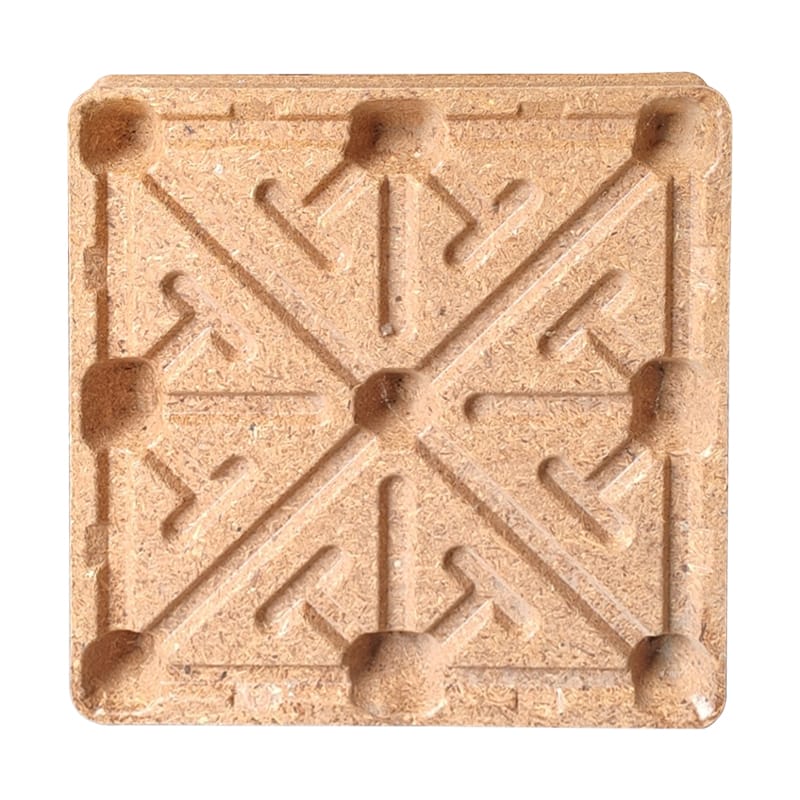
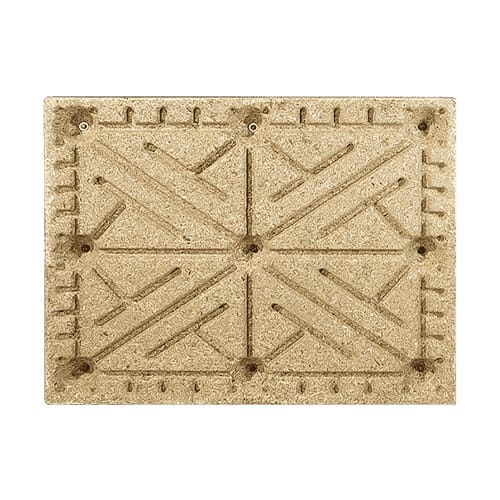
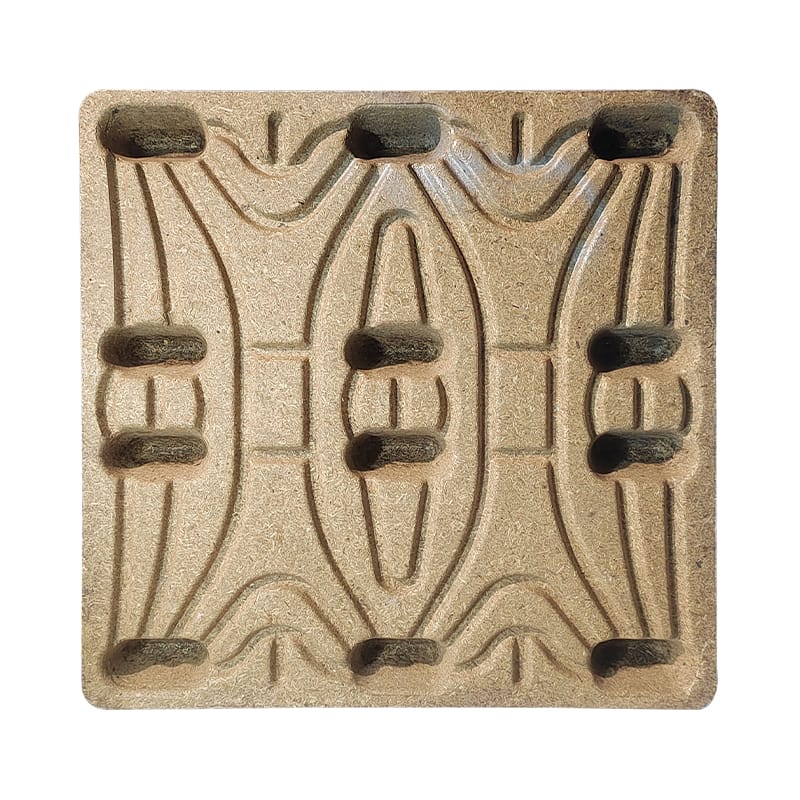
Molded wood pallets use a different manufacturing approach. Processed wood or plant-fiber material can be formed into a defined structural shape, allowing deck areas, ribs, supporting legs, and other features to become part of the molded design.
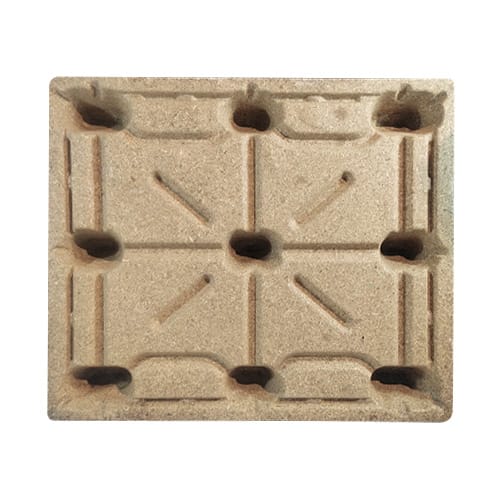
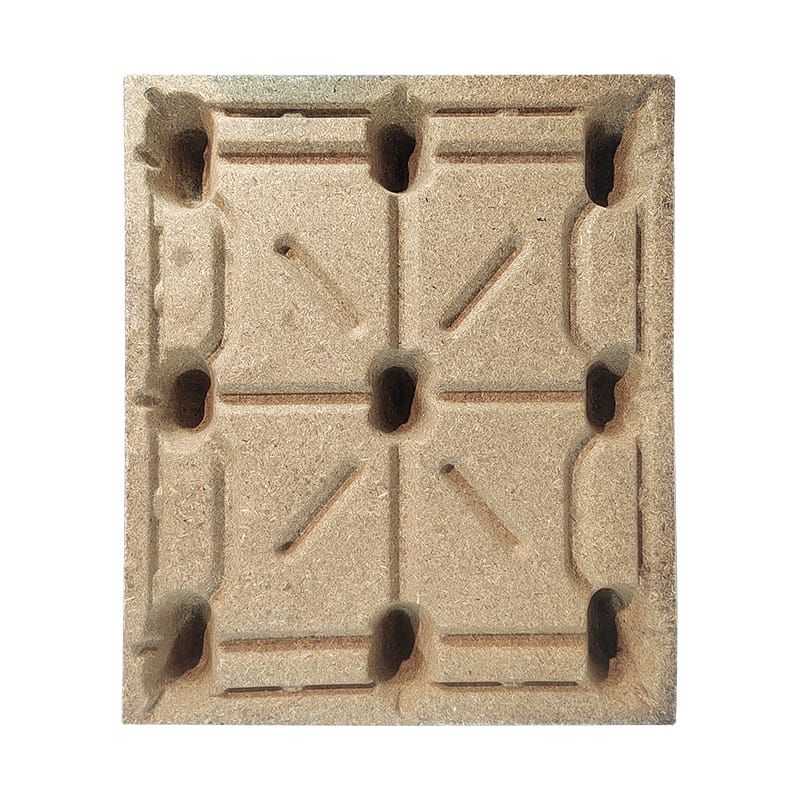
Xinyi specializes in compressed and molded pallet structures and presents product families including single-deck nine-legged pallets, double-deck square-grid pallets, three-runner designs, and flat pallet configurations.
Neither manufacturing method should be considered automatically superior for every load. The important question is how effectively the finished structure supports the cargo and interacts with the equipment used around it.
4. Look Beyond Material and Evaluate Structural Geometry
A common mistake in woodpallet selection is focusing heavily on material while paying less attention to geometry.
The pallet works as a structure. The deck receives the cargo, while ribs, runners, legs, blocks, grids, or other supporting elements transfer the load toward the floor or handling equipment. If these features are poorly positioned for the application, simply adding more material may not solve the problem.
For a product with broad deck contact, relatively even support may be appropriate. For machinery resting on several narrow points, the pallet may need stronger structural areas beneath those locations.
Fork-entry zones are another important part of the structure. These areas need to provide sufficient clearance for normal handling while retaining appropriate strength around the openings.
Molded pallet manufacturing can integrate structural features directly into the pallet geometry. Xinyi’s double-deck square-grid pallet range includes multiple molded dimensions intended for industrial logistics, manufacturing, warehousing, and related applications.
Good woodpallet design is therefore less about maximizing material and more about placing structural support where the application requires it.
5. Choose Woodpallet Dimensions Around the Product
Pallet dimensions directly influence product support and space utilization.
A woodpallet that is too small can allow cargo to extend beyond the deck. Overhanging cartons or products receive less direct support at their edges and may become more exposed during handling.
An oversized pallet creates the opposite problem. Large areas of unused deck surface occupy warehouse, staging, rack, and transportation space without supporting additional cargo.
For this reason, pallet dimensions should begin with the final packaged product rather than the bare item. Protective packaging, cartons, containers, wrapping, straps, and other materials can change the actual footprint.
Several industrial pallet footprints can be suitable depending on the product and handling system. The important point is not to identify one universally preferred dimension but to find the footprint that supports the cargo efficiently while remaining compatible with storage and material-handling equipment.
| Selection Condition | What to Evaluate | Woodpallet Requirement |
|---|---|---|
| Carton loads | Final packaging footprint | Adequate deck coverage with limited overhang |
| Machinery | Contact-point locations | Reinforcement beneath concentrated loads |
| Bulk materials | Load distribution | Stable and sufficiently supported deck |
| Forklift handling | Entry dimensions | Suitable opening height and width |
| Rack storage | Beam support | Structure matched to unsupported spans |
| Conveyor movement | Bottom contact areas | Predictable lower geometry |
| High-volume storage | Pallet footprint | Efficient use of available space |
| Empty pallet storage | Stack or nesting behavior | Practical empty-storage configuration |
This comparison shows why pallet dimensions should always be evaluated together with structural requirements.
6. Match Fork Entry to the Handling Equipment
A structurally strong woodpallet can still be inconvenient in daily use if the fork-entry design does not work well with warehouse equipment.
Entry height and width should provide sufficient operational clearance. If openings are too restrictive, operators may repeatedly contact structural areas with forklift blades. Over time, repeated impact can damage pallet edges, legs, runners, or other supporting features.
The required entry direction also depends on the workflow. Two-way entry can work effectively where pallet orientation remains controlled. Four-way access provides greater flexibility when loads need to be approached from different directions in staging, warehousing, or production areas.
Fork spacing should also be considered. Supporting elements underneath the pallet should not interfere with normal positioning of the equipment intended to lift it.
In high-frequency operations, handling compatibility is not merely a convenience. It affects how consistently the pallet can be moved throughout its working cycle.
Woodpallet Use in Warehouse Storage and Racking
Warehouse operations can expose the same woodpallet to several support conditions during one storage cycle.
Floor storage generally gives the pallet relatively broad support, while stacking places additional compression through the loaded units below. Rack storage may concentrate support on beams, changing how the structure carries the load.
For racking applications, external pallet dimensions are not enough. Beam spacing, pallet orientation, cargo location, and unsupported structural spans should also be considered.
A pallet can physically fit into a rack position yet still be poorly matched to the way the beams support it. This is especially relevant for heavy or concentrated loads.
Warehouse operators should therefore evaluate the pallet together with the rack configuration rather than treating them as independent components.
Woodpallet Design for Conveyors and Automation
Modern material-handling systems make dimensional consistency increasingly important.
Manual forklift operators can compensate for small positioning differences. Conveyors and automated systems generally rely on more predictable pallet geometry.
For conveyor use, the lower structure needs suitable contact with rollers, chains, or other conveying components. Pallet orientation may also affect how its runners, legs, or molded support areas interact with the equipment.
Automated storage can place additional emphasis on consistent length, width, height, fork openings, and structural positions. A pallet that varies noticeably between production batches may create less predictable equipment interaction.
This makes manufacturing consistency part of the functional specification.
The Xinyi guide to wooden pallets and molded solutions also discusses how product dimensions and application requirements can influence the choice between conventional and customized pallet configurations.
Why Woodpallet Manufacturing Consistency Matters
Industrial operations rarely use only one pallet. The same specification may be repeated across many loads, which makes production consistency especially important.
For traditional wooden structures, variables can include board dimensions, lumber condition, fastener placement, joints, and assembly accuracy. For molded structures, material preparation, distribution, forming conditions, and mold geometry influence the finished product.
Useful quality characteristics include consistent external dimensions, reliable fork openings, repeatable support geometry, stable deck condition, and predictable structural configuration.
This becomes particularly important when pallets interact with automated equipment, conveyors, standardized storage positions, or repetitive packaging patterns.
A good pallet specification should therefore describe not only what one finished pallet should look like, but which characteristics need to remain consistent throughout production.
Empty Woodpallet Storage Is Part of Warehouse Efficiency
Pallets occupy space even when they are not carrying products.
In facilities that handle large pallet volumes, empty units may accumulate around loading areas, production lines, staging zones, or warehouse storage locations.
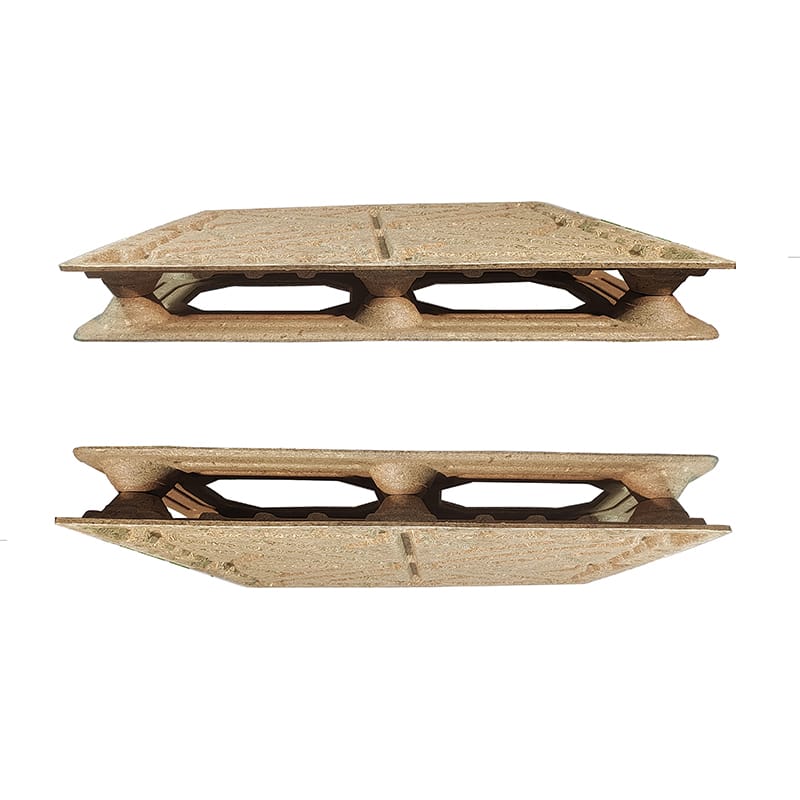
Traditional stackable designs usually remain directly above one another. Some molded pallet structures can be designed for nesting, allowing sections of one pallet to fit partially into another. This can reduce the vertical space occupied by empty units.
Pallet tare weight also deserves consideration because the pallet itself is handled every time the load moves. The objective should not automatically be to select the lightest structure, but to avoid unnecessary mass that does not contribute meaningfully to load support.
Structural efficiency is therefore a useful design principle: provide sufficient strength for the intended application while using material effectively.
When Does a Custom Woodpallet Make Sense?
Standard pallet configurations are practical when they fit the load and equipment well. Customization becomes more useful when a repeated mismatch affects handling or storage.
An unusual machine footprint may require additional deck area or reinforcement beneath specific contact locations. A repetitive carton arrangement may waste substantial deck space on an existing pallet. A conveyor may require particular bottom geometry, while automated equipment may depend on more controlled dimensions.
Custom woodpallet design can involve dimensions, deck geometry, structural ribs, support positions, fork openings, or lower structures.
The purpose should always be functional. Customization makes sense when it improves cargo support, material handling, equipment compatibility, or storage utilization rather than simply creating a different pallet.
Common Woodpallet Selection Mistakes
One of the most common mistakes is selecting a woodpallet only from a maximum load figure. Capacity needs to be associated with the actual support condition because floor storage, forklift movement, and racking affect the structure differently.
Another mistake is assuming a larger pallet is automatically more suitable for heavier goods. Additional deck area does not necessarily improve concentrated load support if the structural elements remain poorly positioned beneath the product.
Material comparisons can also become too general. Conventional timber and molded wood structures can differ substantially in geometry and manufacturing method, so the word “wood” alone provides limited information about performance.
Dimensions are another source of inefficiency. A familiar footprint can still create repeated product overhang or unnecessary unused deck area.
Finally, empty pallet handling should not be overlooked. Storage footprint, stacking, nesting, and pallet weight can all influence the efficiency of high-volume operations.
A Practical Woodpallet Selection Checklist
Before confirming a woodpallet specification, evaluate the complete application.
First, define the cargo. Record the maximum loaded weight, final packaged dimensions, major contact points, load distribution, and center of gravity where relevant.
Next, review handling conditions. Identify the forklift type, fork spacing, required entry directions, handling frequency, and whether conveyors or automated equipment will be involved.
Storage requirements should also be defined. Determine whether pallets will remain on floors, be stacked, enter rack storage, or move between several storage methods.
Finally, review pallet dimensions, structural geometry, material, manufacturing consistency, and empty-pallet handling. These factors should complement the load and equipment requirements rather than being selected independently.
A complete specification reduces the risk of choosing a pallet that works in one part of the operation but creates problems somewhere else.
Conclusion
A woodpallet is more than a wooden platform beneath a product. In an industrial logistics system, it becomes a structural interface between the cargo, handling equipment, warehouse, and storage environment.
Reliable selection begins with understanding the load. Total weight matters, but distribution and contact points can be equally important. Static, dynamic, and racking requirements should also be considered separately because pallet support changes throughout normal handling.
Material should then be evaluated together with structure. Conventional timber pallets and molded wood structures use different manufacturing methods, and their performance depends on dimensions, reinforcement, fork entry, support geometry, and production consistency.
The best woodpallet is not automatically the largest, heaviest, or most familiar design. It is the pallet whose dimensions and structure fit the actual cargo, equipment, storage method, and operating conditions while providing repeatable performance throughout the logistics process.
FAQ
What is a woodpallet used for?
A woodpallet supports packaged goods, machinery, containers, and other loads during storage and material handling. The correct design depends on cargo weight, load distribution, dimensions, forklift requirements, storage conditions, and whether the pallet will interact with racks or conveyors.
How do I choose the right woodpallet?
Start with the final cargo weight, footprint, contact points, and load distribution. Then review forklift entry, storage method, racks, conveyors, and handling frequency. Pallet material, dimensions, and structure should be selected after these operating requirements are understood.
How much weight can a woodpallet hold?
There is no single capacity for every woodpallet. Performance depends on material, structural geometry, dimensions, load distribution, and support conditions. Floor-supported static loading, forklift handling, and rack storage should therefore be evaluated separately.
What is the difference between a traditional and molded woodpallet?
Traditional wood pallets are typically assembled from separate boards and supporting components. Molded wood pallets use processed fibrous material formed into a defined structure, allowing deck areas, ribs, legs, and other supporting features to be integrated into the pallet geometry.
Can a woodpallet be customized for industrial products?
Yes. A woodpallet can be adapted when standard configurations do not fit the cargo or equipment effectively. Depending on the manufacturing method, dimensions, reinforcement, deck geometry, support locations, fork openings, and other structural features may be adjusted.