

In modern logistics, efficiency is no longer defined only by speed of transportation. It is defined by how intelligently goods are stored, handled, and moved across the supply chain. One of the most critical yet often underestimated elements in this system is the pallet.
If you are managing warehousing, export operations, or distribution networks, understanding the different types of pallets is essential. The wrong choice can lead to higher costs, inefficient space utilization, and even product damage during transit. The right choice, however, can significantly improve operational performance and long-term logistics efficiency.
This guide takes a practical, in-depth look at the most important pallet types used in global logistics today, how they perform in real-world environments, and how you can choose the best option for your business.
Table of Contents
Why Understanding Types of Pallets Matters in Logistics

Pallets are not just transportation platforms—they are structural components of your supply chain. Every decision about pallet selection affects:
- warehouse storage efficiency
- shipping container utilization
- handling speed
- product safety
- operational cost structure
According to logistics research published by Material Handling Industry (MHI), optimizing pallet systems can significantly improve warehouse throughput and reduce handling inefficiencies.
When you understand different pallet types, you are essentially optimizing the foundation of your entire logistics system.
Main Types of Pallets Used in Modern Supply Chains
There are several major types of pallets used globally. Each one serves different operational needs depending on material, structure, and application environment.
1. Wooden Pallets
Wooden pallets are one of the most widely used pallet types in traditional logistics systems.
Key characteristics:
- strong load-bearing capacity
- easy to repair
- widely available
- suitable for short- and medium-term use
However, wooden pallets are also affected by moisture, cracking, and inconsistent quality depending on raw material conditions.
2. Plastic Pallets
Plastic pallets are used in industries requiring hygiene and consistent dimensional stability.
Key characteristics:
- moisture resistant
- reusable over long cycles
- consistent dimensions
- suitable for closed-loop systems
However, they often require higher initial investment and may not be suitable for heavy industrial loads in all cases.
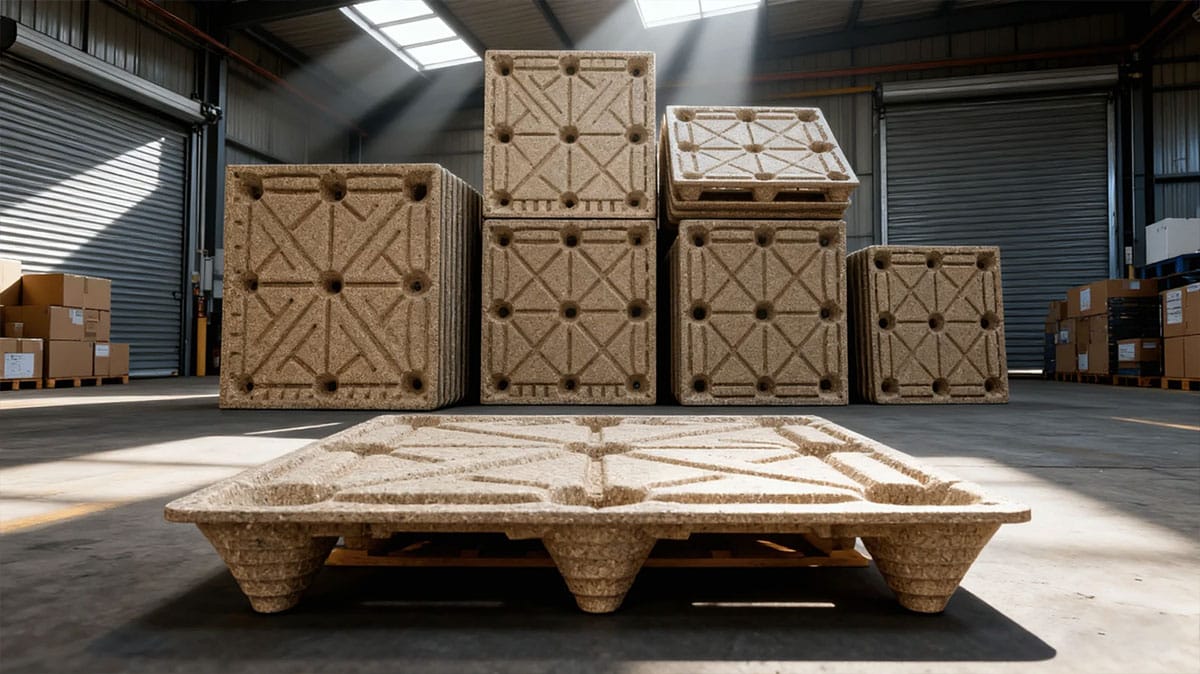
3. Molded Pallets (Engineered Fiber Pallets)
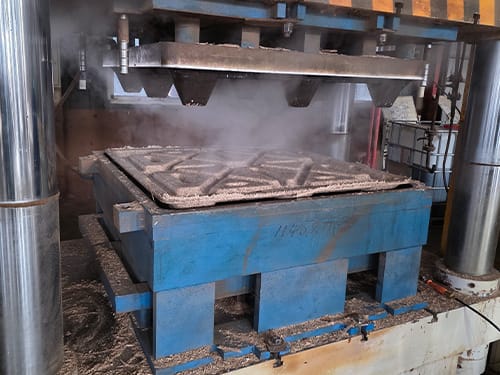
Molded pallets represent a modern evolution in pallet technology. They are produced using compressed natural fibers and agricultural residues through a high-pressure molding process.
These pallets are designed for:
- export logistics
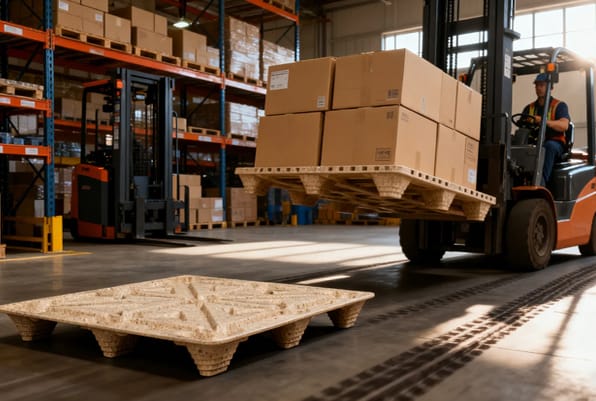
- warehouse automation
- sustainable supply chains
- lightweight transportation systems
You can explore a real example of this technology here:
Industrial Molded Pallet Solution
Comparison of Different Types of Pallets
To better understand how each pallet type performs, consider the following comparison:
| Feature | Wooden Pallets | Plastic Pallets | Molded Pallets |
|---|---|---|---|
| Strength | High | Medium | High (engineered) |
| Weight | Heavy | Medium | Lightweight |
| Moisture Resistance | Low | High | High |
| Consistency | Low | High | High |
| Sustainability | Medium | Low | High |
| Export Compliance | Requires treatment | Usually compliant | Naturally compliant |
| Cost Efficiency | Medium | Low | High (long-term) |
This comparison shows that no single pallet type is universally best. Instead, the right choice depends on your logistics strategy.
How Pallet Types Impact Warehouse Efficiency
Warehouse efficiency depends heavily on pallet consistency and structural stability.
Case example:
A distribution center handling mixed industrial goods previously used multiple pallet types across its operations. This caused:
- inconsistent stacking height
- forklift inefficiencies
- frequent rehandling of goods
- space wastage in storage racks
After standardizing pallet usage, the warehouse improved:
- storage density
- handling speed
- inventory accuracy
- safety conditions
This shows that pallet selection is not just a material decision—it is a system optimization decision.
Export Logistics and the Role of Pallet Types
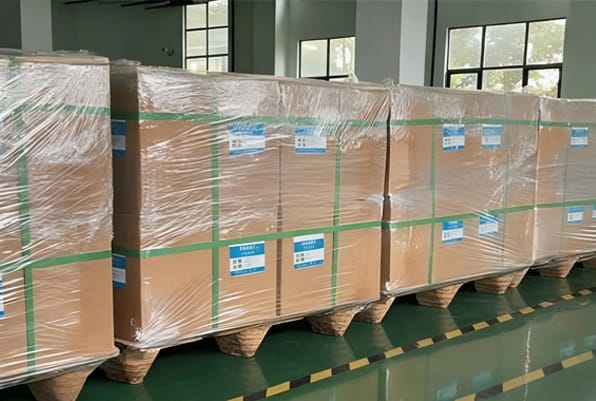
Export logistics introduces additional requirements beyond internal warehouse operations. Pallets used for international shipping must comply with phytosanitary and structural regulations.
According to international trade guidelines referenced by ISO packaging standards, packaging materials must ensure safety, stability, and compliance during cross-border transport.
Molded pallets are particularly suitable here because:
- they do not require fumigation
- they maintain structural consistency
- they reduce inspection delays
- they are lightweight for container optimization
Sustainability Trends Driving New Pallet Choices
Sustainability is becoming a major factor in supply chain decision-making. Many businesses are now moving toward pallet solutions that reduce environmental impact.
Molded pallets are produced using:
- recycled wood fibers
- agricultural byproducts
- renewable natural materials
According to EPA sustainability guidelines, using recycled materials in logistics packaging helps reduce landfill waste and carbon footprint.
This makes engineered molded pallets an increasingly attractive solution for modern supply chains.
Real-World Case: Switching Between Pallet Types
A logistics operator managing export shipments faced recurring issues with wooden pallets:
- moisture damage during transit
- inconsistent pallet sizes
- increased product damage rates
- inefficient container loading
Solution implemented:
They transitioned to molded pallet systems optimized for export logistics.
Results observed:
- improved load stability
- reduced damage during transport
- better container utilization
- simplified export handling process
This demonstrates how pallet type selection directly affects operational performance.
How to Choose the Right Type of Pallet
Selecting the right pallet type requires evaluating your logistics environment.
Step 1: Identify your application
- warehouse storage
- export shipping
- automated logistics
Step 2: Evaluate environmental conditions
- humidity exposure
- handling frequency
- transport distance
Step 3: Consider lifecycle cost
- initial cost
- maintenance cost
- replacement frequency
Step 4: Match pallet type to system design
- automation compatibility
- stacking requirements
- container utilization efficiency
Why Molded Pallets Are Becoming a Preferred Choice
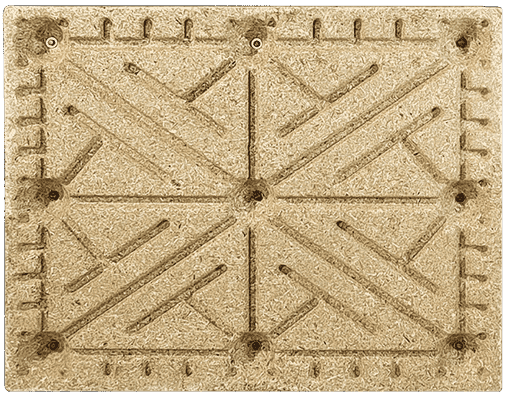
Molded pallets are gaining popularity because they solve multiple limitations of traditional pallet systems.
Key advantages:
- lightweight but strong structure
- consistent manufacturing quality
- high compatibility with export systems
- reduced environmental impact
- optimized for modern logistics automation
These advantages make them suitable for businesses aiming to upgrade their supply chain performance.
Final Insight
Understanding the different types of pallets is essential for building an efficient, scalable, and cost-effective logistics system. While traditional options like wooden and plastic pallets still serve important roles, modern molded pallet solutions are redefining how businesses approach storage, transport, and sustainability.
By choosing the right pallet type for each operational scenario, you can significantly improve supply chain performance and long-term business efficiency.
FAQ
What are the main types of pallets used in logistics?
The main types include wooden pallets, plastic pallets, and molded pallets made from engineered fiber materials.
Which pallet type is best for export?
Molded pallets are often preferred due to their compliance-ready structure and lightweight design.
Are wooden pallets still widely used?
Yes, but they are gradually being replaced in some sectors due to sustainability and efficiency concerns.
What is the most sustainable pallet type?
Molded pallets made from recycled fibers are generally considered the most sustainable option.
Can different pallet types be mixed in one warehouse?
Yes, but it may reduce operational efficiency due to handling inconsistencies.