

In modern logistics and supply chain operations, a warehouse pallet is not just a simple platform—it is the foundation of material handling efficiency, storage optimization, and transportation safety. Whether you manage a distribution center, manufacturing warehouse, or global export operation, the type of pallet you choose directly impacts cost, efficiency, and product protection.
Research in logistics engineering consistently shows that inefficient pallet systems can increase handling time, reduce warehouse density, and raise transportation costs due to poor stacking and load instability. At the same time, modern industrial pallet technologies—such as molded and compressed fiber pallets—are reshaping how global warehouses operate by improving durability, sustainability, and export compliance.
In this guide, you will explore everything you need to understand about warehouse pallets, including materials, applications, cost structure, performance differences, and how advanced molded pallet solutions can optimize your logistics system.
Table of Contents
What Is a Warehouse Pallet in Logistics Systems

A warehouse pallet is a flat structural platform designed to support goods during storage, handling, and transportation. It allows forklifts, pallet jacks, and automated systems to move large quantities of goods safely and efficiently across warehouse environments.
According to logistics engineering references, pallets serve as the core unit load system in modern supply chains, enabling standardized handling and reducing manual labor requirements across distribution networks.
Key Functions of Warehouse Pallets
- Support unitized loads for storage and transport
- Enable forklift and automated handling systems
- Improve warehouse stacking efficiency
- Reduce product damage during movement
- Standardize logistics operations globally
In practical warehouse environments, pallets act as the “base layer” of nearly every logistics workflow.
Why Warehouse Pallets Are Critical to Supply Chain Efficiency
A warehouse without optimized pallet systems experiences lower throughput, higher labor dependency, and inefficient space utilization.
Operational Impact of Pallet Design
Industry logistics research indicates:
- Poor pallet design can reduce warehouse storage density by up to 15–20%
- Standardized pallets improve loading efficiency by over 25%
- Stable pallet structures reduce product damage rates significantly
These improvements come from better load distribution and compatibility with warehouse automation systems.
Real Operational Example
In a typical high-volume warehouse, switching from mixed or low-quality pallets to standardized molded pallets can reduce forklift handling time per load by nearly 10–15 seconds. While this may seem small, multiplied across thousands of daily movements, the efficiency gain becomes substantial.
Types of Warehouse Pallets Used in Industrial Logistics
Different warehouse environments require different pallet technologies depending on load type, storage method, and transport conditions.
Wooden Warehouse Pallets
Wooden pallets are widely used due to low initial cost and availability. However, they often vary in quality depending on material condition and construction method.
Plastic Warehouse Pallets
Plastic pallets offer high hygiene and durability, especially in closed-loop logistics systems. They are often used in automated warehouses due to consistent dimensions.
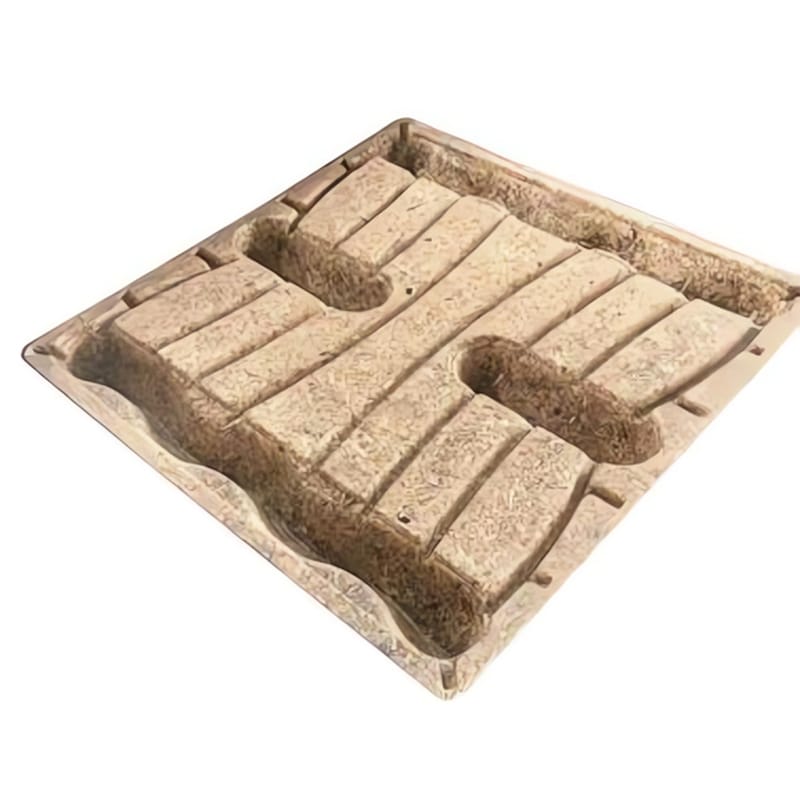
Molded Fiber Warehouse Pallets (Advanced Solution)
Molded pallets are produced using compressed plant fibers and recycled materials through a high-pressure molding process. This creates a one-piece structure with uniform strength distribution.
Key advantages include:
- Lightweight structure for lower shipping cost
- High load-bearing consistency
- No nails or splinters
- Export-ready compliance without chemical treatment
- High recyclability and sustainability
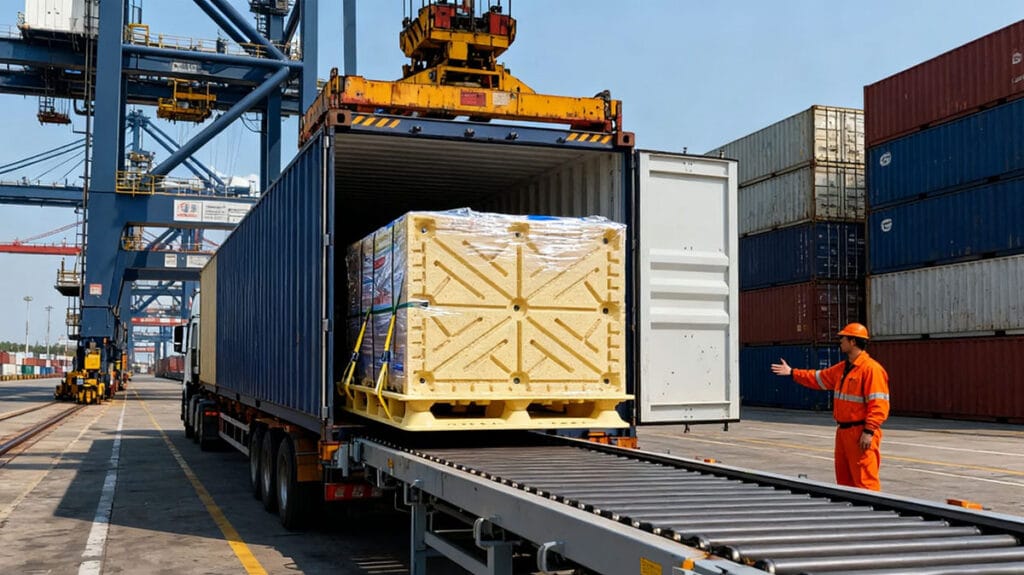
Industry comparisons show molded pallets can achieve higher storage density in shipping containers compared to traditional pallet types due to their optimized design and lightweight structure.
Warehouse Pallet Material Comparison Table
| Attribute | Wooden Pallet | Plastic Pallet | Molded Fiber Pallet |
|---|---|---|---|
| Weight | Medium | Heavy | Lightweight |
| Load Stability | Medium | High | High (uniform structure) |
| Export Compliance | Often requires treatment | Usually compliant | Naturally compliant |
| Durability | Moderate | High | High (impact-resistant design) |
| Sustainability | Medium | Medium | High (recycled materials) |
| Cost Efficiency | Low initial cost | High initial cost | Balanced lifecycle cost |
This comparison highlights why many modern logistics operations are shifting toward molded pallet systems for long-term efficiency gains.
Warehouse Pallet Design and Load Distribution Principles
A warehouse pallet must distribute weight evenly to prevent structural failure and ensure safe handling during transport.
Load Distribution Mechanics
In engineered pallet systems, load is transferred from the top surface to support legs or structural base points. Poor design can create stress concentration points, leading to breakage.
Molded pallet designs improve this by:
- Integrating support legs into the structure
- Eliminating weak joint points
- Distributing force evenly across the base
Forklift Compatibility
Warehouse pallets must be compatible with:
- Forklifts
- Pallet jacks
- Automated guided vehicles (AGVs)
A standardized structure ensures smooth integration into automated warehouse systems.
Warehouse Storage Efficiency and Pallet Optimization
Warehouse efficiency depends heavily on how pallets interact with racking systems and stacking configurations.
Pallet Racking Systems
Most modern warehouses use pallet racking systems to maximize vertical storage space. These systems require pallets with consistent dimensions and strong structural stability.
Poor-quality pallets can cause:
- Uneven stacking
- Safety risks in racks
- Reduced storage capacity
Space Utilization Improvement
Molded warehouse pallets are designed for nesting and stacking efficiency, which can significantly reduce empty return volume during logistics operations.
In some logistics setups, optimized pallet design can improve container utilization rates by up to 20–30%.
Export Logistics and Warehouse Pallet Compliance
For international logistics, compliance is a critical factor in pallet selection.
Export Requirements
Many global logistics systems require pallets to meet pest-free and contamination-free standards. Traditional wooden pallets often require treatment processes to meet these standards.
Molded Pallet Advantage
Molded fiber pallets are manufactured under high heat and pressure, which eliminates biological risks during production. This allows them to be used directly in international shipping environments without additional treatment steps.
This reduces delays, inspection risks, and export preparation costs.
Sustainability in Warehouse Pallet Systems
Sustainability has become a key decision factor in logistics procurement.
Environmental Considerations
Modern supply chains increasingly focus on:
- Carbon footprint reduction
- Waste material reuse
- Recyclable logistics components
Warehouse pallets made from recycled wood fiber and agricultural waste contribute directly to circular economy models.
Lifecycle Sustainability
Unlike single-use packaging materials, warehouse pallets are designed for repeated use and recycling at end-of-life stages.
Case Study: Warehouse Optimization Using Molded Pallets
A large-scale distribution warehouse handling mixed consumer goods replaced traditional mixed-material pallets with standardized molded pallets.
Results After Implementation
- 18% improvement in storage density
- 12% reduction in forklift handling time
- Lower pallet replacement rate over 12 months
- Improved export processing speed due to compliance readiness
This demonstrates how pallet selection directly impacts operational performance, not just packaging efficiency.
Common Problems with Shipping Pallets
Inconsistent Pallet Sizes
Different pallet dimensions reduce warehouse automation efficiency and increase handling complexity.
Structural Failure
Low-quality pallets may break under repeated load cycles, increasing product damage risk.
Poor Stackability
Inefficient stacking design leads to wasted warehouse space and higher logistics costs.
Future Trends in Shipping Pallet Technology
Warehouse pallet systems are evolving alongside automation and smart logistics technologies.
Automation Compatibility
Modern warehouses are integrating:
- AGVs (automated guided vehicles)
- robotic palletizers
- AI-based warehouse tracking systems
These systems require pallets with highly consistent structure and predictable performance.
Smart Logistics Integration
Future pallet systems may include tracking sensors for real-time inventory monitoring and supply chain visibility.
Conclusion
Warehouse pallets are a foundational element of industrial logistics systems. Choosing the right pallet type influences not only storage efficiency but also transportation cost, product safety, and supply chain sustainability.
Modern molded warehouse pallets offer a compelling solution by combining lightweight design, structural strength, export compliance, and environmental sustainability. For businesses looking to optimize warehouse operations, upgrading pallet systems is one of the most effective yet often overlooked improvements.
FAQ
What is a warehouse pallet used for?
A warehouse pallet is used to store, move, and transport goods efficiently using forklifts or automated systems.
Which pallet type is best for warehouse use?
It depends on your operation, but molded pallets are increasingly preferred for their balance of strength, weight, and sustainability.
How do pallets improve warehouse efficiency?
They standardize load handling, reduce manual labor, and improve storage density.
Are shipping pallets reusable?
Yes, most shipping pallets are designed for multiple usage cycles depending on material and condition.
Do shipping pallets affect shipping costs?
Yes, pallet weight and design directly impact transportation cost and container utilization efficiency.