

In modern logistics and global supply chain operations, pallet selection has a direct impact on transportation cost, warehouse efficiency, product safety, and sustainability performance. Many companies underestimate this decision and focus only on unit price, but experienced logistics managers understand that the right pallet system can significantly improve operational efficiency and reduce long-term costs.
Among the most widely used industrial pallet solutions are compressed wood pallets and plastic pallets. Each has its strengths, limitations, and ideal use cases. If you are optimizing your logistics system or planning large-scale shipping operations, understanding the real differences between these two pallet types is essential.
This guide provides a detailed, practical comparison based on material structure, performance behavior, cost efficiency, sustainability impact, and real logistics application scenarios.
Table of Contents
What Are Compressed Wood Pallets?
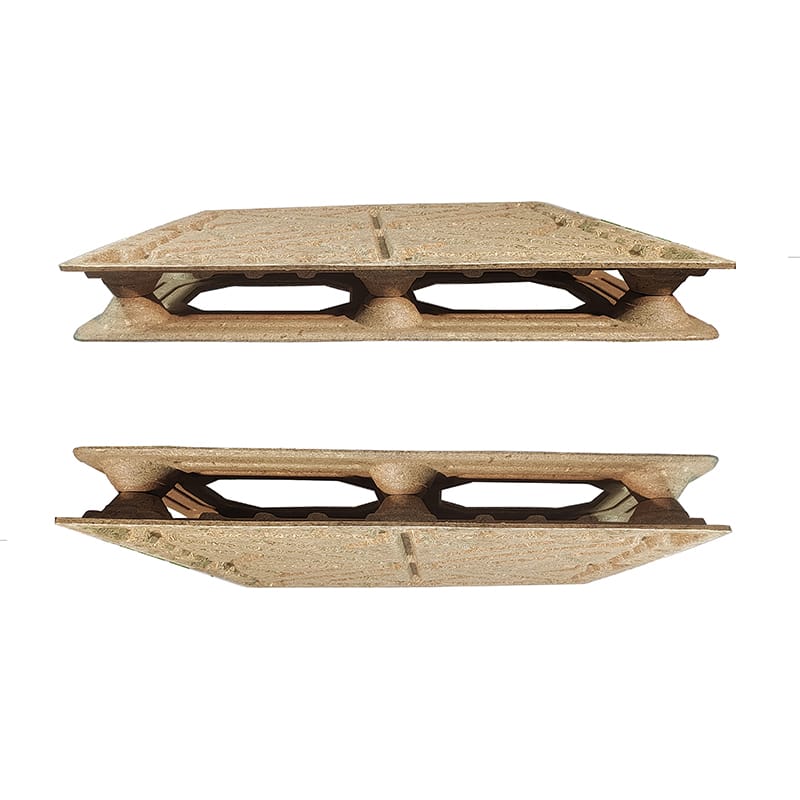
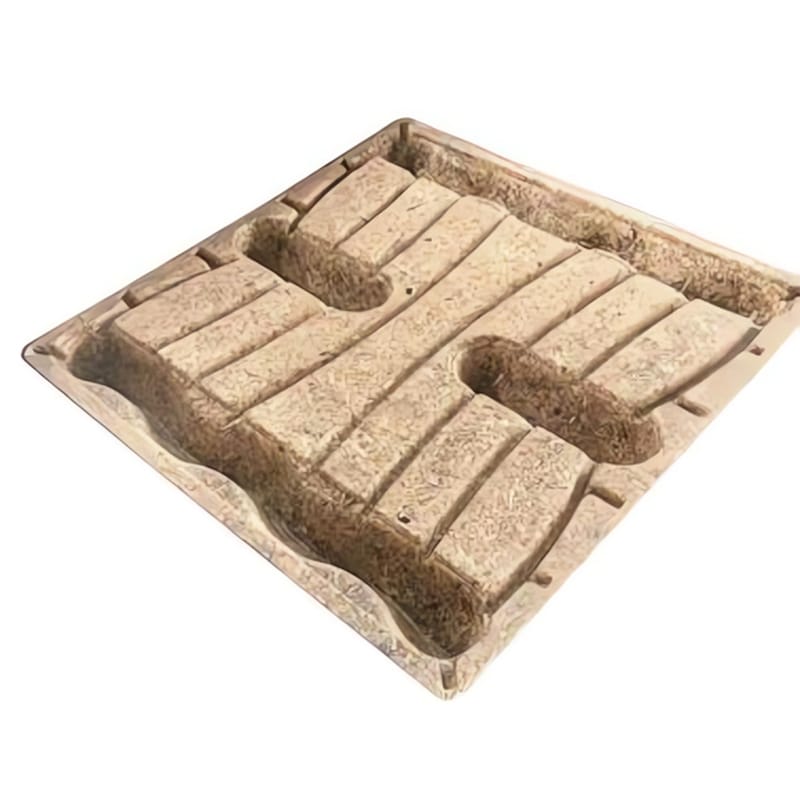
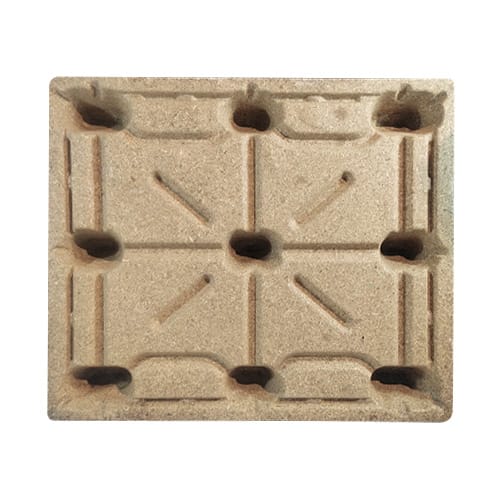
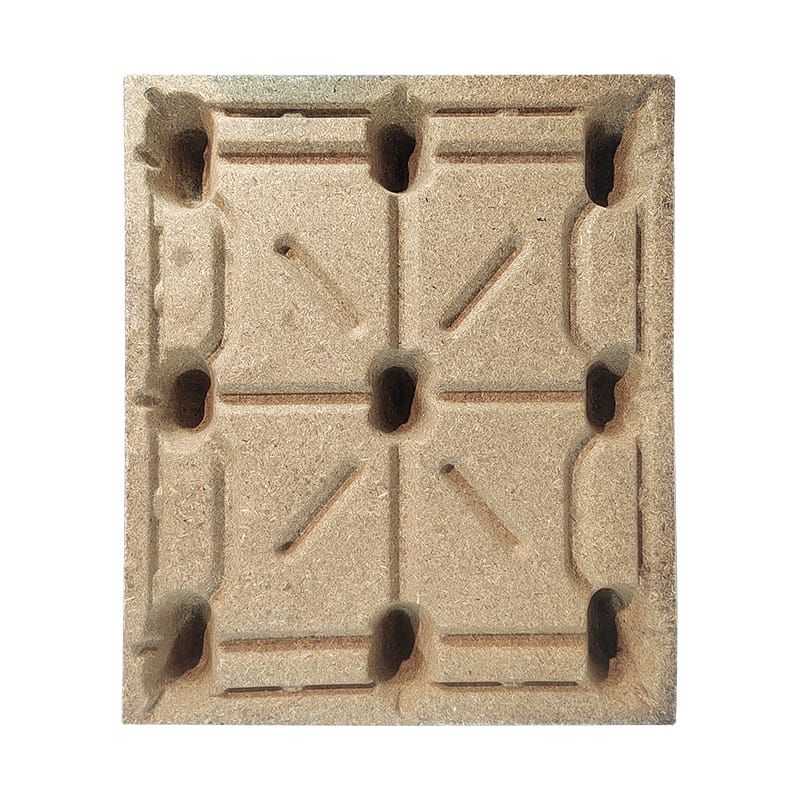
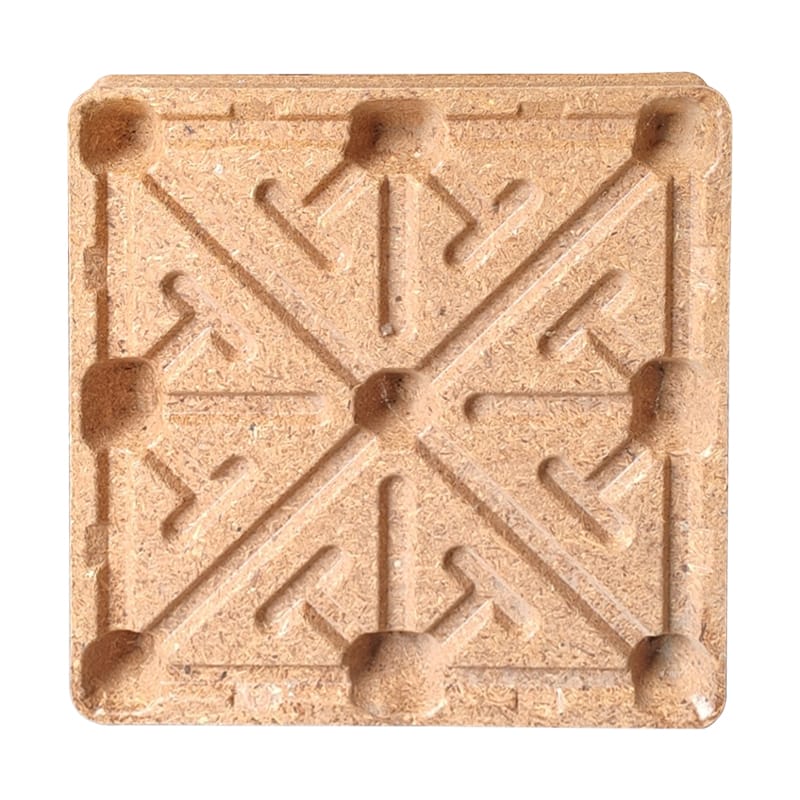
Compressed wood pallets, also known as molded fiber pallets or press wood pallets, are manufactured using recycled wood fibers, agricultural residues, and natural plant-based materials. These raw materials are processed under high temperature and high pressure in a closed mold system, forming a single integrated structural unit.
Unlike traditional wooden pallets assembled with nails or fasteners, compressed wood pallets are a one-piece molded structure. This eliminates structural weak points caused by joints and improves load distribution performance.
Key structural characteristics:
- One-piece integrated molding structure
- No nails, screws, or loose components
- High-density fiber compression technology
- Lightweight but strong load distribution
- Smooth surface design for handling efficiency
Because of these features, compressed wood pallets are widely used in export logistics, container shipping, warehouse stacking systems, and automated handling environments.
What Are Plastic Pallets?
Plastic pallets are industrial pallets manufactured using polymer materials such as HDPE (High-Density Polyethylene) or PP (Polypropylene). They are typically produced through injection molding or structural foam molding.
Plastic pallets are known for their durability, chemical resistance, and long service life, making them suitable for closed-loop logistics systems where pallets are continuously reused.
Key characteristics:
- High resistance to moisture and corrosion
- Long lifecycle under controlled environments
- Stable and uniform dimensions
- Suitable for hygiene-sensitive industries
- Higher production energy and cost input
Plastic pallets are commonly used in industries requiring clean, controlled, or reusable logistics environments.
Compressed Wood Pallets vs Plastic Pallets: Full Comparison Overview
To understand the differences clearly, it is important to evaluate both pallet types across multiple operational factors rather than focusing on a single attribute like price.
| Feature | Compressed Wood Pallets | Plastic Pallets |
|---|---|---|
| Weight | Lightweight | Heavier |
| Initial Cost | Lower | Higher |
| Lifecycle Cost | Low to medium | Medium to high |
| Structural Design | One-piece molded | Rigid molded structure |
| Load Distribution | Excellent | Good |
| Export Compliance | Naturally compliant | Generally compliant |
| Moisture Resistance | Moderate | High |
| Repairability | Not repairable | Limited repair options |
| Environmental Impact | Recycled materials | Energy-intensive production |
| Storage Efficiency | High (stackable) | Medium |
This comparison shows that neither pallet type is universally superior. The best choice depends on your logistics structure, shipping frequency, and cost optimization goals.
Cost Efficiency: Understanding True Logistics Economics
When evaluating pallet systems, many companies only compare purchase price. However, logistics experts often use Total Cost of Ownership (TCO) to evaluate real performance.
Cost components of compressed wood pallets:
- Lower initial procurement cost
- Reduced shipping weight cost
- Lower export preparation cost
- No chemical treatment requirement
- Efficient storage and stacking
Cost components of plastic pallets:
- High initial investment
- Long service life reduces replacement frequency
- Higher freight cost due to weight
- Maintenance cost is low but capital cost is high
Logistics insight:
In many export-heavy supply chains, compressed wood pallets can reduce overall logistics cost by improving container utilization and reducing shipment weight, especially when scaling to large shipment volumes.
Structural Strength and Load Performance
Pallet strength is not only about material hardness but also about how load is distributed across the structure.
Compressed wood pallet performance
Compressed wood pallets use fiber compression technology, which creates a uniform internal density. This allows weight to be distributed evenly across the entire pallet surface.
This structure reduces:
- localized stress points
- cracking under uneven load
- deformation during stacking
They perform particularly well in:
- container shipping
- high-density warehouse stacking
- export logistics environments
Plastic pallet performance
Plastic pallets offer excellent rigidity and resistance to environmental damage. However, in high-impact or uneven load conditions, they may crack depending on structural design quality.
Plastic pallets perform best in:
- closed-loop supply chains
- controlled warehouse environments
- automated production systems
Environmental and Sustainability Impact
Sustainability is now a major factor in global logistics procurement decisions.
Compressed wood pallets and circular economy
Compressed wood pallets are produced using:
- recycled wood fibers
- agricultural waste materials
- plant-based residues
This reduces reliance on virgin materials and supports circular economy principles.
Environmental benefits include:
- reduced landfill waste
- lower carbon footprint
- renewable material sourcing
Plastic pallets environmental impact
Plastic pallets are recyclable, but their production involves:
- fossil fuel-based raw materials
- higher energy consumption
- more complex recycling processes
While they offer long service life, their production phase environmental impact is higher.
Export Logistics and Compliance Efficiency
Export regulations often require pallets to meet pest-free and contamination-free standards.
Compressed wood pallets advantage
Due to high-temperature compression molding, compressed wood pallets are produced in a process that eliminates biological contaminants at the manufacturing stage.
This reduces or eliminates the need for:
- fumigation
- heat treatment certification processes
- export delays due to inspection
Plastic pallets advantage
Plastic pallets naturally meet export requirements due to their material composition, but they may not always be cost-efficient for high-volume export operations due to weight and pricing factors.
Real-World Logistics Application Example
A mid-sized global distribution center handling industrial goods evaluated both pallet systems over a 6-month operational cycle.
Results after switching part of operations to compressed wood pallets:
- 14% reduction in outbound shipping weight cost
- 18% improvement in container loading efficiency
- Faster export clearance due to simplified compliance
- Reduced pallet procurement expenses by shifting from high-cost plastic usage
Plastic pallets remained in internal closed-loop operations where durability and reuse cycles were prioritized.
Storage Efficiency and Warehouse Optimization
Warehouse efficiency is heavily influenced by pallet design and stacking behavior.
Compressed wood pallets
- High stackability
- Nesting-friendly design
- Lightweight handling
- Improved space utilization during return logistics
Plastic pallets
- Stable stacking but less flexible nesting
- Heavier handling during manual operations
- Requires more storage space in reverse logistics
Which Pallet Type Should You Choose?
Your choice should depend on your logistics model:
Choose compressed wood pallets if:
- You focus on export logistics
- You want to reduce shipping cost
- Lightweight handling is important
- Sustainability is a priority
- You need cost-efficient scaling
Choose plastic pallets if:
- You operate closed-loop systems
- Hygiene is critical
- You require long lifecycle reuse
- You prioritize durability over cost
Conclusion
Compressed wood pallets and plastic pallets each play important roles in modern logistics systems. Plastic pallets excel in durability and closed-loop reuse systems, while compressed wood pallets provide a powerful combination of cost efficiency, lightweight structure, export compliance, and sustainability advantages.
For businesses focused on reducing logistics costs, improving shipping efficiency, and scaling export operations, compressed wood pallets represent a highly competitive and modern alternative in global supply chain systems.
FAQ
Are compressed wood pallets strong enough for industrial use?
Yes, they are designed using high-pressure compression technology, providing strong load-bearing performance suitable for industrial logistics.
Do plastic pallets last longer than compressed wood pallets?
Plastic pallets typically have a longer lifecycle in controlled environments, but compressed wood pallets offer better cost efficiency in export logistics.
Are compressed wood pallets reusable?
Yes, they can be reused multiple times depending on handling conditions and load requirements.
Do compressed wood pallets require fumigation?
No, they are produced under high temperature and pressure, which eliminates pests during manufacturing.
Which pallet is more cost-effective for shipping?
Compressed wood pallets are generally more cost-effective for export and large-scale shipping due to lower weight and procurement costs.