
Table of Contents
Introduction
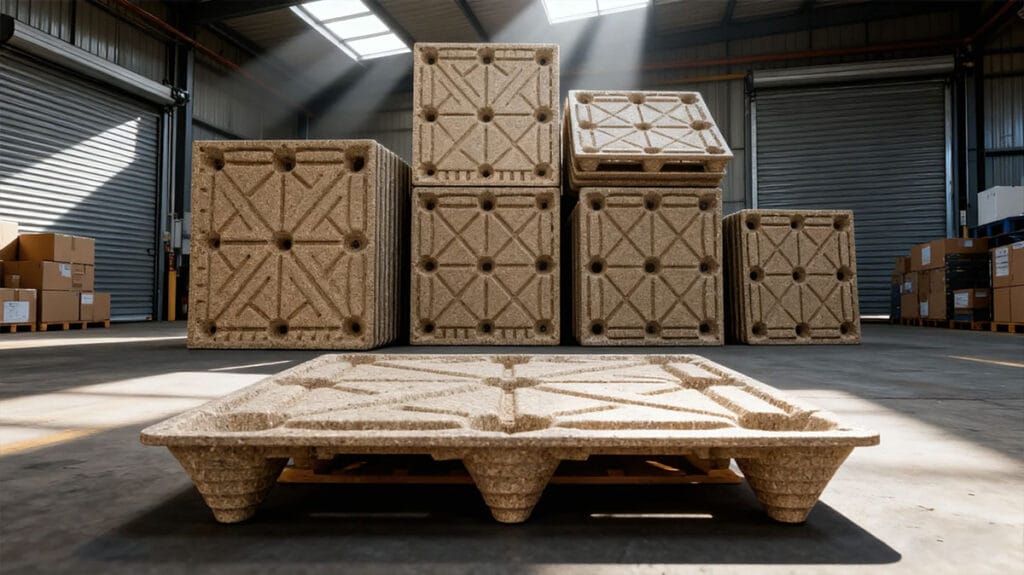
Molded pallets are increasingly used in modern logistics where businesses need consistent dimensions, efficient handling, practical storage, and reliable support for transported goods. Unlike conventional pallets assembled from separate timber boards and blocks, molded designs are formed under controlled pressure and temperature, allowing the pallet structure to be shaped for specific handling and load requirements.
Their manufacturing method also makes it possible to use processed plant-based materials while maintaining a repeatable pallet form. For warehouses, manufacturing facilities, export operations, and distribution networks, this combination of structural consistency and practical handling makes molded pallets suitable for a wide range of logistics environments.
Understanding how these pallets are manufactured, how different structures perform, and where they are most effective can help logistics teams select a pallet configuration that better matches their actual operating conditions.
What Are Molded Pallets?
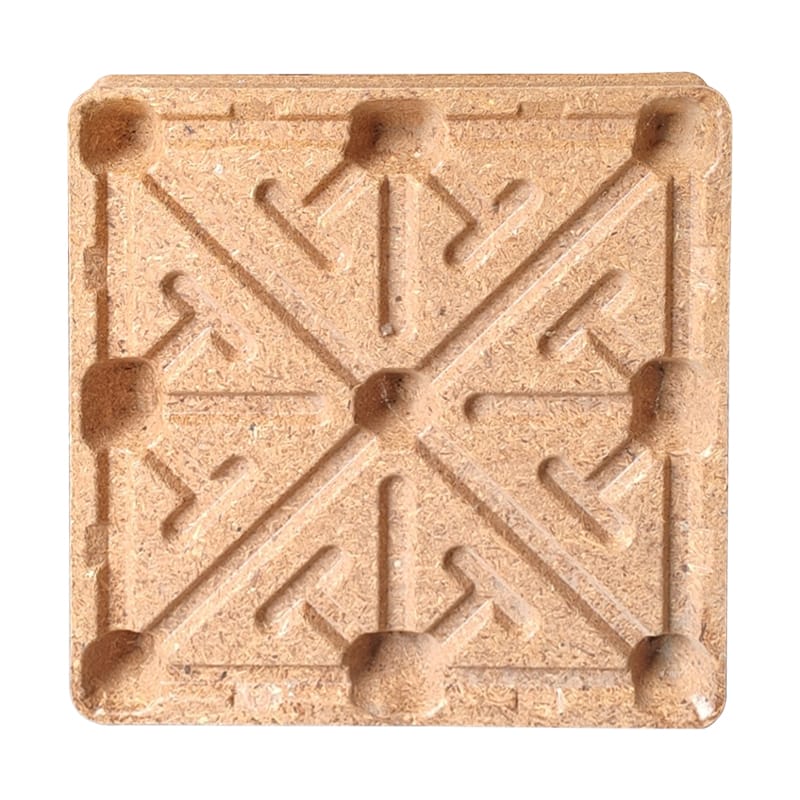
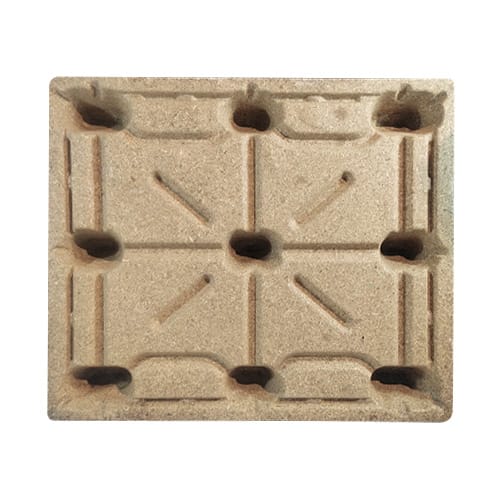
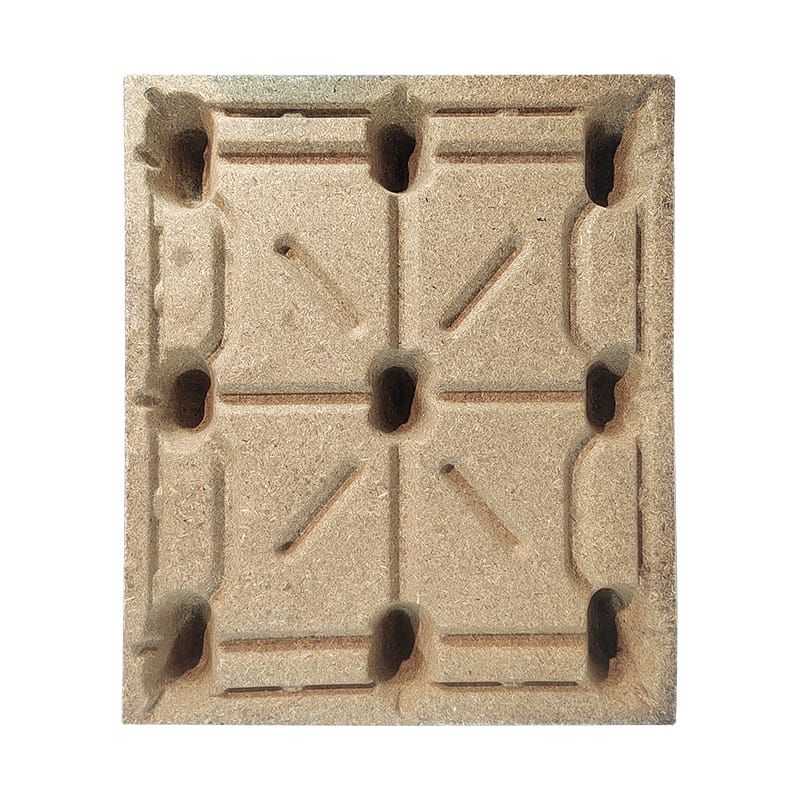
Molded pallets are load-support platforms manufactured by shaping processed fiber-based materials in a mold under heat and pressure. Instead of relying primarily on boards joined with nails, the pallet body or key structural sections are formed into predetermined shapes during manufacturing.
This process allows dimensions, support points, fork-entry areas, deck profiles, and reinforcing structures to be controlled more consistently. Depending on the design, a molded pallet may use a single-deck structure, reinforced runners, integrated supports, or other configurations developed for particular cargo and handling conditions.
Xinyi’s current molded pallet product range includes different dimensions and structural designs for logistics, warehousing, manufacturing, export handling, and other industrial applications.
How Are Molded Pallets Manufactured?
The manufacturing process generally begins with prepared plant-fiber materials combined with suitable bonding components. The material is distributed within a mold before heat and pressure are applied to create the required pallet form.
Because the main structure is shaped inside a mold, manufacturers can control important features such as deck thickness, supporting feet, runner position, fork-entry geometry, and overall dimensions. This creates a more repeatable structure than a pallet assembled from naturally varying pieces of raw timber.
The molding process also enables manufacturers to create integrated designs that reduce the number of separate structural components. For logistics operations involving repeated forklift handling, stacking, storage, and transportation, this structural consistency can simplify pallet selection and handling planning.
Molded Pallets vs Conventional Timber Pallets
The difference between molded and conventional timber pallets is not simply the type of wood material used. Their structural concepts are different.
| Feature | Molded Pallets | Conventional Timber Pallets |
|---|---|---|
| Construction | Molded under heat and pressure | Boards and blocks mechanically assembled |
| Structural consistency | Controlled through the mold | Influenced by individual timber components |
| Surface profile | Designed during molding | Determined by board arrangement |
| Storage design | Can incorporate nesting or stacking features | Depends on conventional construction |
| Material utilization | Can use processed plant fibers | Primarily uses sawn timber |
| Custom structure | Mold-dependent design options | Adjusted through board and block dimensions |
Neither structure is automatically suitable for every application. Pallet selection should instead consider the cargo, static and dynamic loads, handling equipment, warehouse environment, transportation route, and storage method.
Why Structural Design Matters
A pallet experiences several different forces during normal logistics operations. It must support goods while stationary, withstand movement during forklift handling, remain stable during transportation, and interact correctly with warehouse equipment.
For this reason, the visible dimensions of a pallet tell only part of the story. Support geometry, deck structure, runner configuration, fork-entry areas, material distribution, and reinforcement all affect practical performance.
For example, a pallet carrying evenly distributed cartons may experience different stresses from one supporting concentrated industrial equipment. A pallet used primarily on a warehouse floor also faces different structural conditions from one repeatedly transferred between forklifts, loading areas, trucks, and storage locations.
A well-selected molded design therefore starts with the operating environment rather than simply selecting a familiar pallet dimension.
Common Molded Pallet Structures
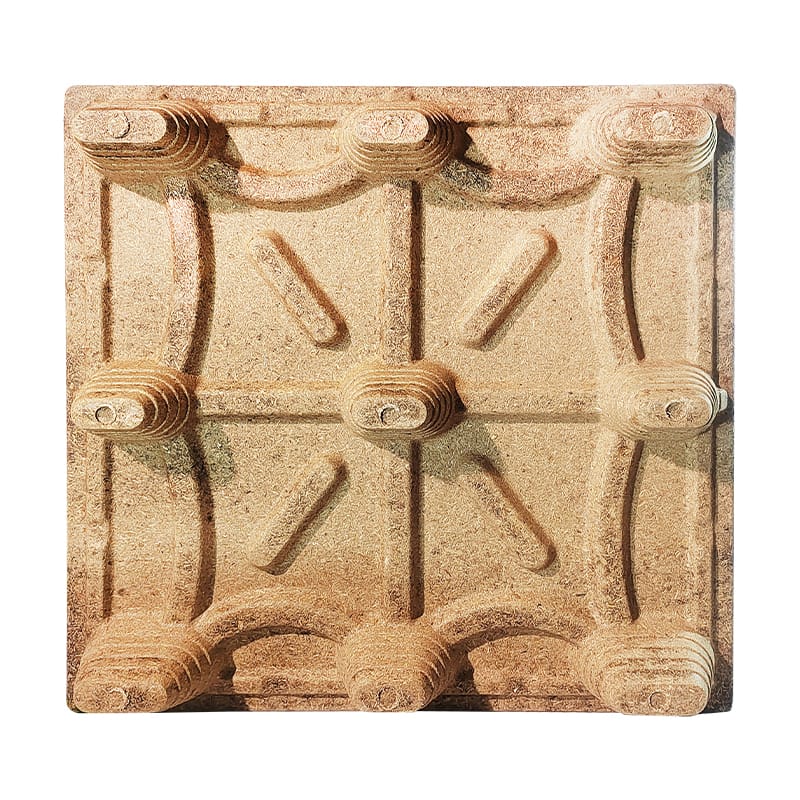
Different structural configurations allow molded pallets to address different handling requirements.
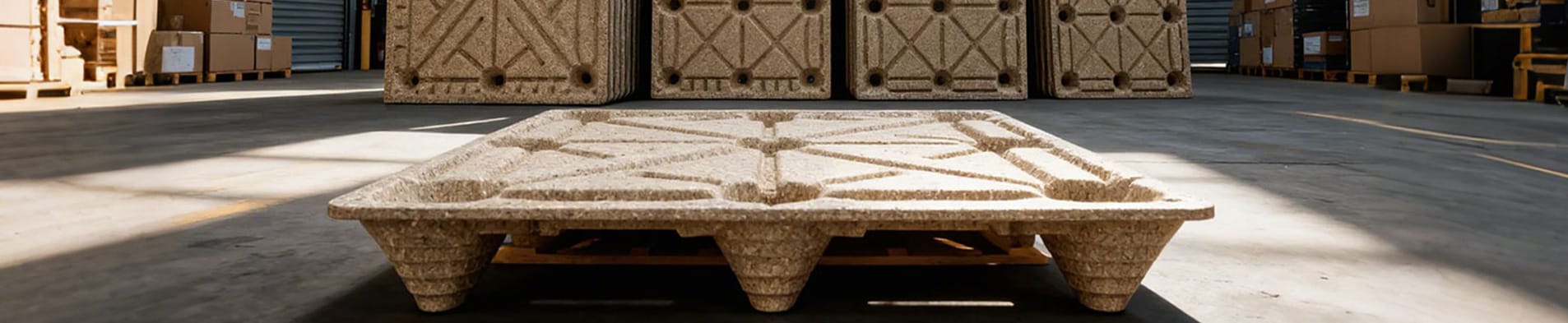
Single-deck designs can provide a relatively straightforward platform for warehouse movement and general cargo handling. Reinforced versions may incorporate additional support beneath the deck when greater structural stability is required. Integrated base structures can also improve consistency between the upper deck and supporting sections.
For applications where additional support geometry is important, products such as the Strip-Reinforced Molded Pallet use molded plant-fiber construction together with reinforcing elements designed for industrial transportation and storage applications.
The correct structure should be selected according to the actual load pattern and handling process rather than assuming that one pallet form will suit every cargo type.
Storage Efficiency and Pallet Design
Warehouse efficiency depends not only on how much cargo can be placed on a pallet but also on what happens to empty pallets between transportation cycles.
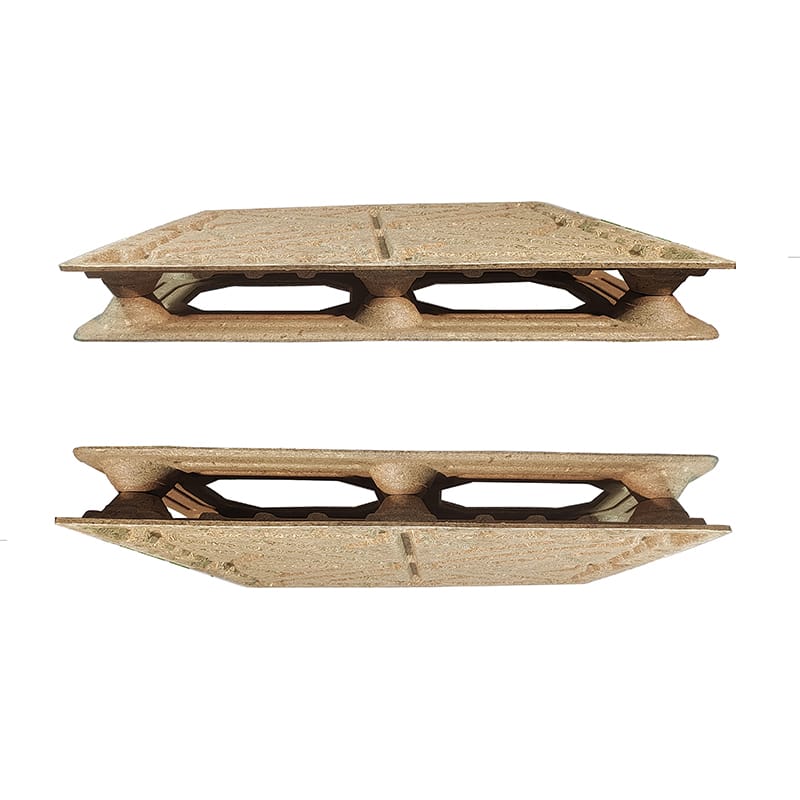
Certain molded pallet geometries can be designed so that empty units fit together more efficiently. This can reduce the storage footprint required when pallets are not carrying goods and may also simplify empty-pallet handling within warehouses and distribution facilities.
However, nesting and stacking should not be treated as interchangeable concepts. A nestable pallet is designed so that parts of one pallet fit into another, while a stackable pallet is arranged so multiple pallets can be placed securely on top of each other.
The appropriate configuration depends on storage space, handling frequency, pallet return processes, and the equipment used within the facility.
Forklift and Material-Handling Compatibility
Pallets form part of a larger material-handling system. Their dimensions and fork-entry design need to match forklifts, pallet trucks, loading docks, storage areas, and other equipment used throughout the logistics process.
Fork openings should provide adequate access while maintaining sufficient support around the pallet structure. Operators also need to consider entry direction, fork spacing, ground clearance, and how the load is positioned during lifting.
In automated or semi-automated environments, dimensional consistency becomes even more important. Conveyor systems, positioning equipment, and repeated transfer points typically work more effectively when pallet geometry remains predictable.
Before selecting molded pallets for a new application, logistics teams should therefore review the entire handling route rather than evaluating the pallet independently.
Molded Pallets for Export Logistics
Export logistics introduces additional considerations because pallets may pass through several warehouses, terminals, transportation systems, and regulatory environments before reaching their destination.
Wood packaging requirements are particularly important when raw wood is involved. The International Plant Protection Convention explains that ISPM 15 regulates wood packaging material made from raw wood to reduce the international movement of quarantine pests. The standard also distinguishes certain wood packaging manufactured from processed wood materials.
Companies preparing export loads should review the applicable requirements for the destination and confirm how the specific pallet material and manufacturing process are classified. For a broader explanation of international wood-packaging requirements, the ISPM 15 standard outlines how wood packaging materials used in cross-border trade are treated and identifies processed materials that may fall outside conventional treatment requirements.
This regulatory consideration is one reason pallet material should be evaluated early in export packaging planning rather than immediately before shipment.
Applications for Molded Pallets
Molded pallets can support many types of industrial logistics when their dimensions and structures are correctly matched to the application.
In manufacturing facilities, they can be used to move components, packaged materials, or finished goods between production and storage areas. Warehouses may use them for floor storage, internal turnover, or distribution preparation. Export-oriented companies may select molded designs where processed materials, consistent dimensions, and transport efficiency are important considerations.
Other applications can include cartons, packaged beverages, sheet materials, industrial containers, bulk bags, and other goods that require a stable handling platform.
The key is to evaluate the complete load rather than selecting a pallet based only on industry name. Weight distribution, packaging shape, center of gravity, handling frequency, and storage conditions all influence which pallet structure is appropriate.
How to Select the Right Molded Pallet
A practical selection process begins with the cargo.
First, determine the dimensions and total loaded weight, then consider whether that weight is evenly distributed or concentrated in specific areas. Next, review the required static and dynamic handling conditions, including how frequently forklifts or pallet trucks will move the load.
Warehouse conditions should also be considered. Storage layout, floor conditions, stacking practices, humidity exposure, conveyor compatibility, and empty-pallet storage can all affect the appropriate configuration.
For international logistics, destination requirements and packaging regulations should be reviewed as part of the same evaluation.
Finally, pallet dimensions should be coordinated with the surrounding logistics system. Selecting a pallet that fits the cargo but conflicts with handling equipment or warehouse layout can create unnecessary operational problems.
Molded Pallets and Sustainable Material Use
Sustainability in pallet design involves more than using a material described as environmentally friendly. A useful evaluation considers material sourcing, manufacturing efficiency, transport efficiency, service life, storage requirements, and what happens to the pallet at the end of its useful life.
Molded manufacturing can make use of processed plant-based materials that might otherwise have limited structural applications. Efficient designs may also reduce empty-pallet storage requirements, which can improve warehouse and transportation utilization.
However, sustainability claims should always be evaluated using the actual material composition, manufacturing process, operating conditions, and recycling pathway of the specific pallet rather than relying only on general product labels.
Common Mistakes When Selecting Molded Pallets
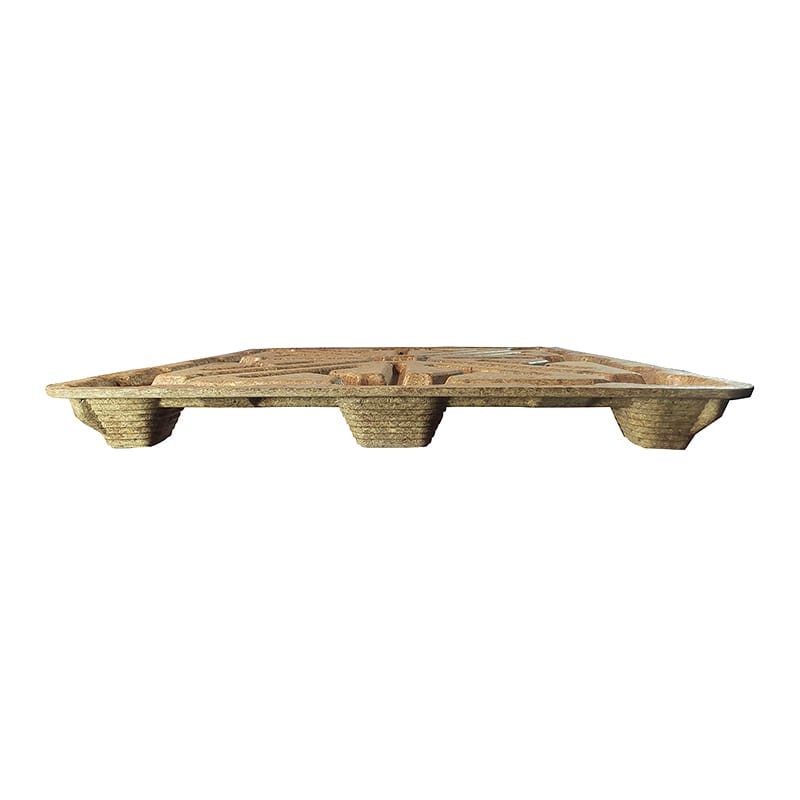
One common mistake is selecting a pallet based only on its external dimensions. Two pallets with similar length and width can perform very differently if their deck, supports, reinforcement, or fork-entry structures differ.
Another issue is relying only on a maximum load figure without considering how the cargo is distributed. Concentrated loads can create very different stresses from uniformly distributed goods.
Companies may also overlook compatibility with handling equipment. Forklift entry, pallet truck access, warehouse clearances, and conveyor interfaces should be checked before introducing a new pallet configuration into an existing logistics system.
Finally, export requirements should not be assumed. Destination rules and the actual pallet material should always be reviewed before international use.
Conclusion
Molded pallets provide a practical alternative for logistics operations that require consistent dimensions, controlled structural design, efficient handling, and compatibility with a wide range of industrial applications.
Their performance depends on more than the molding process itself. Cargo characteristics, structural configuration, fork-entry design, storage environment, handling equipment, transportation conditions, and export requirements all influence whether a particular pallet is suitable.
For manufacturers, warehouses, and logistics operators, the most effective approach is to evaluate the complete material-handling process and then select a molded pallet structure that matches those requirements.
FAQ
What materials are molded pallets made from?
Molded pallets can be produced from processed plant-fiber or wood-based materials combined with suitable binding components. Exact material composition varies according to the manufacturing process and pallet design.
Are molded pallets suitable for forklifts?
Yes, provided the pallet structure and fork-entry dimensions are compatible with the forklift or pallet truck being used. Equipment compatibility should always be checked before regular operation.
Can molded pallets be used for international shipping?
They can be used in international logistics, but exporters should verify the pallet material, manufacturing process, destination requirements, and applicable phytosanitary regulations before shipment.
Are molded pallets nestable?
Some molded pallet designs are created with nesting features that allow empty pallets to fit together more efficiently. Nestability depends on the specific pallet geometry.
How should a molded pallet be selected?
Selection should consider cargo dimensions, load distribution, handling frequency, static and dynamic conditions, storage method, forklift compatibility, transportation route, and relevant export requirements.
Need Help Selecting the Right Molded Pallet?
Different cargo and handling environments require different pallet structures. Explore Xinyi’s molded pallet product range to compare available dimensions and structural configurations for logistics, warehousing, manufacturing, and export applications.