

Choosing the right pallets for your business is not just a matter of purchasing a basic logistics tool. It is a strategic decision that directly affects transportation costs, warehouse efficiency, product safety, and long-term operational performance. Many companies underestimate how much influence pallet have on their supply chain, often selecting them based only on price or availability. However, businesses that take a more structured approach to pallet selection often achieve measurable improvements in efficiency and cost reduction.
In this guide, you will learn how to evaluate pallet options from a practical, business-focused perspective. You will understand how materials, design, load capacity, and application scenarios all contribute to performance. By the end, you will be able to make a confident and informed decision about which pallets best suit your operations.
Table of Contents
Understanding the Role of Pallets in Modern Logistics
Pallets are the foundation of nearly every warehouse and transportation system. They serve as the base unit for storing, handling, and shipping goods. Without standardized pallet, modern logistics systems would struggle to maintain efficiency.
In a typical supply chain, pallet influence:
- warehouse storage density
- loading and unloading speed
- transportation stability
- product damage rates
- labor efficiency
According to logistics research published in supply chain management studies, optimized pallet usage can improve warehouse handling efficiency by up to 25% and reduce product damage during transit by a noticeable margin. This makes pallet selection a critical part of operational planning rather than a secondary consideration.
Key Factors to Consider When Choosing Pallet
Selecting the right pallet requires evaluating several key factors that directly impact performance.
Load Capacity and Strength
One of the most important considerations is how much weight the pallet need to support. You must evaluate both static load (weight supported when stationary) and dynamic load (weight during movement).
If your operations involve heavy goods or stacking, choosing pallet with strong structural integrity is essential. Weak pallets can lead to breakage, product damage, and safety risks.
Pallet Weight
The weight of pallets affects transportation costs. Lightweight pallet reduce total shipment weight, which can significantly lower freight expenses, especially for large-scale shipments.
In export-heavy operations, even a small reduction in pallet weight can result in substantial annual savings.
Size and Compatibility
Pallet dimensions must match your warehouse systems and transportation requirements. Standard sizes work for many operations, but custom-sized pallet may be necessary for:
- automated warehouse systems
- specialized product packaging
- container optimization
Using the wrong size pallets can lead to wasted space and inefficiencies.
Types of Pallets and Their Applications
Different pallet types are designed for different operational environments. Understanding these differences helps you match the right solution to your needs.
Wooden Pallet
Wooden pallets are widely used due to their availability and relatively low cost. However, they can vary in quality depending on the material and construction method.
They are suitable for general logistics but may require additional treatment for export compliance.
Plastic Pallet
Plastic pallets offer durability and resistance to moisture and chemicals. They are commonly used in controlled environments where hygiene and long-term reuse are priorities.
However, they tend to have a higher initial cost and are heavier than some alternatives.
Molded Fiber Pallet
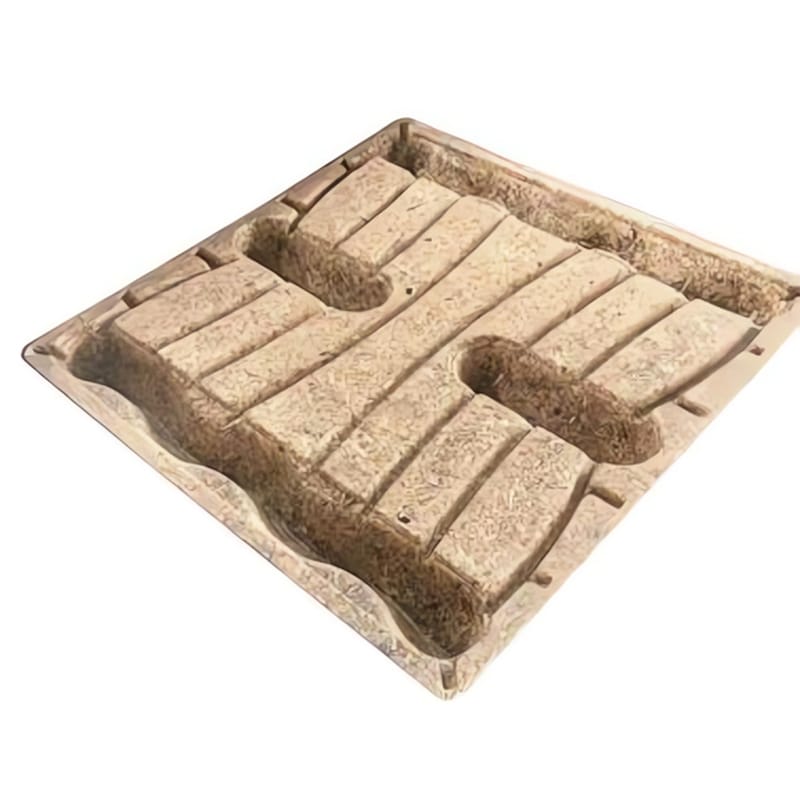
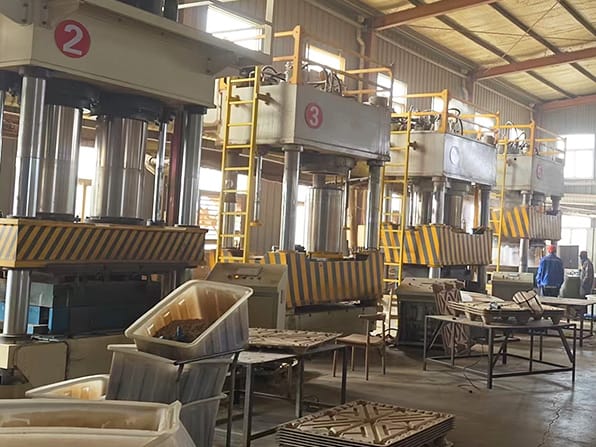
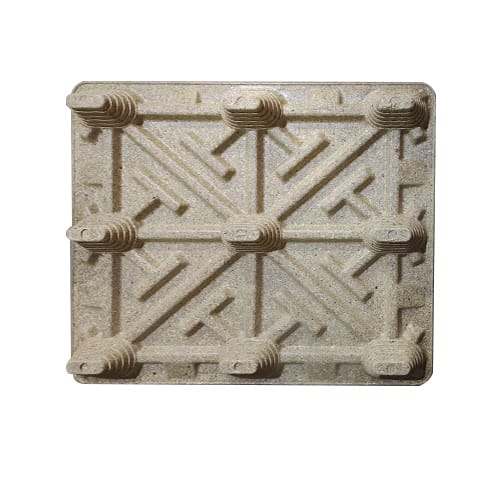
Molded pallets are produced using recycled wood fibers and plant materials through a high-pressure molding process. This creates a one-piece structure with consistent strength.
These pallets are increasingly popular in global logistics because they combine:
- lightweight design
- strong load performance
- export readiness
- environmental sustainability
Pallet Material Comparison
The following table provides a clear comparison of common pallet materials:
| Feature | Wooden Pallet | Plastic Pallet | Molded Fiber Pallet |
|---|---|---|---|
| Weight | Medium | Heavy | Lightweight |
| Durability | Moderate | High | High |
| Cost | Low initial | High initial | Medium |
| Export Compliance | Requires treatment | Generally compliant | Naturally compliant |
| Sustainability | Limited | Moderate | High |
| Maintenance | Medium | Low | Low |
This comparison shows that no single type of pallets is ideal for every situation. The best choice depends on your specific logistics needs.
Cost Analysis: Looking Beyond Purchase Price
Many businesses make the mistake of choosing pallets based only on initial cost. However, long-term value depends on total cost of ownership.
Hidden Costs to Consider
- replacement frequency
- transportation weight costs
- storage inefficiencies
- product damage losses
For example, low-cost pallets that break easily may need frequent replacement, increasing overall expenses. On the other hand, slightly higher-cost pallet with better durability can reduce long-term costs.
Real Example
A mid-sized distribution company initially used low-cost wooden pallet. After experiencing frequent breakage and product damage, they switched to molded pallets. Within one year, they reported:
- 20% reduction in pallet replacement costs
- improved warehouse efficiency
- lower product damage rates
This demonstrates the importance of evaluating total cost rather than just upfront price.
Warehouse Efficiency and Storage Optimization
Pallet design plays a major role in how efficiently you can use warehouse space.
Stacking and Storage
Efficient pallets allow for stable stacking, which increases storage density. Poorly designed pallet may lead to unstable stacks and wasted space.
Compatibility with Equipment
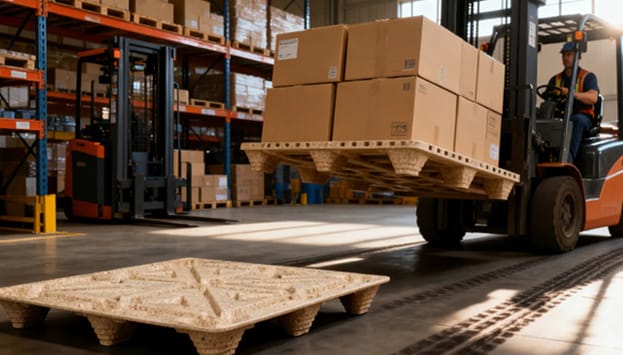
Your pallets must work seamlessly with forklifts, pallet jacks, and automated systems. Inconsistent pallet dimensions can slow down operations and increase labor costs.
Export Requirements and Compliance
For businesses involved in international shipping, pallet compliance is critical.
Certain pallets must meet global standards to prevent the spread of pests and contaminants. This often involves treatment processes for traditional wooden pallet.
Molded pallets offer an advantage because they are produced under high heat and pressure, eliminating the need for additional treatment. This simplifies export procedures and reduces delays.
Sustainability and Environmental Considerations
Sustainability is becoming an important factor in supply chain decisions.
Businesses are increasingly choosing pallets that:
- use recycled materials
- reduce environmental impact
- support circular economy practices
Molded pallet made from recycled fibers are often seen as a more environmentally responsible option compared to traditional alternatives.
Case Study: Improving Logistics Efficiency Through Pallet Selection
A global warehouse handling mixed industrial goods faced challenges with inconsistent pallet quality and high transportation costs.
Challenges
- pallet breakage during transport
- inefficient container loading
- high shipping costs
Solution
The company evaluated different pallet options and transitioned to a standardized pallet system with improved design and lighter weight.
Results
- 15% improvement in container utilization
- reduced product damage
- lower transportation costs
- improved handling efficiency
This case highlights how selecting the right pallets can directly improve overall logistics performance.
How to Choose the Right Pallet Solution Step by Step
To make the right decision, follow a structured approach:
- Analyze your load requirements
- Evaluate transportation conditions
- Consider warehouse storage systems
- Compare material options
- Calculate total cost of ownership
- Assess sustainability goals
- Test pallet performance in real conditions
By following these steps, you can identify the most suitable pallets for your business.
Common Mistakes When Choosing Pallets

Many businesses encounter problems due to poor pallet selection.
Choosing Based on Price Alone
Low-cost pallets may lead to higher long-term expenses.
Ignoring Load Requirements
Using pallets that cannot handle required loads can result in safety risks and product damage.
Overlooking Compatibility
Pallets that do not fit your warehouse systems can reduce efficiency.
Avoiding these mistakes helps ensure a more effective pallet strategy.
Conclusion
Choosing the right pallets is a critical decision that impacts every stage of your supply chain. By considering factors such as load capacity, cost, material, and sustainability, you can select a pallet solution that improves efficiency and reduces long-term costs.
Instead of focusing only on price, take a comprehensive approach to evaluation. The right pallets will not only support your products but also strengthen your entire logistics system.
A well-chosen pallet solution is not just a purchase—it is an investment in operational success.
FAQ
What are the most important factors when choosing pallets?
The most important factors include load capacity, weight, durability, cost, and compatibility with your logistics systems.
Are lightweight pallet better for shipping?
Yes, lightweight pallet can reduce transportation costs, especially in large-scale shipments.
How long do pallet typically last?
The lifespan depends on material and usage conditions, but high-quality pallet can last several years.
Do all pallet require treatment for export?
Not all pallet require treatment. Some types, such as molded pallet, are produced in a way that meets export requirements without additional processing.
Can pallet be customized?
Yes, many suppliers offer custom pallet sizes and designs to meet specific operational needs.
Need Help Choosing the Right Pallet Solution?
If you’re unsure which pallets are best for your warehouse, shipping, or supply chain operations, our experts are here to help. Contact us today for a personalized consultation, and ensure your logistics system is efficient, cost-effective, and reliable. Don’t wait until inefficiencies or losses affect your business—get in touch now to optimize your pallet solution and strengthen your supply chain performance!