
Table of Contents
A useful assessment of molded wood transport pallet starts with the cargo, equipment and receiving conditions of a defined job. A runner base travels differently from isolated feet when it crosses a transfer point. For a molded transport pallet, the direction of travel, the gaps between supports and the transition between machines can matter more than the overall footprint printed in the catalogue.
This guide develops a purchasing and trial plan around Xinyi’s One-Piece Chuan Base Molded Pallet. Use a molded wood transport pallet as the starting point for the inquiry, then confirm the actual model and operating requirements. For molded wood transport pallet, the steps below are evaluation guidance, not a report of a completed customer trial.
Define the molded wood transport pallet requirement
Map every transfer from the packing line to dispatch. Record whether runners travel parallel or perpendicular to the conveyor direction. Identify the largest unsupported gap, the shortest supported length and any point where the pallet changes orientation. Review this map with the equipment supplier before trialing cargo.
Match the product construction to the job
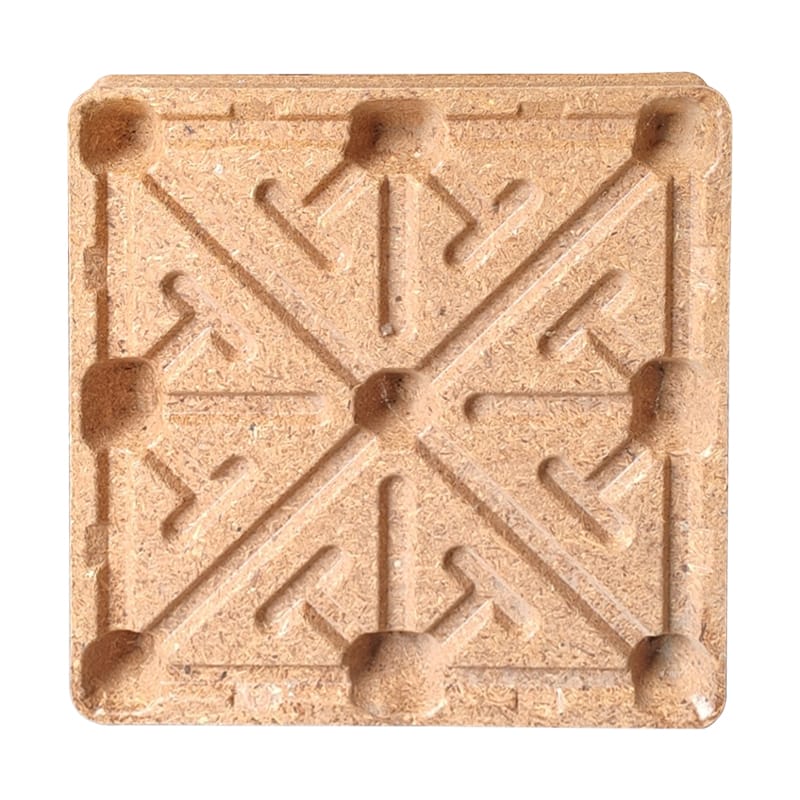
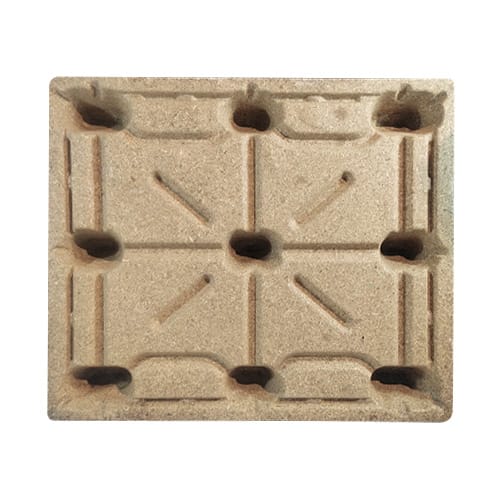
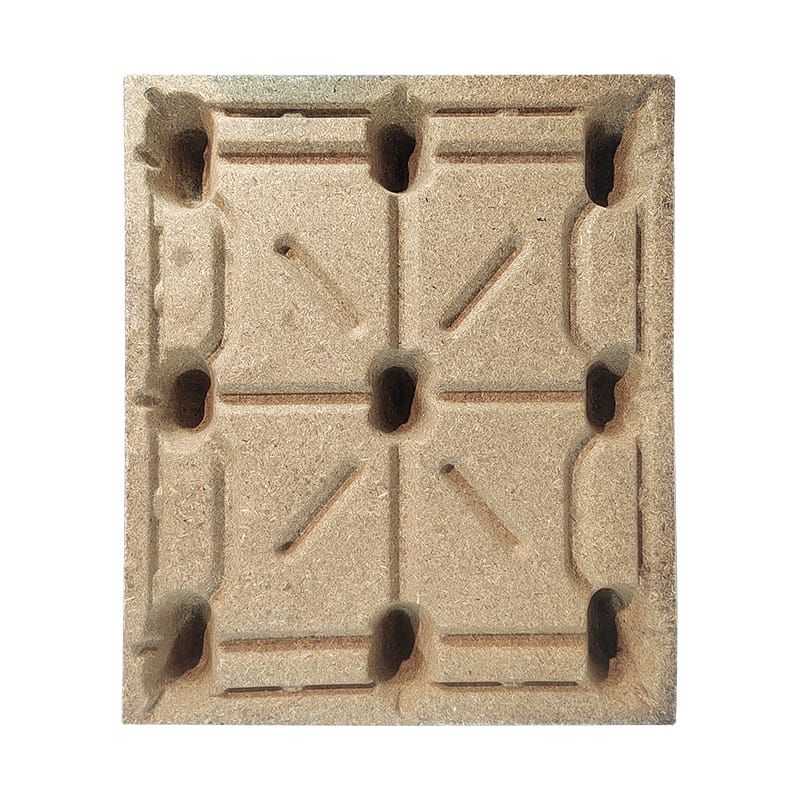
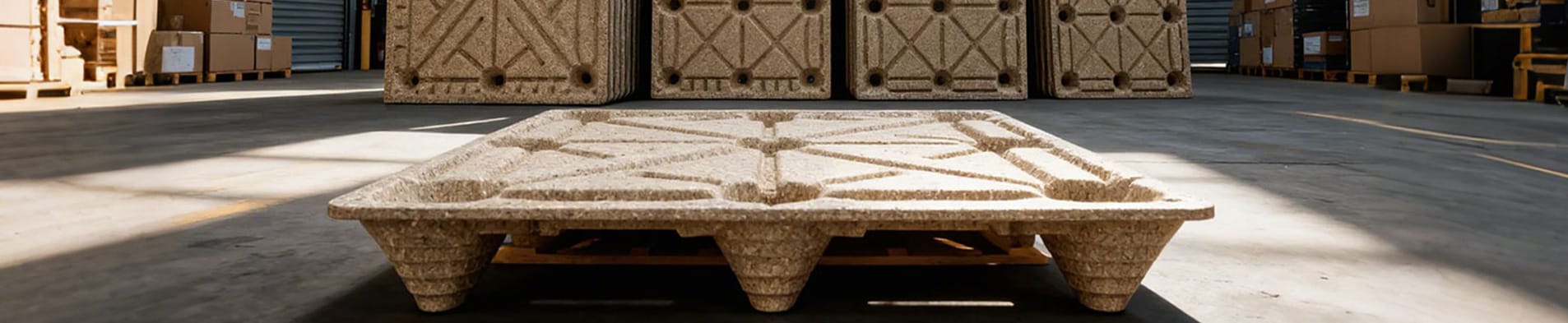
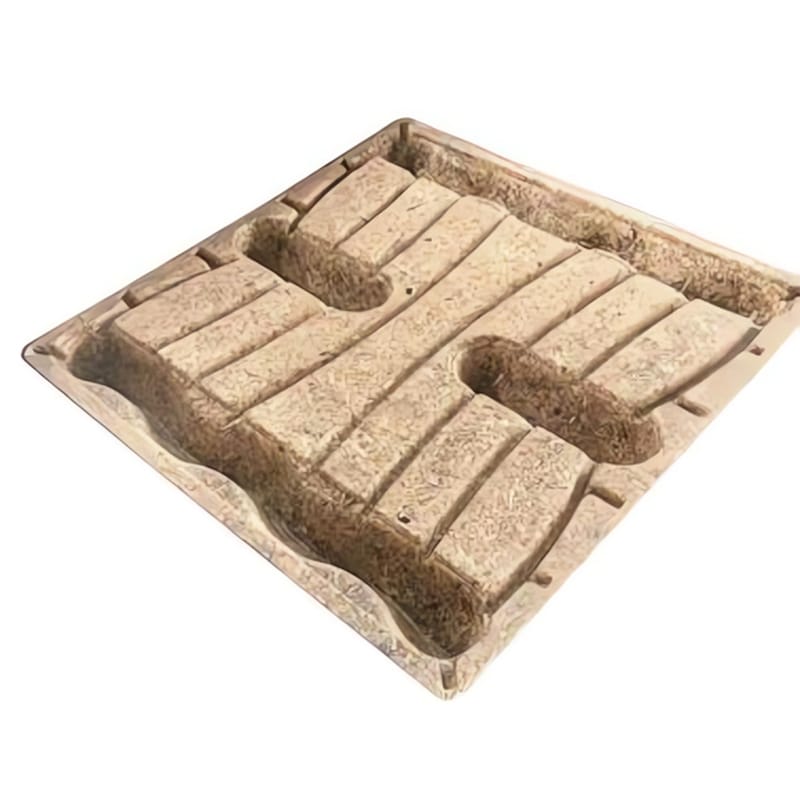
Xinyi lists three different constructions in this series: a nine-foot base with added wooden strips, a block-based assembly and an integrated molded Chuan base. These are separate configurations with different component and interface questions. Specify the exact construction in the RFQ, including any added solid wood. Do not use the family name as a substitute for the model drawing, assembled dimensions or equipment trial.
The relevant range for molded wood transport pallet is Three-Runner Series. Confirm the selected model’s current dimensions and supplied condition with Xinyi. When assessing a molded wood transport pallet, use the product drawing as the dimensional reference; image filenames and older promotional tables may describe another revision. Any quoted capability must be tied to the actual load and support conditions.
Run the application-specific comparison
Begin with an unloaded interface check, then use a controlled load approved for the test. Observe the base as it enters and leaves each transfer. A smooth run on one straight section does not establish reliable behavior on curves, stops, turntables or accumulation zones.
Qualify the underside against the actual conveyor
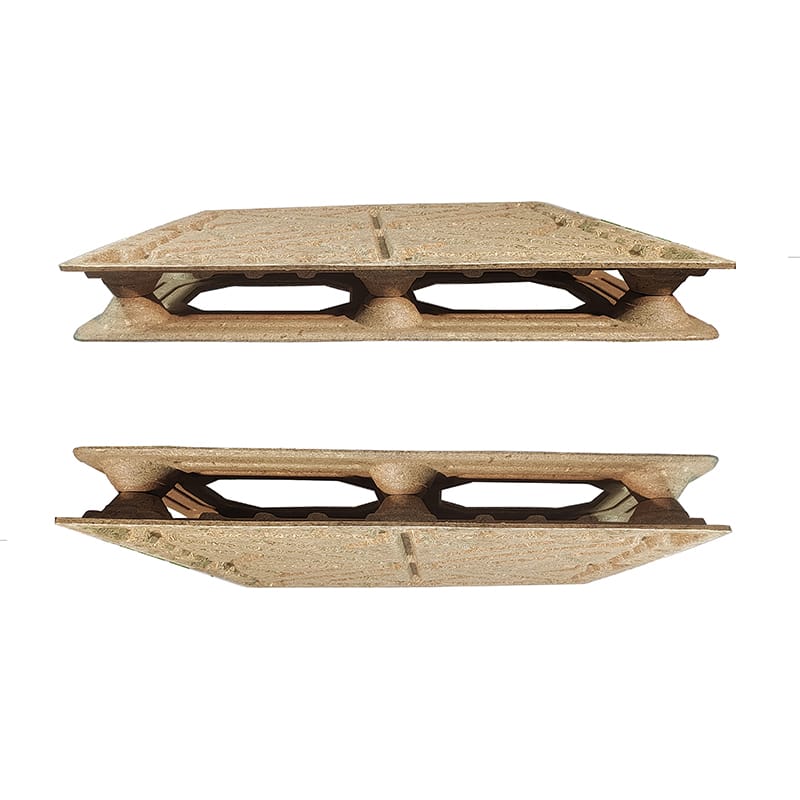
Conveyor compatibility for a molded wood transport pallet depends on the interface below the deck. Record roller spacing, chain locations, guide positions, transfer gaps, direction changes and stopping points. Include the pallet’s intended orientation at each stage. A catalogue description such as suitable for conveyors does not identify these details and should lead to an interface review, not automatic acceptance.
Ask the equipment supplier to examine the underside drawing and the proposed load. Start with clearance and contact checks, then develop a controlled loaded trial within an agreed operating envelope. Observe entry, travel, accumulation, restart and exit. A successful pass on one straight section cannot establish behavior on every transfer or under every pattern of support.
For a molded wood transport pallet, document the allowed orientation and equipment settings beside the operating instruction. Check that sensors reliably detect the unit and that guides do not strike vulnerable features. If the line changes, revisit the interface approval. Keep photographs of critical transfers so maintenance, production and procurement can identify whether a later issue follows a pallet change or a machine adjustment.

Check each handling device separately
Handling checks for a molded wood transport pallet should distinguish forklift forks, hand pallet trucks and powered pallet trucks. Their contact points and wheel paths differ. Record the actual equipment model, fork dimensions, spacing and entry direction. Ask operators to identify difficult approaches or blind spots before the trial, since the ideal straight entry shown in a drawing may not reflect a busy loading area.
Inspect clearances through the full movement rather than at the entry opening alone. Wheels need a path into and out of the base, and forks need adequate support without striking feet or side features. Begin with an unloaded check and move to a supervised representative-load trial only when the interface is acceptable. Preserve the permitted directions in the final instruction.
After using a molded wood transport pallet, examine contact areas and the lower structure for new marks or damage. Link observations to specific handling events where possible. Confirm that destination equipment is covered by the same approval or receives its own review. This prevents a pallet that works well at the factory from arriving at a warehouse with an incompatible unloading method.
Compare molded wood transport pallet options on equal terms
The following comparison focuses on the decision described above. It is a working molded wood transport pallet procurement matrix for a molded wood transport pallet, not a ranking of brands or an assertion that every listed arrangement is suitable. Complete the missing evidence using the selected model and representative cargo.
| Decision area | Evidence to obtain | Issue to resolve |
|---|---|---|
| Straight travel | Check continuous support in direction of movement | Testing only the top deck |
| Transfer gap | Measure the actual unsupported distance | Assuming every conveyor is identical |
| Stop and restart | Observe base engagement and load movement | Approving from steady-speed travel alone |
Document the pilot and release decision
For the molded wood transport pallet pilot, assign an owner to collect the baseline measurements and preserve the sample identity. Give particular attention to transfer gap: measure the actual unsupported distance. The issue to resolve is assuming every conveyor is identical. Write an acceptance criterion before the test so the result is judged against the requirement rather than an attractive photograph.
Release molded wood transport pallet only for the conditions covered by the evidence. Preserve the selected molded wood transport pallet drawing, sample record and packing instruction with the order. Record open questions separately and identify who will close them. If the first production delivery differs from the accepted sample, hold the affected stock while the difference is assessed and communicate the result to everyone who handles it.
Prepare an RFQ that suppliers can answer
Send Xinyi the intended cargo dimensions, gross mass, load-contact drawing, annual or order quantity, destination and required delivery date. Identify molded wood transport pallet and the linked product as the starting point, then describe the operating constraint in plain language. Include handling-device details, storage support and the complete packing arrangement so the supplier can review the application rather than merely quote a nominal size.
Use the Xinyi application solutions page to identify the related logistics setting, or contact the team with your pack drawing. For this molded wood transport pallet application, ask the quotation to address stop and restart explicitly so the operational issue is not lost in a general price response.
For a framework when discussing pallet test evidence with a laboratory, see ASTM D1185, test methods for pallets and related structures. Specify the relevant test conditions with the laboratory; linking to a standard does not mean this product has been certified to it.
Request a molded wood transport pallet sample review
If this evaluation matches your project, send Xinyi the load drawing and the three comparison priorities above. Ask the team to review the proposed three-runner configuration, identify the appropriate model and confirm the sample plan. A focused molded wood transport pallet inquiry makes it easier to resolve technical exceptions and compare a quotation with the cost of the complete usable shipment.
Frequently asked questions
What information is needed to specify a molded wood transport pallet?
Provide the cargo footprint, gross mass, contact pattern, loaded height, quantity and handling route. For this application, include the three-runner configuration and the conditions discussed above. A drawing and photographs of the proposed load help Xinyi review the request against the selected model.
How should buyers validate a proposal involving a molded wood transport pallet?
A catalogue match is a starting point. Confirm the current drawing and relevant product evidence, then qualify the proposed load and equipment interfaces. For One-Piece Chuan Base Molded Pallet, approval should identify the actual configuration and operating conditions rather than cover every use of the product family.
Which comparison should the purchasing team prioritize?
Check continuous support in direction of movement. Compare alternatives with the same cargo and supply conditions. Include preparation and receiving work in the decision, and keep any supplier exceptions visible before releasing the purchase order.
What changes require a new molded wood transport pallet review?
Review changes in cargo layout, mass, support geometry, equipment, packing accessories or product construction. A repeat order with a different base, material or assembly detail may no longer match the approved trial, even if the sales name remains unchanged.
What should be included with a quotation request?
Send the pack drawing, required quantity, destination, equipment details and preferred delivery condition. Attach the acceptance priorities from this guide and ask for current specifications, sample arrangements and any exceptions. Confirm pricing and timing in the quotation for the actual order.