


In global supply chain operations, pallets are more than just a support platform for goods. They are a critical part of logistics efficiency, compliance, and transportation safety. However, many businesses still confuse warehouse pallets with export pallets, assuming they serve the same function. In reality, these two types of pallets are designed for very different operational environments.
If your business handles both domestic storage and international shipping, understanding the differences between warehouse pallets and export pallets is essential. Choosing the wrong type can lead to shipment delays, compliance issues, increased costs, or even product rejection at customs checkpoints.
This guide provides a complete breakdown of how warehouse pallets differ from export pallets, including standards, materials, cost structure, performance, and real-world application scenarios. The goal is to help you make more informed logistics decisions and optimize your supply chain performance.
Table of Contents
Understanding the Role of Pallets in Modern Logistics
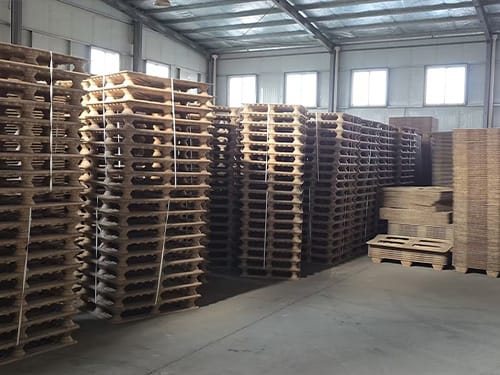
Pallets are the foundation of modern logistics systems. They standardize how goods are stored, handled, and transported across warehouses, distribution centers, and international shipping routes.
A well-designed pallet system improves:
- warehouse efficiency
- loading and unloading speed
- cargo stability during transport
- storage density
- supply chain automation compatibility
In logistics research, standardized pallet systems have been shown to improve handling efficiency by reducing manual labor time and improving equipment compatibility. This makes pallet selection a strategic decision rather than a simple procurement task.
In this context, export pallet systems and warehouse pallet systems serve two distinct but equally important roles.
What Are Warehouse Pallets?
Warehouse pallets are primarily used in internal logistics environments such as storage facilities, production lines, and distribution centers. Their main purpose is to support goods during short-distance movement and storage cycles.
Key Characteristics of Warehouse Pallets
- Designed for repeated internal use
- Focus on durability and stacking stability
- Compatible with forklifts and pallet jacks
- Optimized for storage efficiency
- Used in closed-loop logistics systems
Warehouse pallets are often selected based on durability and cost efficiency rather than international compliance requirements.
What Are Export Pallets?
An export pallet is specifically designed for international shipping and cross-border logistics. These pallets must meet global phytosanitary and safety standards to ensure that goods can pass customs inspections without delays.
Key Characteristics of Export Pallets
- Compliant with international shipping regulations
- Designed for one-way or limited-cycle use
- Lightweight to reduce transportation cost
- Often treated or manufactured to prevent pest contamination
- Suitable for container loading and global distribution
The most important requirement for an export pallet is compliance with international standards such as ISPM 15, which regulates the treatment of wood packaging materials in global trade.
Warehouse Pallets vs Export Pallets: Key Differences
Although both types of pallets serve logistics functions, their design goals and performance requirements are significantly different.
| Feature | Warehouse Pallets | Export Pallets |
|---|---|---|
| Primary Use | Internal storage and transport | International shipping |
| Compliance Requirements | Low | High (ISPM 15 or equivalent) |
| Durability Focus | High reuse cycles | Cost-efficient one-way use |
| Weight Optimization | Moderate importance | High importance |
| Treatment Requirement | Not required | Often required or built-in |
| Cost Structure | Long-term investment | Per-shipment optimization |
| Handling Environment | Controlled warehouse | Variable global conditions |
This comparison highlights a key insight: warehouse pallets prioritize reuse efficiency, while export pallets prioritize compliance and shipping optimization.
Material Differences Between Warehouse and Export Pallets
Material selection plays a major role in pallet performance.
Common Warehouse Pallet Materials
- solid wood
- plastic
- reinforced composite materials
These materials are chosen for durability and long service life in controlled environments.
Common Export Pallet Materials
Export pallets often require materials that:
- meet international treatment standards
- reduce weight for shipping efficiency
- minimize inspection delays
In many modern logistics systems, compressed fiber-based pallets are increasingly used for export purposes due to their lightweight structure and compliance-ready production process.
Export Compliance and ISPM 15 Standards

One of the most important aspects of shipping pallet selection is compliance with international phytosanitary regulations.
ISPM 15 is a globally recognized standard that regulates wood packaging materials used in international trade. It requires that pallets be treated to eliminate pests and prevent the spread of invasive species.
Common Compliance Methods
- Heat treatment
- Chemical fumigation
- Engineered wood or fiber-based alternatives
An export pallet must meet these requirements to avoid shipment rejection, delays, or additional inspection procedures.
Cost Structure Comparison
Cost is a major factor when selecting between warehouse pallets and export pallets.
Warehouse Pallet Cost Model
Warehouse pallets are typically evaluated based on long-term lifecycle value:
- higher initial cost acceptable
- multiple reuse cycles
- maintenance and repair possible
- long-term ROI focus
Export Pallet Cost Model
Export pallets focus on per-shipment efficiency:
- low or medium initial cost
- minimal return logistics
- reduced handling requirements
- optimized for one-way shipping
Cost Insight Example
A logistics company handling mixed domestic and export operations reported that separating pallet systems reduced overall logistics cost by improving pallet lifecycle efficiency and reducing unnecessary return transport.
Structural Performance and Load Capacity
Both warehouse pallets and export pallets must support industrial loads, but their structural priorities differ.
Warehouse Pallet Strength Requirements
Warehouse pallets are designed for:
- repeated forklift handling
- long-term stacking
- high durability under repeated cycles
Export Pallet Strength Requirements
Export pallets prioritize:
- stable container loading
- vibration resistance during transport
- lightweight structure for shipping cost reduction
A well-designed export pallet must balance strength and weight efficiency.
Real-World Case Study: Mixed Logistics Optimization
A mid-sized logistics operator handling both domestic storage and international shipments previously used a single pallet type for all operations.
Challenges
- high return logistics cost
- export delays due to compliance checks
- inefficient warehouse stacking
- frequent pallet replacement issues
Solution
The company introduced a dual pallet strategy:
- durable warehouse pallets for internal operations
- lightweight export pallet systems for international shipments
Results
- 17% reduction in total logistics cost
- improved export clearance speed
- reduced pallet damage rate
- optimized warehouse storage density
This demonstrates the importance of distinguishing between warehouse pallets and shipping pallet systems.
Environmental and Sustainability Considerations
Sustainability is increasingly influencing pallet selection decisions.
Warehouse pallets often focus on reuse cycles, while shipping pallets focus on material efficiency and reduced shipping impact.
Modern export pallet solutions increasingly use recycled fibers and engineered materials to reduce environmental impact while maintaining compliance.
Operational Efficiency in Warehouse vs Export Systems
Warehouse Efficiency Focus
- fast internal movement
- high reuse cycles
- compatibility with automation systems
Export Efficiency Focus
- fast customs clearance
- minimal handling delays
- optimized container loading
Each system requires different pallet design priorities.
Common Mistakes in Pallet Selection


Many businesses make costly mistakes when managing pallet systems.
Using One Pallet Type for Everything
This often leads to inefficiency in both warehouse and export operations.
Ignoring Compliance Requirements
Export pallets must meet strict regulations. Non-compliance can result in shipment rejection.
Overlooking Weight Optimization
Heavier pallets increase shipping costs significantly over time.
Conclusion
Understanding the difference between warehouse pallets and export pallets is essential for building an efficient and cost-effective logistics system. While warehouse pallets are optimized for durability and repeated use, export pallets are designed for compliance, lightweight transport, and global shipping efficiency.
Businesses that separate these two systems often achieve better operational performance, lower costs, and smoother international logistics workflows. Choosing the right pallet strategy is not just a packaging decision—it is a supply chain optimization strategy that directly impacts long-term business success.
FAQ
What is an export pallet?
An export pallet is a pallet designed for international shipping that meets global compliance standards such as ISPM 15.
Can warehouse pallets be used for export shipping?
Not always. Many warehouse pallets require treatment or modification before they can be used for export.
What is the main difference between warehouse and shipping pallets?
Warehouse pallets focus on reuse and durability, while shipping pallets focus on compliance and shipping efficiency.
Are shipping pallets reusable?
Some shipping pallets can be reused depending on design and condition, but many are designed for one-way logistics.
What is the best material for shipping pallets?
It depends on logistics needs, but lightweight and compliant materials are often preferred for international shipping efficiency.
Need Help Choosing the Right Export Pallet Solution?
If you’re unsure which export pallet or warehouse pallet system is best for your logistics, storage, or international shipping needs, our experts are here to help. Contact us today for a personalized consultation, and ensure your pallet solution is cost-effective, compliant, and optimized for your supply chain performance. Don’t wait until shipping delays or inefficiencies impact your business—get in touch now to improve your logistics system and protect your cargo!