
Table of Contents
Introduction
If you are managing logistics, warehousing, or international shipping, you already know that one size does not fit all when it comes to pallets. Choosing the right customized pallets can dramatically improve your supply chain efficiency, reduce freight costs, and ensure cargo safety.
Many businesses still rely on traditional wooden or plastic pallets, which often come with weight variability, moisture sensitivity, and compliance issues. With custom molded pallets, made in a single compression molding process, you get a durable, lightweight, and fully customizable solution.
In this article, you will learn how molded customized pallets can solve real-world operational problems and help your company achieve measurable improvements in logistics and warehousing.
Why Customized Pallets Matter for Your Business
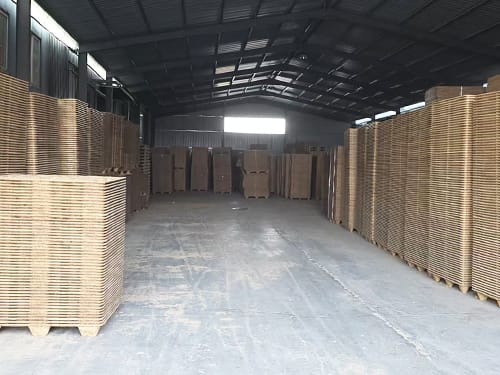
You might think pallets are a commodity, but they are one of the most critical components in your logistics system. Poor pallet selection leads to:
- Increased freight costs: Heavier pallets increase shipping fees.
- Storage inefficiency: Non-stackable pallets occupy unnecessary space.
- Cargo damage: Inconsistent quality leads to product loss.
- Export delays: Certain countries require fumigation or heat treatment.
By using customized pallets, you control dimensions, weight, and structural features tailored to your products and logistics workflow.
How Molded Customized Pallets Work
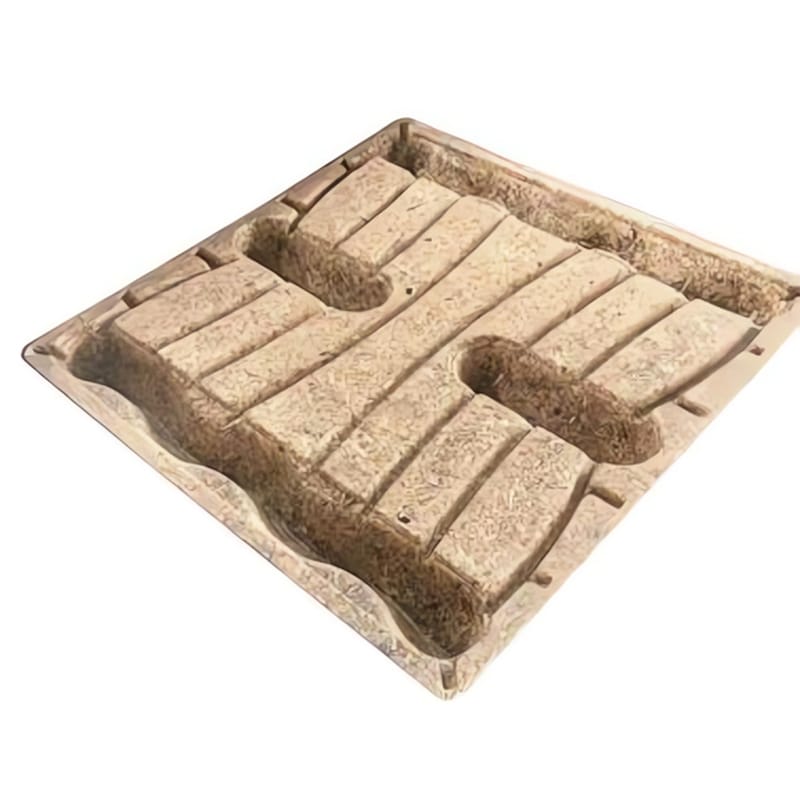
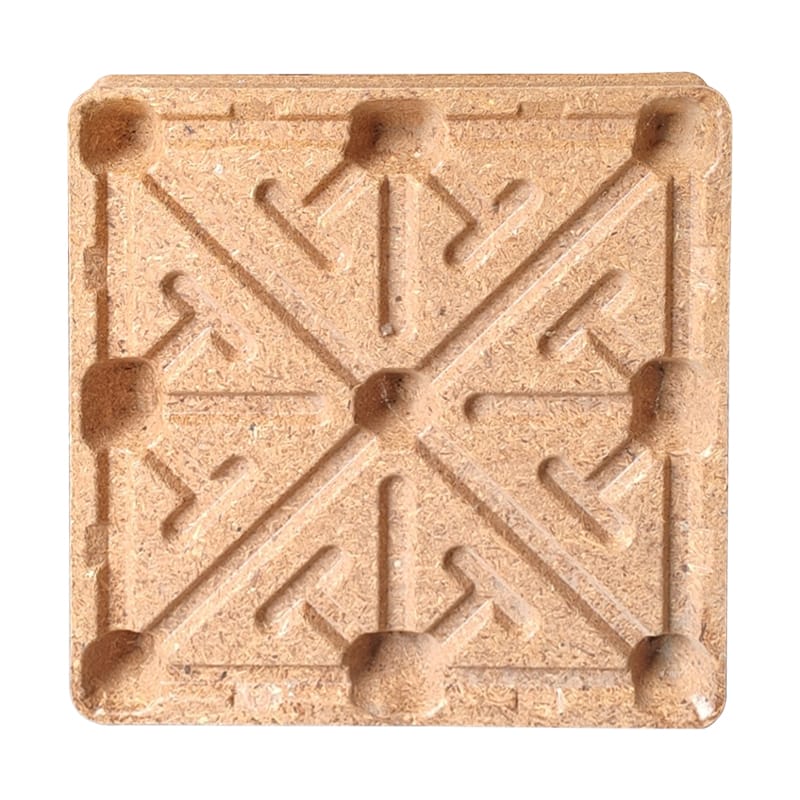
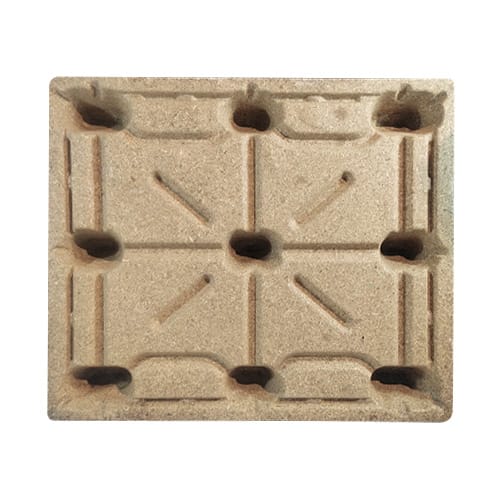
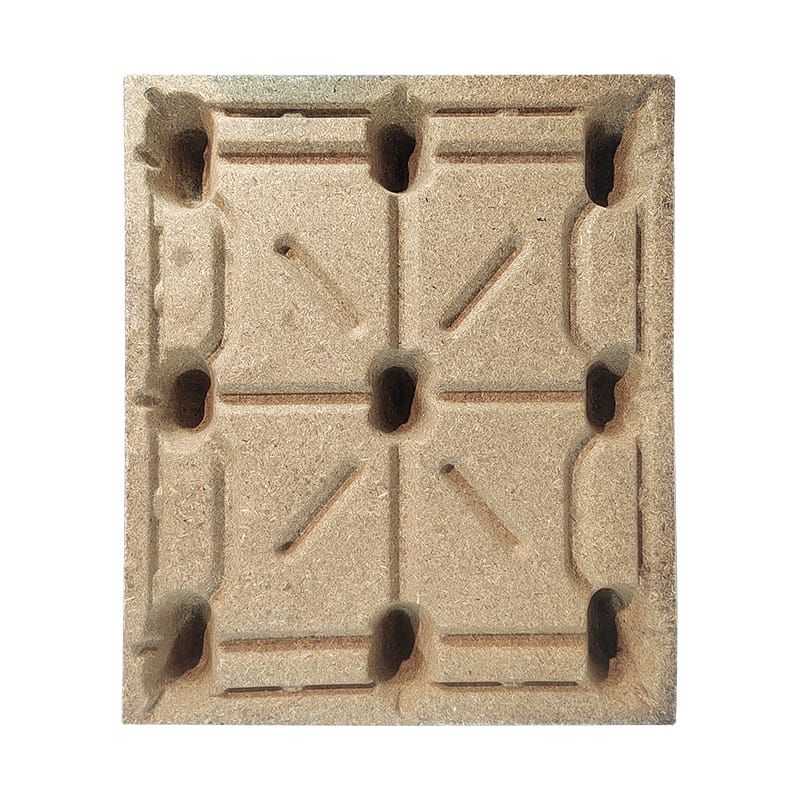
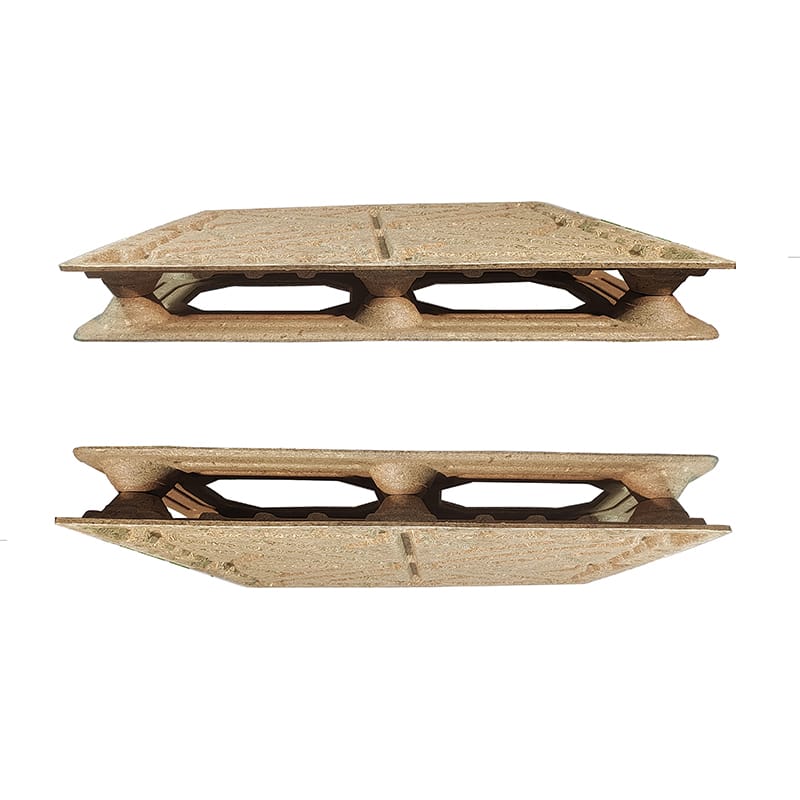
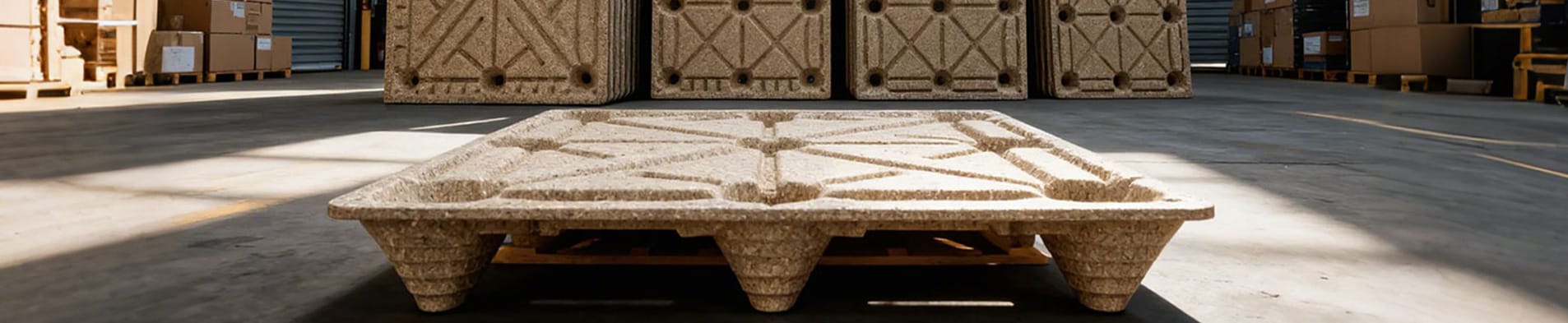
Your customized pallet is manufactured from plant fiber using a single hot compression molding process. The benefits of this approach include:
- Uniform load distribution: Prevents weak points that cause product damage.
- Natural compliance for export: Eliminates the need for additional heat treatment or fumigation.
- Moisture and pest resistance: Ideal for long-term storage and overseas shipping.
- Lightweight yet strong: Reduces shipping costs while maintaining cargo safety.
Case Study: Electronics Exporter Optimizes Supply Chain
Company Profile
- Industry: Electronics Components Export
- Shipping Volume: 15,000 pallets/year
- Original Pallets: Traditional wooden pallets requiring fumigation
Challenges
- Frequent shipment delays due to fumigation
- High replacement cost for damaged pallets
- Inefficient warehouse stacking
Implemented Solution
- Switched to customized molded pallets tailored for container dimensions
- Single-piece molding ensured uniform strength
- Stackable design reduced storage footprint
Results
| Metric | Before | After |
|---|---|---|
| Average pallet weight | 22 kg | 11 kg |
| Export lead time | 5–7 days | 0 days |
| Fumigation cost | $80,000/year | $0 |
| Damage rate | 4.0% | 1.2% |
| Warehouse footprint | High | Reduced by 55% |
This shows that choosing customized molded pallets can directly impact both cost and operational efficiency.
Designing Your Pallet for Maximum Efficiency
When you order customized pallets, consider the following aspects to maximize your ROI:
- Dimensions: Match the pallet to your container, warehouse racks, or automated systems.
- Deck and support design: Ensure stress is evenly distributed across the pallet.
- Stackability: Efficient stacking reduces warehouse space by up to 60%.
- Forklift compatibility: Uniform weight and design minimize handling damage.
Cost Comparison: Customized Molded vs Traditional Pallets
| Feature | Customized Molded Pallets | Traditional Wooden Pallets |
|---|---|---|
| Weight | 11–12 kg | 20–25 kg |
| Export Compliance | Automatic | Requires fumigation |
| Damage Rate | 1–2% | 3–5% |
| Stackability | High | Medium |
| Lifecycle Cost | 30–50% lower | Higher |
| Customization | Fully customizable | Limited |
Focusing on total lifecycle cost rather than purchase price alone demonstrates the value of custom molded pallets for modern logistics.
Sustainability and Environmental Impact
You can also use customized pallets to improve your ESG metrics:
- Made from renewable plant fibers
- Fully recyclable at end-of-life
- Lightweight design reduces carbon emissions during transport
Organizations like Ellen MacArthur Foundation emphasize that sustainable packaging solutions are critical for modern supply chains.
Warehouse and Handling Advantages
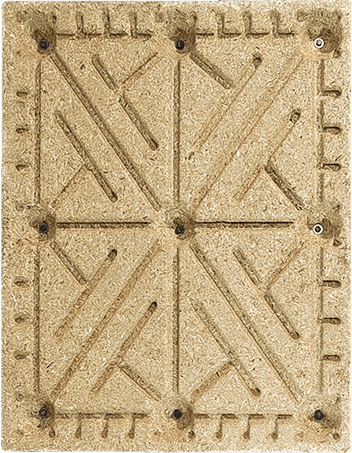
For you, warehouse efficiency is key. Using molded customized pallets:
- Reduces forklift energy consumption
- Minimizes labor handling effort
- Allows predictable stacking and automation compatibility
Export Advantages for Your Business
Custom molded pallets are heat-treated during production, so:
- You avoid fumigation costs
- Export documentation becomes simpler
- Lead times are reduced
Implementation Guide for Your Company
- Audit current pallets: Track weight, damage rates, and storage efficiency.
- Identify high-cost shipping routes: Focus on areas with highest cost per kg or container.
- Design pallets to your cargo: Optimize size, stacking, and load distribution.
- Test with a pilot batch: Deploy on one product line first.
- Measure results quarterly: Track cost reduction, damage rate, and warehouse efficiency.
Conclusion
Choosing customized pallets is not just a packaging decision—it is a strategic move for your logistics, export efficiency, and cost control. By switching to molded, custom-designed pallets, you reduce freight costs, improve warehouse efficiency, and ensure your products arrive safely and on time.
For modern supply chains, custom molded pallets are more than an operational tool—they are a competitive advantage.
FAQ
Can customized molded pallets handle heavy loads?
Yes, the compression molding process ensures uniform strength across the pallet.
Are these pallets compliant for export without fumigation?
Yes. Molded pallets meet international standards and eliminate the need for additional heat treatment.
Can I fully customize dimensions and load ratings?
Absolutely. You can adjust size, structure, stacking, and weight specifications to your workflow.
Are molded pallets environmentally friendly?
Yes. They are fully recyclable and made from renewable plant fiber.
How much cost reduction can I expect?
Companies typically see 30–50% lower total pallet-related costs compared to traditional wood pallets.
Are these pallets suitable for automated warehouses?
Yes. Uniform size and weight make them fully compatible with conveyors, robotics, and forklifts.