
Table of Contents
If you are responsible for international shipping, warehouse management, or logistics operations, you already know how cumbersome heat treat pallet requirements can be. Many exporters rely on traditional wood pallets that must undergo fumigation or heat treatment before leaving the country. These processes add cost, delay shipments, and complicate compliance.
What if you could eliminate that extra step, streamline your supply chain, and still get strong, durable, and customized pallets designed for your cargo? This is exactly where molded pallets come in.
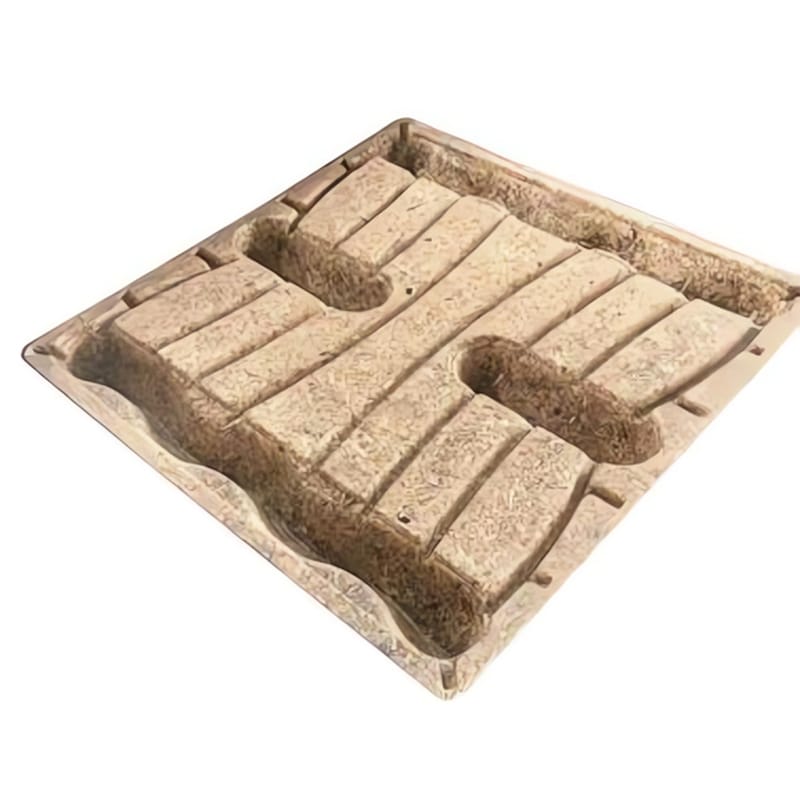
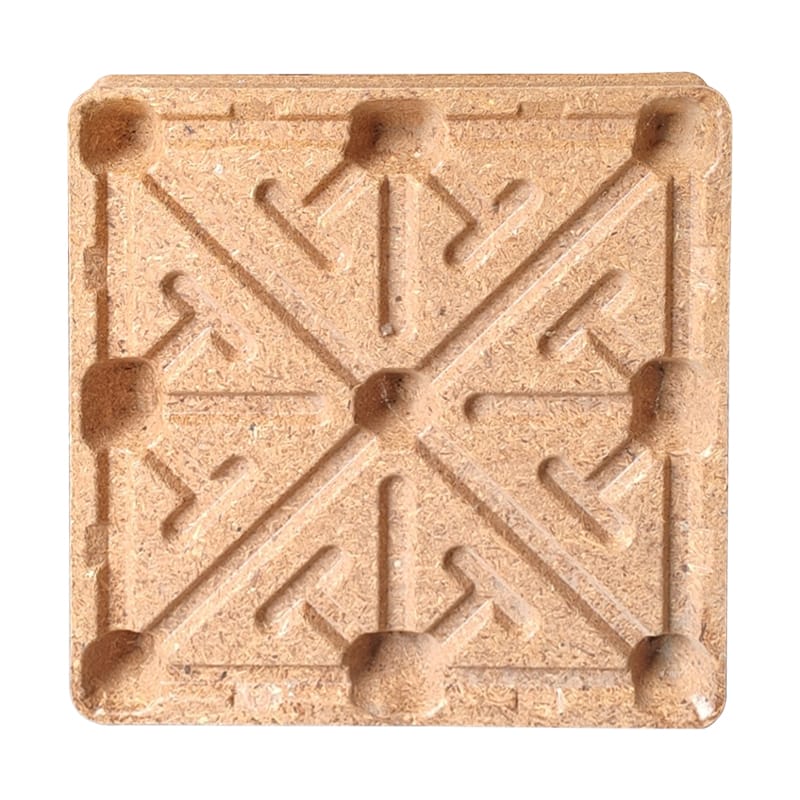
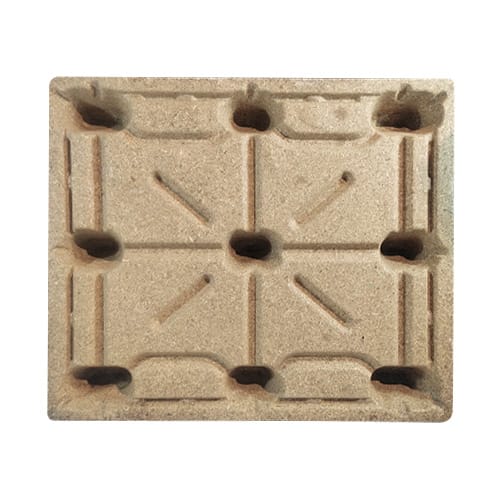
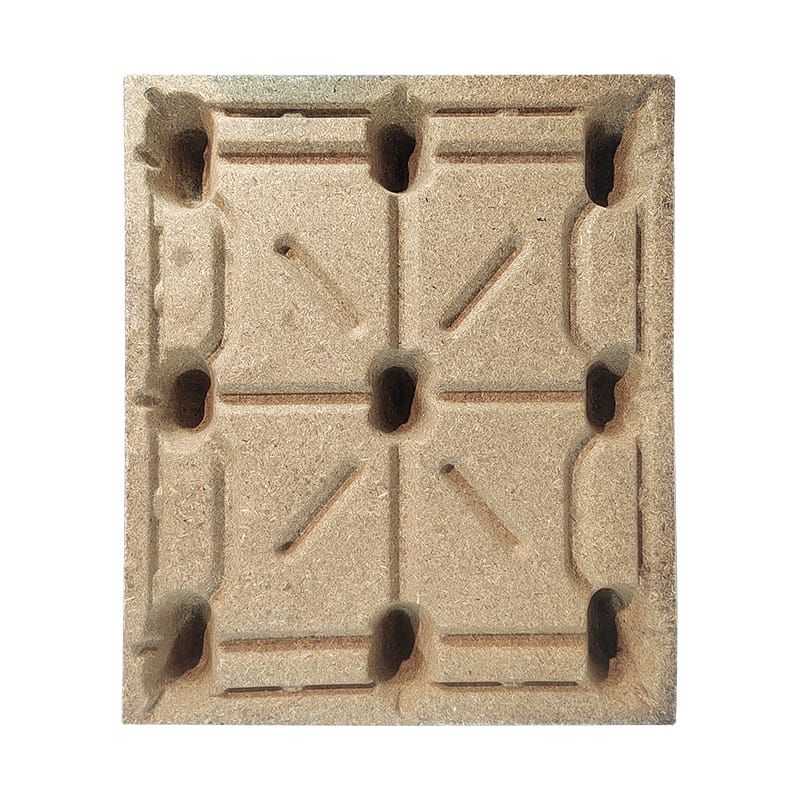
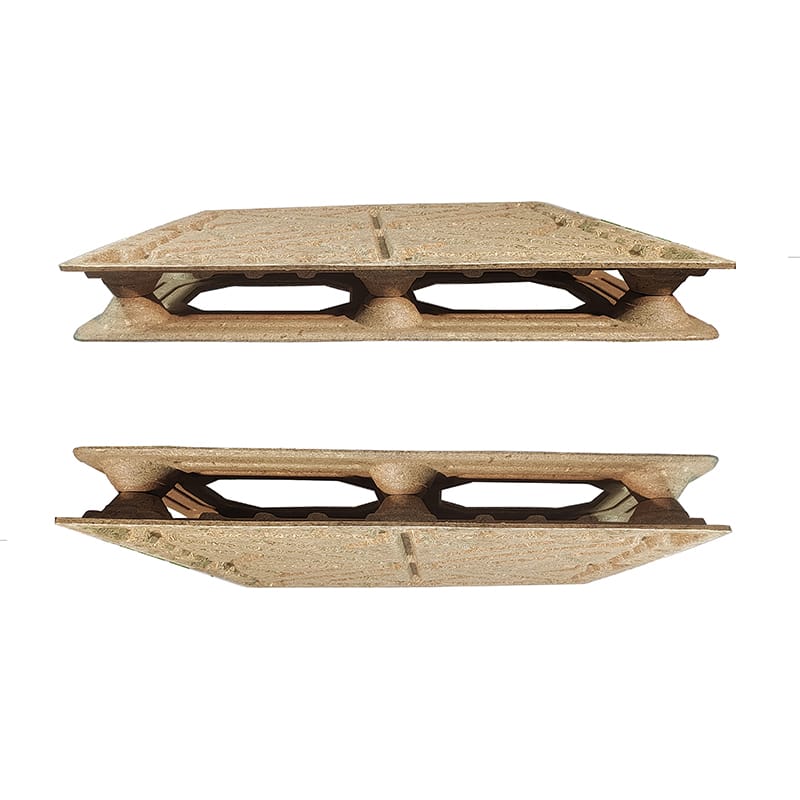
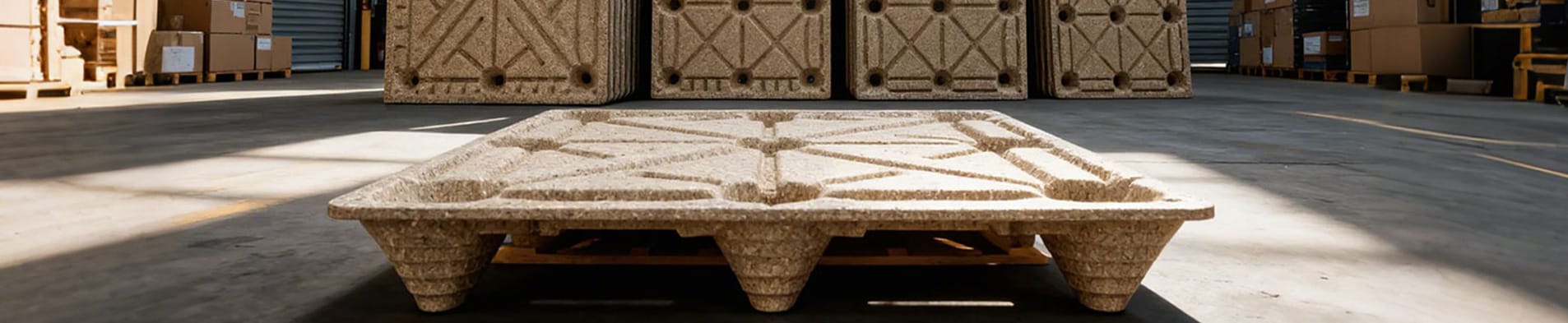
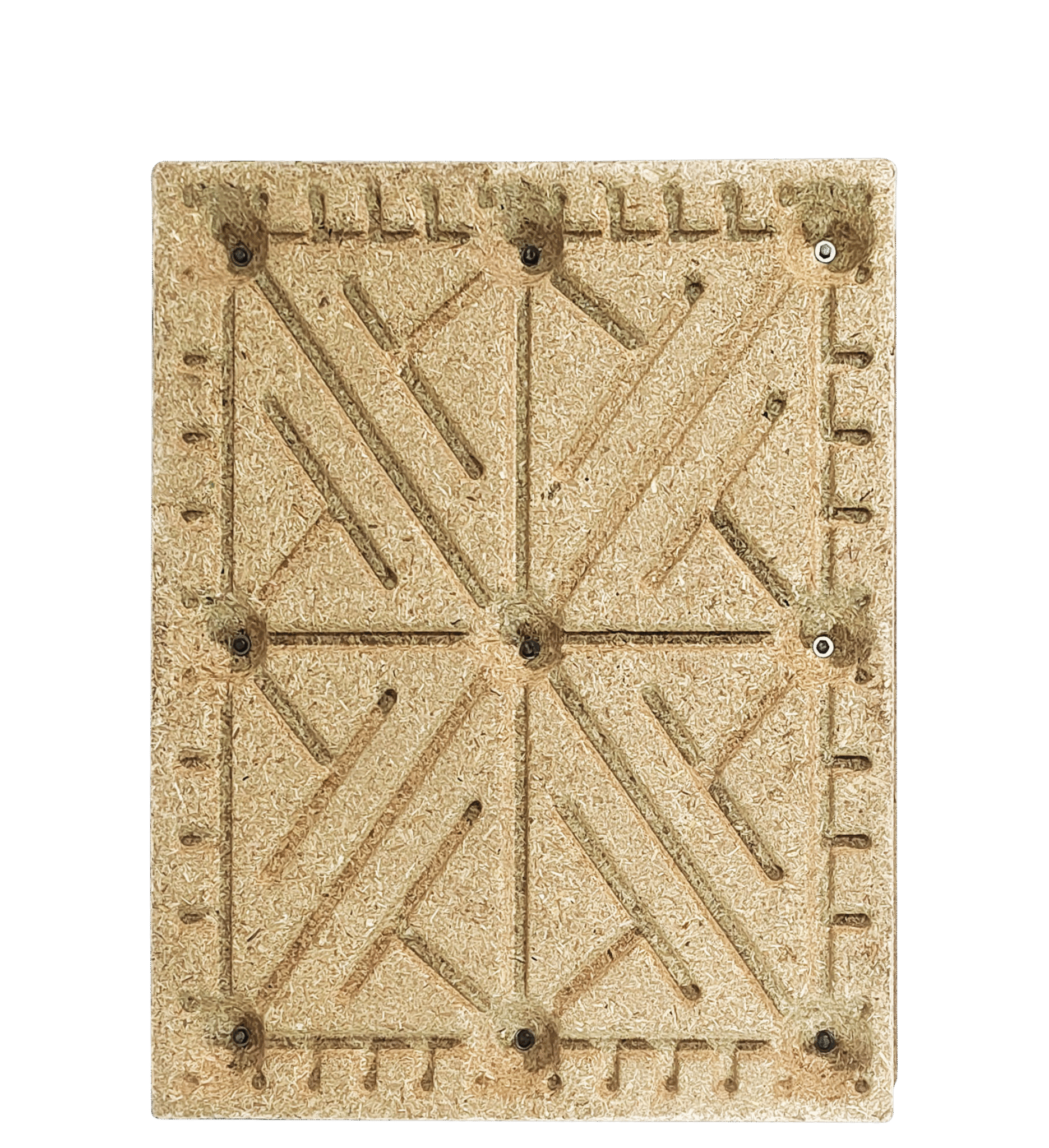
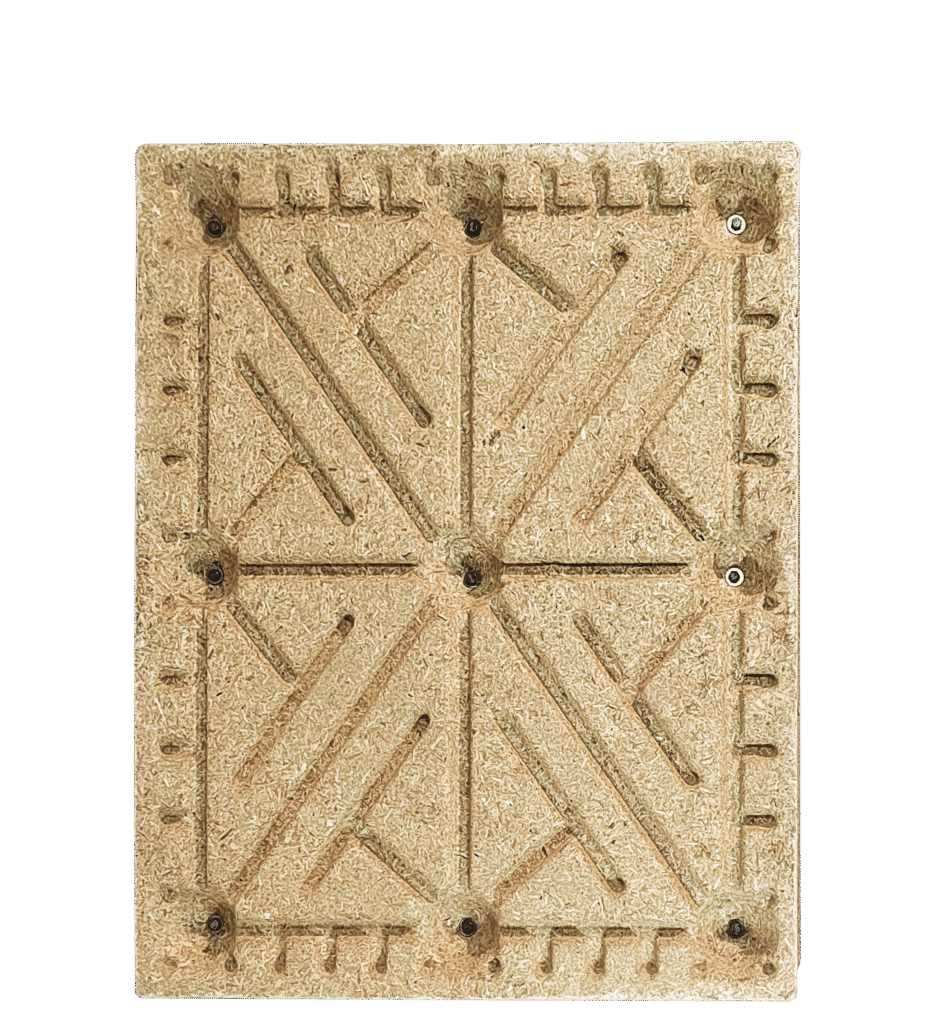
Unlike traditional wood pallets, molded pallets are engineered in a single compression molding process. This not only ensures uniform strength and consistent quality but also makes them naturally compliant for export without additional heat treat pallets.
In this guide, you will discover how choosing custom molded heat treat pallets can reduce cost, improve warehouse efficiency, and simplify international logistics.
Why Heat Treat Pallets Can Be a Bottleneck
Many companies underestimate the hidden costs of heat treatment:
- Delays in shipment: Fumigation or heat treatment can take several days.
- Added cost: Fees for treatment, certification, and inspection accumulate.
- Risk of non-compliance: Incorrect treatment can result in rejected shipments or fines.
- Space consumption: Pallets awaiting treatment occupy valuable warehouse space.
For you, every day a pallet sits in treatment is a day your cargo is delayed. Eliminating this step can significantly improve lead time and reduce total supply chain cost.
How Molded Pallets Solve Heat Treatment Issues
Your molded pallet is produced using plant fiber and a single hot compression process. The high temperature during molding ensures:
- No pest risk
- Natural compliance with international standards
- Uniform load-bearing structure
- Resistance to moisture, mold, and insects
This means you can ship pallets directly without fumigation, saving time and money.
According to ISPM 15 documentation, pallets manufactured under controlled high-temperature processes meet export standards naturally, allowing your company to bypass heat treatment entirely.
Case Study: Electronics Exporter Eliminates Heat Treatment
Company Profile:
- Industry: Electronics Components Export
- Shipping Volume: 10,000 pallets per year
- Original Pallet Type: Standard wood requiring heat treatment
Pain Points:
- Shipping delays of 3–5 days per order
- Treatment cost of $6–$8 per pallet
- Storage congestion while waiting for fumigation
Solution Implemented:
- Switched to custom molded heat treat pallets
- Pallet dimensions and load capacity tailored to cargo
- Single-piece molded structure for consistent performance
Results:
| Metric | Before | After |
|---|---|---|
| Average pallet weight | 23 kg | 12 kg |
| Export lead time | 5–7 days | 0 days |
| Treatment cost | $70,000/year | $0 |
| Damage rate | 4.1% | 1.2% |
| Storage footprint | High | Reduced 55% |
This shows that choosing the right heat treat pallet alternative can reduce cost, improve efficiency, and reduce damage risk.
Designing Your Custom Molded Pallet
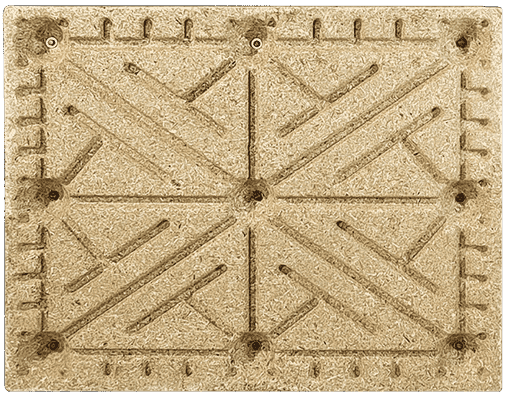
When you choose custom molded pallets, you can optimize for:
- Dimensions: Match container and warehouse racking
- Deck and support design: Ensure even load distribution
- Stacking compatibility: Save up to 60% storage space
- Forklift and conveyor handling: Reduce handling damage
Studies such as container loading efficiency guides emphasize that custom-sized pallets can significantly improve shipping utilization.
Cost Analysis: Molded vs Traditional Heat Treated Pallets
| Factor | Molded Heat-Compliant Pallets | Standard Wood Pallets |
|---|---|---|
| Initial Cost | Slightly higher | Lower per unit |
| Heat Treatment | Not required | Required ($6–$8/pallet) |
| Export Compliance | Automatic | Manual, error-prone |
| Weight | Lighter, consistent | Heavier, variable |
| Stackability | High, uniform | Medium, inconsistent |
| Damage Risk | Low | Higher |
| Lifecycle Cost | 30–50% lower | Higher |
By focusing on total lifecycle cost, molded pallets clearly outperform traditional heat treat pallets.
Sustainability Advantages
Your business also benefits from environmental compliance:
- Made from renewable plant fiber
- Fully recyclable at end-of-life
- Reduces carbon footprint due to lighter weight and higher container utilization
Organizations increasingly prioritize sustainable logistics solutions. See circular economy packaging guidelines for industry examples.
Warehouse Efficiency and Handling Benefits
Lightweight, custom-designed molded pallets reduce:
- Forklift energy consumption
- Labor handling time
- Storage footprint
According to warehouse optimization research, stackable, uniform pallets significantly increase warehouse throughput.
Export Advantages
By eliminating heat treatment:
- Faster customs clearance
- Reduced handling and paperwork
- Immediate export readiness
For you, this translates into faster lead times, reduced costs, and fewer operational bottlenecks. More guidance on international pallet regulations is available for exporters.
Conclusion
You are not just selecting pallets—you are optimizing your entire supply chain.
By adopting custom molded heat treat pallets, you eliminate delays, reduce costs, and improve warehouse and export efficiency. In today’s global logistics environment, the right pallet is a strategic tool that improves freight, storage, and sustainability metrics simultaneously.
FAQ
Are molded pallets strong enough for heavy cargo?
Yes. Single compression molding creates uniform density and load distribution.
Can pallets be customized?
Yes. Dimensions, deck design, load rating, and stacking options can all be tailored.
Do these pallets need heat treatment?
No. The molding process itself ensures export compliance.
Are molded pallets environmentally friendly?
Yes. They are fully recyclable and made from renewable plant fibers.
How much cost savings can I expect?
Companies often see 30–50% lower total pallet-related costs compared to traditional wood pallets with heat treatment.
Can molded pallets be used in automated warehouses?
Yes. Their uniform size and weight make them compatible with conveyors and automated forklifts.