
Inhaltsverzeichnis
Einleitung

Die Palettenherstellung ist weit über die einfache Idee hinausgegangen, ein paar Bretter zu einer Plattform zusammenzufügen. Moderne Industriepaletten sollen mit Gabelstaplern, Lagerregalen, Förderbändern, automatisierten Handhabungssystemen, schweren Lasten, gestapelter Lagerung und langen Transportzyklen arbeiten. Diese Anforderungen haben die Hersteller dazu veranlasst, den Materialien, der Strukturgeometrie, der Maßkonsistenz, dem Feuchtigkeitsverhalten und der Produktionskontrolle viel mehr Aufmerksamkeit zu schenken.
Auch die Herstellungsweise beeinflusst, was eine Palette kann Herkömmliche Holzpaletten werden im Allgemeinen aus einzelnen Komponenten zusammengesetzt, während Formpaletten als integrierte Struktur aus verarbeitetem Holz oder Pflanzenfasermaterialien geformt werden können Kunststoff - und Metallpaletten setzen wieder auf unterschiedliche Produktionstechnologien.
Für Käufer ist das Verständnis der Palettenherstellung nützlich, da sich zwei Paletten mit ähnlichen Außenabmessungen nach dem Laden sehr unterschiedlich verhalten können Deckdesign, Verstärkungsrippen, Stützbeine, Materialverteilung, Formkonsistenz und Qualitätsprüfung können alle die tatsächliche Leistung beeinflussen.
Der allgemeine Zweck eines Palette Güter als eine Einheit zu unterstützen, die gelagert und mechanisch gehandhabt werden kann Die Fertigung bestimmt, wie effektiv die fertige Struktur diese Rolle ausübt.
Für industrielle Anwender ist die wichtige Frage daher nicht einfach “Was ist diese Palette hergestellt?”, sie lautet “Wie wurde diese Palette für die Art und Weise entworfen und hergestellt, wie wir sie verwenden wollen?”
Warum die Palettenherstellungsmethode wichtig ist
Eine fertige Palette mag einfach erscheinen, aber ihr Herstellungsprozess steuert mehrere Eigenschaften, die sich auf die Logistikleistung auswirken.
Dazu gehören:
- Maßkonsistenz
- Decksteifigkeit
- Lastverteilung
- Gabeleintrittsgeometrie
- Palettengewicht
- Oberflächenzustand
- Feuchtigkeitsverhalten
- Strukturwiederholbarkeit
- Nistfähigkeit
- Kompatibilität mit Handhabungsgeräten
Wenn Paletten nur gelegentlich verwendet werden, können kleine Dimensionsunterschiede unwichtig erscheinen. In einem Lager mit hohem Volumen oder einer automatisierten Materialhandhabungsumgebung macht sich die Inkonsistenz jedoch deutlich deutlicher bemerkbar.
Herstellungskonsistenz
Ein zuverlässiger Palettenherstellungsprozess sollte wiederholbar sein.
Wenn Paletten derselben Spezifikation in Höhe, Deckgeometrie, Stützposition oder Gabelfreiheit erheblich variieren, können Bediener und Ausrüstung bei jedem Betreten des Systems mit unterschiedlichen Handhabungsbedingungen konfrontiert werden.
Konsistenz ist besonders wichtig für Förderbänder und automatisierte Lagersysteme, bei denen Geräte Dimensionsschwankungen nicht so einfach ausgleichen können wie ein menschlicher Gabelstaplerfahrer.
Strukturelle Konsistenz
Die Tragfähigkeit wird durch mehr als die Materialmenge beeinflusst.
Ebenso wichtig ist die Positionierung des Materials.
Ein Palettenherstellungsprozess, der Rippen, Beine, Kufen, Deckdicke und Verstärkungsbereiche genau reproduziert, kann eine vorhersehbarere Strukturkonfiguration von einer Palette zur anderen bieten.
Hauptarten der Palettenherstellung
Unterschiedliche Palettenmaterialien erfordern unterschiedliche Produktionsansätze.
Es gibt keine einzige Herstellungsmethode, die für jede Anwendung am besten geeignet ist.
| Palettentyp | Typischer Fertigungsansatz | Strukturelle Charakteristik | Wichtige Produktionskontrollen |
|---|---|---|---|
| Traditionelle Holzpalette | Schneiden und mechanische Montage | Trennen Sie Bretter, Blöcke oder Läufer | Holzqualität, Abmessungen, Befestigungselemente, Verbindungen |
| Formholzpalette | Faservorbereitung und Formpressen | Integrierte Formstruktur | Materialaufbereitung, Feuchtigkeit, Formkonsistenz |
| Kunststoffpalette | Formprozess | Integrierte Polymerstruktur | Materialformulierung, Formkontrolle, Kühlung |
| Metallpalette | Schneiden, Formen und Fügen | Gefertigtes Strukturgerüst | Materialstärke, Fugen, Maßhaltigkeit |
| Verbundpalette | Hängt vom Materialsystem ab | Konstruierte Struktur | Materialkonsistenz und Umformprozess |
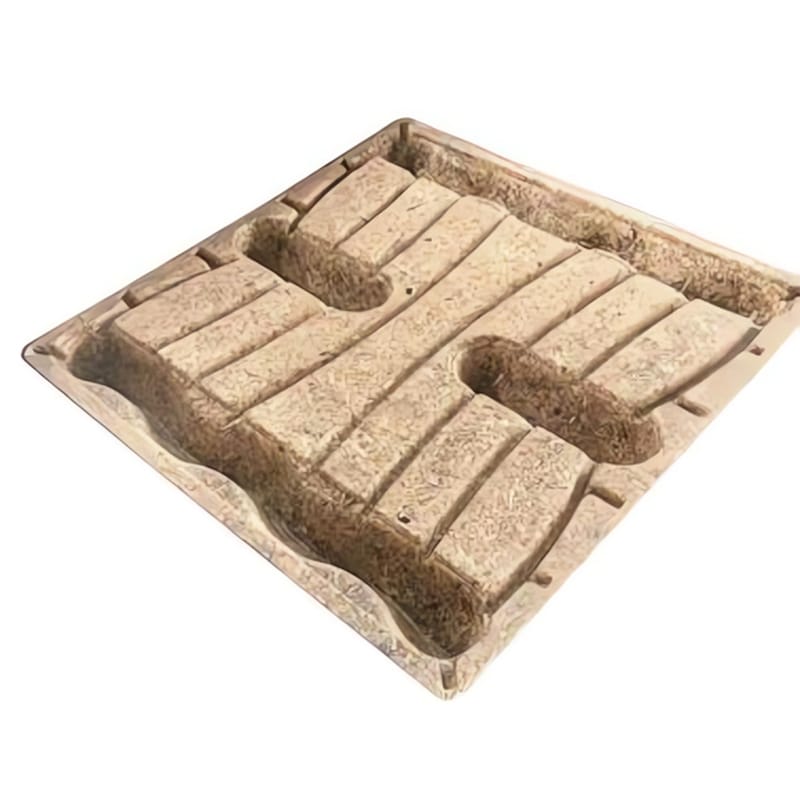
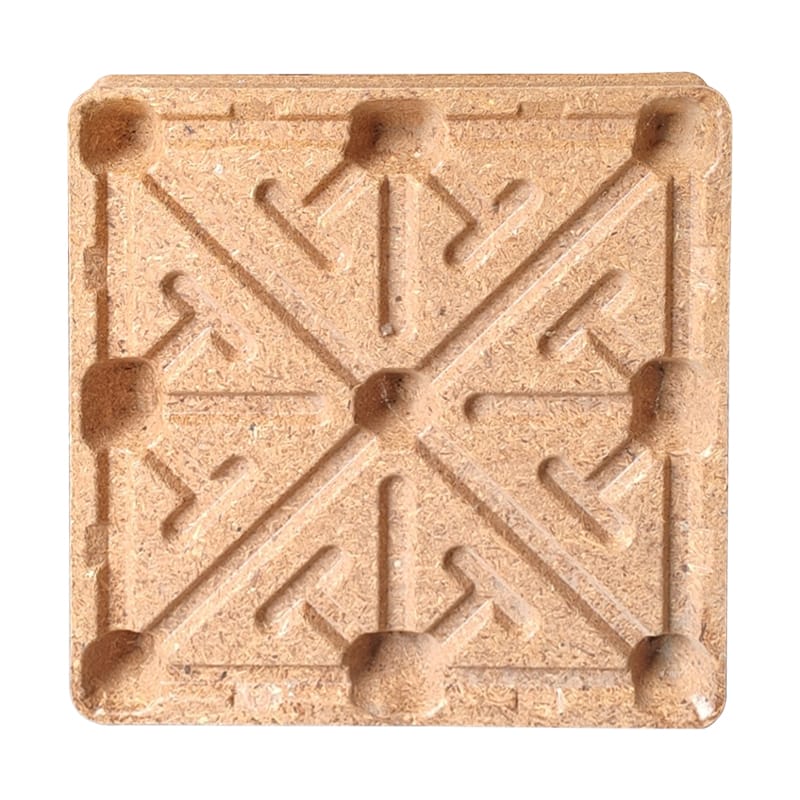
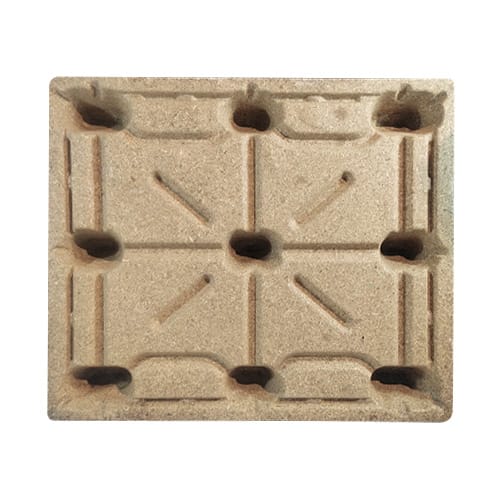
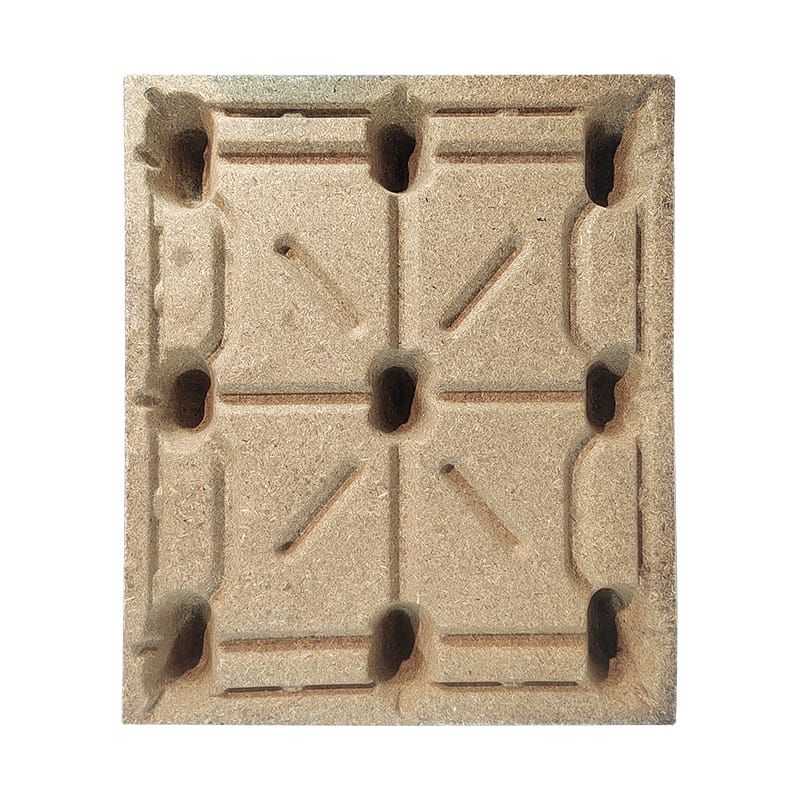
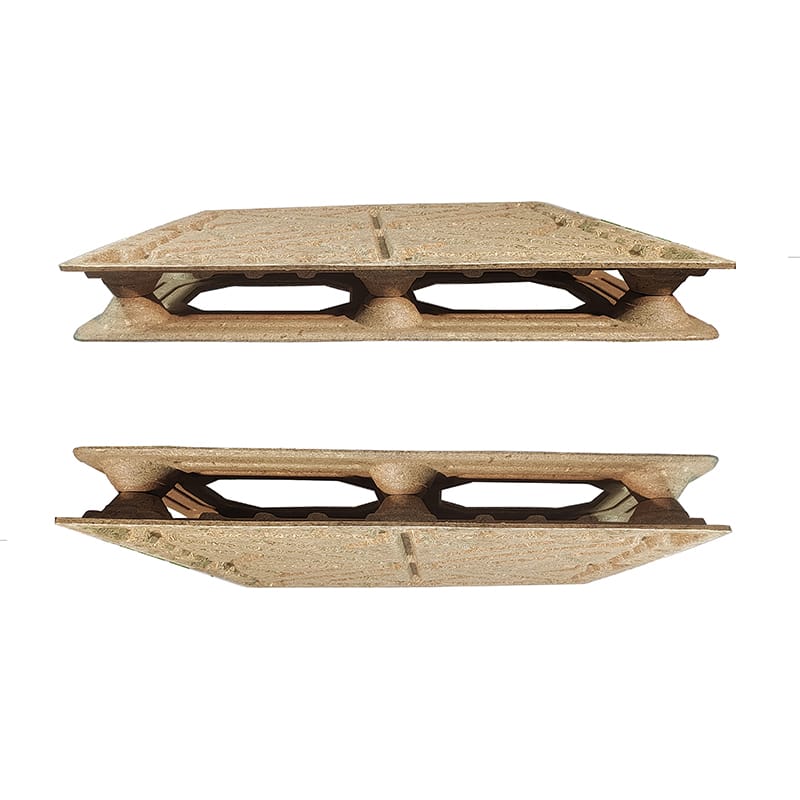
Für Xinyi Pallet liegt der Fertigungsschwerpunkt auf geformten Pflanzenfaserpaletten, die aus verarbeiteten Holz- und Agrarfasermaterialien mit Formpresstechnik hergestellt werden. In der veröffentlichten Fertigungsbeschreibung des Unternehmens werden einmaliges Formen und integrierte Palettenstrukturen hervorgehoben.
Traditionelle Herstellung von Holzpaletten

Die traditionelle Herstellung von Holzpaletten beginnt normalerweise mit der Holzzubereitung.
Einzelne Strukturbauteile werden nach Palettenbauart zugeschnitten und später zur fertigen Plattform zusammengesetzt.
Materialauswahl
Die Qualität des Rohholzes kann beeinflussen:
- Stärke
- Feuchtigkeitsverhalten
- Dimensionsstabilität
- Befestigungselementhalte
- Oberflächenqualität
Materialvariation ist daher ein wichtiger Bestandteil der Produktionskontrolle.
Schneiden und Dimensionieren
Bretter, Blöcke und Läufer müssen innerhalb geeigneter Maßtoleranzen hergestellt werden.
Schlechte Schnittgenauigkeit kann Auswirkungen haben:
- Palettenquadrigkeit
- Gesamtabmessungen
- Gabelöffnungen
- Deckabstand
- Stapelausrichtung
Versammlung
Anschließend werden die Strukturbauteile mit geeigneten Befestigungsmethoden verbunden.
Die Befestigung des Befestigungselements ist wichtig, da Verbindungen Teil der tragenden Struktur sind.
Ein starkes Brett in Verbindung mit einer schlecht positionierten oder inkonsistenten Verbindung kann dennoch eine schwache Stelle erzeugen.
Endkontrolle
Fertige Paletten sollten auf Eigenschaften wie: überprüft werden
- Außenmaße
- Lockere Bestandteile
- Vorstehende Befestigungselemente
- Beschädigte Bretter
- Deckzustand
- Gabelfreiheit
- Strukturalausrichtung
Die traditionelle Herstellung von Holzpaletten ist flexibel, die fertige Leistung hängt jedoch sowohl von der Rohstoffqualität als auch von der Montagekonsistenz ab.
Wie die Herstellung geformter Paletten funktioniert
Die Herstellung geformter Paletten geht unterschiedlich an die Struktur heran.
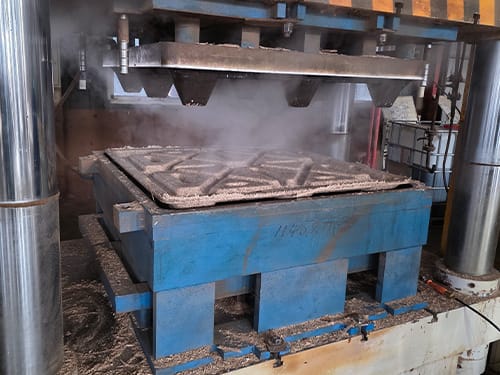
Anstatt die fertige Palette aus vielen separaten Platten und Befestigungselementen zusammenzusetzen, wird verarbeitetes Fasermaterial durch Formpressen in eine definierte Form gebracht.
Xinyi beschreibt seine Formpalettenherstellung Als Verwendung von Materialien wie Holzverarbeitungsrückständen und landwirtschaftlichen Faserressourcen, wobei die fertige Industriepalette durch einen geschlossenen Formprozess geformt wird.
Die spezifischen Fertigungsparameter hängen vom Palettendesign und Materialsystem ab, besonders wichtig sind jedoch mehrere Produktionsstufen.
Rohstoffvorbereitung
Der erste Schritt besteht darin, Material vorzubereiten, das für stabiles Formen geeignet ist.
Materialgröße
Faseriger Rohstoff kann nicht einfach ohne Vorbereitung in eine Form gegeben werden.
Partikel - und Fasereigenschaften beeinflussen, wie gleichmäßig das Material verteilt werden kann und wie effektiv die endgültige Struktur gebildet werden kann.
Große Unstimmigkeiten in der Materialgröße können zu unebenen Bereichen innerhalb der Palette führen.
Entfernung unerwünschten Materials
Produktionsmaterial sollte auch auf Verunreinigungen oder Komponenten kontrolliert werden, die nicht in das entworfene Materialsystem gehören.
Die Materialsauberkeit trägt zur Konsistenz der Produktion bei.
Feuchtigkeitskontrolle
Besonders wichtig ist Feuchtigkeit in der Holzpalettenherstellung.
Zu große Variation kann das Verarbeitungsverhalten und die Konsistenz der fertigen Formstruktur beeinflussen.
Aus diesem Grund sollte die Feuchtigkeitskontrolle als Herstellungsparameter und nicht nur als Lagerproblem nach der Produktion behandelt werden.
Materialmischung und Vorbereitung zum Formen
Nach der Herstellung der Rohfaser muss die Materialmischung für das Formen ausreichend gleichmäßig gemacht werden.
Je nach Herstellungssystem kann die Mischung verarbeitete Pflanzenfasern und geeignete Bindungs- oder Funktionsmaterialien enthalten.
Warum eine einheitliche Verteilung wichtig ist
Ist die Materialmischung nicht gleichmäßig, können verschiedene Abschnitte der Palette unterschiedliche Dichte oder strukturelles Verhalten aufweisen.
Eine gleichbleibende Mischung hilft dem Hersteller bei der Reproduktion:
- Decksektionen
- Stützbeine
- Verstärkungsrippen
- Ecken
- Gabeleintrittszonen
Mit größerer Vorhersehbarkeit.
Materialmenge
Auch die Menge des in die Form eingebrachten Materials bedarf einer Kontrolle.
Einfach mehr Material hinzufügen ist nicht unbedingt besser.
Eine gute Palettenherstellung zielt darauf ab, das Material effizient zu verteilen und ausreichend strukturelle Masse dort zu platzieren, wo das Palettendesign Unterstützung erfordert, ohne unnötiges Gewicht zu erzeugen.
Kompressionsformen und Strukturbildung
In der Formstufe wird das vorbereitete Material zu einer Palettenstruktur.
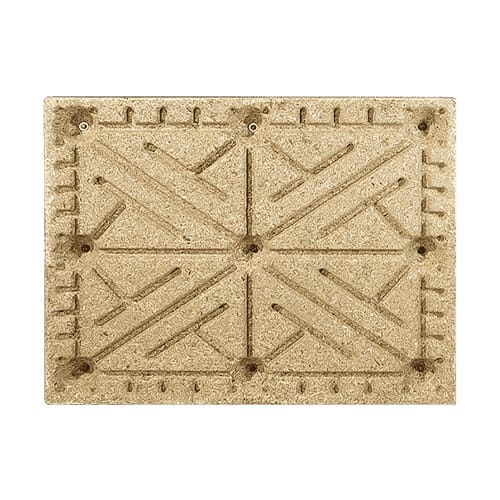
Eine Form definiert viel mehr als die äußere Länge und Breite. Sie kann auch die Decktextur, die Verstärkungsgeometrie, Beine, Kufen, Gitterabschnitte und Gabelzugangsbereiche bestimmen.
Integrierte Geometrie
Eines der charakteristischen Merkmale der Herstellung geformter Paletten ist die Fähigkeit, während desselben Formvorgangs mehrere Strukturmerkmale zu schaffen.
Anstatt einzelne Verstärkungen nachträglich anzubringen, können Rippen und Stützbereiche in die Palettengeometrie integriert werden.
Dies kann besonders nützlich sein, wenn wiederholte Abmessungen und Strukturformen erforderlich sind.
Druckverteilung
Während der Umformung muss das Material im gesamten Formbereich ausreichend und gleichmäßig verdichtet werden.
Eine schlechte Materialverteilung vor dem Formen kann eine gleichmäßige Verdichtung erschweren.
Aus diesem Grund sollten Vorbereitung und Formen nicht als unabhängige Phasen behandelt werden.
Temperaturkontrolle
Wärme ist üblicherweise Teil von Kompressionsformprozessen mit Holzfasern und Klebesystemen.
Das Ziel ist die kontrollierte Bildung und nicht nur die Einwirkung der höchstmöglichen Temperatur auf das Material.
Die Herstellungsparameter müssen an die spezifische Materialformulierung, Palettengeometrie und Produktionsausrüstung angepasst werden.
Warum Formendesign bei der Palettenherstellung wichtig ist
Die Form ist effektiv Teil des technischen Prozesses.
Wenn ein Hersteller die Art und Weise ändern möchte, wie die Palette ein Produkt trägt, kann die Anpassung der Strukturgeometrie manchmal sinnvoller sein als einfach die Erhöhung der Materialmenge.
Verstärkungsrippen
Rippen können die Steifigkeit erhöhen und dabei helfen, Lasten über die Palette zu verteilen.
Ihr Abstand, ihre Tiefe, ihre Richtung und ihre Beziehung zu anderen Strukturelementen sind alle von Bedeutung.
Stützbeine
Beinpositionen betreffen:
- Bodenstütze
- Nistend
- Gabelstapler Zugang
- Kraftbelastung
- Palettenstabilität
Wenn die Palette für eine bestimmte Ladung ausgelegt ist, kann der Hersteller prüfen, ob die Stützbereiche den Hauptlastpunkten des Produkts entsprechen.
Gitterstrukturen
Die Gittergeometrie kann Material verteilen und strukturelle Tiefe erzeugen, ohne dass eine völlig feste, unnötig schwere Palette entsteht.
Für schwerere Lager- und Logistikanwendungen ist Xinyi's Doppelstock-Gitterpalettenserie Verwendet geformte obere und untere Strukturgeometrie in verschiedenen industriellen Abmessungen.
Gabelöffnungen
Der Gabeleintritt sollte auch in die Palette eingebaut werden und nicht als leerer Raum unter dem Deck behandelt werden.
Öffnungsbreite, Höhe, Stützpositionen und Anflugrichtungen beeinflussen alle die praktische Handhabung.
Kühlung, Entformung und Stabilisierung
Das Umformen ist nicht unbedingt das Ende der Palettenherstellung.
Die neu geformte Struktur muss die durch den Prozess definierte Form und Abmessungen beibehalten.
Kontrollierte Entfernung
Eine vorzeitige oder schlecht kontrollierte Entfernung aus der Umformausrüstung kann die fertige Geometrie beeinträchtigen.
Der Prozess muss es der Struktur ermöglichen, ihre beabsichtigte Form beizubehalten.
Dimensionsprüfungen
Nach der Produktion können Hersteller wichtige Messungen überprüfen, wie zum Beispiel:
- Gesamtlänge
- Breite
- Höhe
- Gabeleintrittsmaße
- Beinstellungen
- Deckzustand
Diese Messungen werden besonders wichtig, wenn Paletten in automatisierten oder streng kontrollierten Lagersystemen betrieben werden.
Oberflächeninspektion
Die fertige Oberfläche sollte außerdem auf sichtbare Mängel oder Bereiche untersucht werden, die die Ladung beeinträchtigen könnten.
Abhängig vom Palettendesign können Inspektoren nach Folgendem suchen:
- Unvollständige Formbereiche
- Beschädigte Ecken
- Unregelmäßige Kanten
- Oberflächenfehler
- Deformierung
Die visuelle Inspektion kann die Strukturprüfung nicht ersetzen, bleibt aber für die routinemäßige Produktionskontrolle nützlich.
Palettenherstellung und Lastleistung
Eine Palette kann nicht allein anhand ihrer Herstellungsmethode bewertet werden.
Das fertige Design muss unter den Lastbedingungen funktionieren, für die es vorgesehen war.
Statische Belastung
Wenn eine Palette auf einem ausreichend stützenden Boden ruht, kann ein Großteil ihrer unteren Struktur am Tragen der Last beteiligt sein.
Dadurch entsteht meist ein günstigerer Zustand.
Dynamische Handhabung
Die Bewegung des Gabelstaplers verändert die Art und Weise, wie die Palette gestützt wird.
Die Gabeln tragen nur ausgewählte Bereiche, während Beschleunigungs-, Brems-, Dreh- und Handhabungsstöße zusätzliche Belastungen erzeugen.
Daher wird die Fertigungskonsistenz rund um Gabeleintritts- und Tragzonen für Paletten, die häufig bewegt werden, wichtig.
Gestellspeicher
Die Gestellaufbewahrung kann noch anspruchsvoller sein, da Abschnitte der Palette möglicherweise nicht unterstützte Räume zwischen den Balken überbrücken.
Spezifikationen für die Palettenherstellung, die für das Regalen bestimmt sind, sollten Folgendes berücksichtigen:
- Palettenmaße
- Strahlabstand
- Lastort
- Palettenausrichtung
- Strukturelle Auslenkung
Eine statische Belastungszahl sollte nicht automatisch als Rackleistung interpretiert werden.
Warum Dichte und Materialverteilung wichtig sind
Bei der Herstellung von Formpaletten hängt die strukturelle Leistung teilweise davon ab, wie das Material durch das fertige Teil verteilt wird.
Das Ziel ist nicht unbedingt überall die gleiche Dicke.
Verschiedene Palettenbereiche erfüllen unterschiedliche Aufgaben.
Deckbereiche
Das Deck trägt die Ladung direkt.
Abschnitte unter konzentrierter Ladung erfordern möglicherweise andere strukturelle Eigenschaften als Bereiche, in denen leichte, gleichmäßig verteilte Kartons transportiert werden.
Fork-Entry-Zonen
Diese Bereiche sind sowohl strukturellen Kräften als auch gelegentlichen Handhabungskontakten ausgesetzt.
Die Konstruktion sollte eine ausreichende Festigkeit bieten und gleichzeitig den praktischen Ausrüstungsspielraum beibehalten.
Beine und untere Stützen
Stützelemente übertragen Lasten auf Böden, Gestelle, andere Paletten oder Handhabungsgeräte.
Ihre Geometrie muss konsistent bleiben, da Dimensionsabweichungen beeinflussen können, wie die Palette diese Oberflächen berührt.
Eine gute Palettenfertigung verbindet daher Materialkontrolle mit Strukturdesign.
Palettenabmessungen beginnen mit der Fertigungsgenauigkeit
Palettenlänge und - breite erhalten beim Kauf viel Aufmerksamkeit, aber Maßgenauigkeit beinhaltet mehr als die äußere Grundfläche.
Für industrielle Anwendungen können weitere wichtige Messungen Folgendes umfassen:
- Gesamthöhe
- Gabelöffnungshöhe
- Gabelöffnungsbreite
- Beinabstand
- Läuferabstand
- Deckdicke
- Stützpositionen
Warum Toleranzen wichtig sind
Ein menschlicher Bediener kann kleine Dimensionsunterschiede ausgleichen.
Automatisierte Systeme sind weniger flexibel.
Lagerhäuser, die Förderbänder, automatisierte Lager, Sensoren oder standardisierte Rackpositionen verwenden, legen daher möglicherweise mehr Wert auf wiederholbare Abmessungen.
Produkt-fit
Genaue Palettenabmessungen helfen auch dabei, den Produktüberhang und den ungenutzten Deckbereich zu kontrollieren.
Durch gleichbleibende Abmessungen sind Verpackungslayouts vorhersehbarer, wenn die gleiche Stücklast in großen Mengen wiederholt wird.
Herstellung von einstöckigen und doppelstöckigen Paletten
Die Palettenstruktur beeinflusst die Formgestaltung und die Produktionsanforderungen.
Eindeckpaletten
Eine einstöckige Konfiguration kann Folgendes betonen:
- Geringeres Taragewicht
- Nistend
- Einfacher Fork-Zugang
- Effiziente Leerlagerung
Die Stützbeine und Rippen benötigen noch eine ausreichende strukturelle Integrität für die vorgesehene Belastung.
Doppeldeckpaletten
Doppelstockkonstruktionen umfassen eine zusätzliche untere Stützgeometrie.
Dies kann die Art und Weise der Lastübertragung und die Interaktion der Palette mit Speicher- oder Materialhandhabungssystemen verändern.
Fertigung wird mehr als nur das Erstellen einer anderen Oberfläche Obere und untere Strukturen müssen als eine tragende Konstruktion zusammenarbeiten.
Anwendung kommt zuerst
Keine der beiden Konfigurationen sollte automatisch als überlegen angesehen werden.
Die Palettenherstellung sollte letztlich auf die Anwendung reagieren:
- Was wird geladen?
- Wo berührt das Gewicht das Deck?
- Wie werden sich Stapler nähern?
- Wird die Palette gestapelt?
- Ist Rack-Lagerung im Spiel?
- Werden Förderbänder eingesetzt?
Diese Fragen sind nützlicher als die Auswahl der Struktur basierend auf dem Aussehen.
Qualitätskontrolle in der Palettenherstellung
Die Produktionsqualität sollte eher gemessen als angenommen werden.
Ein praktisches Palettenqualitätskontrollprogramm kann eingehende Materialkontrollen, Prozessüberwachung, Dimensionsinspektion, Inspektion des Endprodukts und eine geeignete Leistungsüberprüfung umfassen.
Rohstoffkontrollen
Hersteller müssen verstehen, ob das eingehende Material den Anforderungen des Produktionsprozesses entspricht.
Für Formfasersysteme können relevante Kontrollen Folgendes umfassen:
- Materialtyp
- Sauberkeit
- Partikeleigenschaften
- Feuchtigkeitszustand
Prozesssteuerung
Bei der Palettenherstellung kommt es auf die Wiederholbarkeit an.
Die Produktionseinstellungen sollten innerhalb der für das spezifische Material- und Palettendesign festgelegten Bereiche gehalten werden.
Dimensionsinspektion
Messungen können Variationen erkennen, bevor Paletten in Kundenlager gelangen.
Wichtige Prüfpunkte sollten die beabsichtigte Anwendung widerspiegeln und nicht auf Länge und Breite beschränkt sein.
Lastüberprüfung
Lasttests sollten aussagekräftige Betriebsbedingungen reproduzieren.
Beispielsweise liefert das Testen einer Palette nur, während sie vollständig auf einem Boden steht, begrenzte Informationen, wenn der Kunde beabsichtigt, die geladene Palette über Regalbalken zu lagern.
Die Testkonfiguration sollte der Art und Weise ähneln, wie die Palette tatsächlich verwendet wird.
Fertigungsqualität vs. Erscheinungsbild der fertigen Palette
Das Aussehen kann gewisse Produktionsprobleme aufdecken, aber eine optisch saubere Palette ist nicht automatisch eine strukturell geeignete Palette.
Ebenso benötigt eine Industriepalette keine dekorative Veredelung, um eine effektive Leistung zu erbringen.
Eine bessere Bewertung trennt sichtbare Qualität von struktureller Qualität.
| Qualitätsbereich | Was es anzeigen kann |
|---|---|
| Oberflächenzustand | Form- oder Endbearbeitungskonsistenz |
| Maßhaltigkeit | Produktionswiederholbarkeit |
| Gabelöffnungskonsistenz | Handhabungskompatibilität |
| Bein - und Rippengeometrie | Strukturelle Reproduktion |
| Palettengewichtskonsistenz | Material-/prozesskonsistenz |
| Belastungsprüfung | Strukturfähigkeit unter definierten Bedingungen |
| Chargenprüfung | Laufende Fertigungskontrolle |
Für industrielle Anwender ist diese Unterscheidung wichtig, da der Zweck der Qualitätskontrolle eine zuverlässige Leistung und nicht nur ein einheitliches Erscheinungsbild ist.
Wie sich die Palettenherstellung auf die Lagerautomatisierung auswirkt

Automatisierung übt neuen Druck auf die Genauigkeit der Palettenherstellung aus.
Ein manuell gehandhabtes Lager verträgt oft relativ kleine Unterschiede in der Palettenposition oder den Abmessungen, da die Bediener ihre Vorgehensweise anpassen können.
Automatisierte Ausrüstung hängt stärker von der Konsistenz ab.
Förderbewegung
Der Palettenboden benötigt einen vorhersehbaren Kontakt mit Rollen, Ketten oder anderen Transportkomponenten.
Eine inkonsistente untere Geometrie kann die Art und Weise verändern, wie sich Paletten über Geräte bewegen.
Automatisierter Speicher
Speichersysteme können auf wiederholbaren Außenabmessungen und Stützpositionen basieren.
Wenn sich eine Produktionscharge deutlich von einer anderen unterscheidet, kann die Palette unterschiedlich mit Führungen, Sensoren, Stopps oder unterstützenden Geräten interagieren.
Gabel- und Eintrittsgeometrie
Automatisierte Palettenhandhabungsgeräte erfordern möglicherweise eine strengere Kontrolle der Öffnungen, da weniger Möglichkeiten zur manuellen Korrektur bestehen.
Für diese Anwendungen werden die Fertigungstoleranzen von Paletten zu einem betrieblichen Problem und nicht nur zu einer Messgröße in Fabrikqualität.
Wie die Herstellung die Lagerung leerer Paletten beeinflusst
Paletten verbrauchen auch Platz, wenn sie nicht geladen werden.
Die Herstellungsmethode kann bestimmen, ob ein Design effizient gestapelt oder verschachtelt werden kann.
Nistbare Pressholzpaletten
Einige geformte Designs enthalten Beine, die teilweise in entsprechende Bereiche einer anderen Palette passen.
Dadurch verringert sich der vertikale Platzbedarf mehrerer leerer Einheiten.
Der Nutzen wird bei der Verwaltung großer Palettenbestände sinnvoller.
Nesting-konsistenz
Eine effektive Verschachtelung hängt auch von der Dimensionswiederholbarkeit ab.
Wenn Beine oder passende Öffnungen zu stark variieren, können Palettenstapel weniger stabil werden oder nicht bis zur vorgesehenen Tiefe nisten.
Wieder einmal wirkt sich die Fabrikkonsistenz auf die Lagerleistung aus.
Nachhaltigkeit und Materialeffizienz bei der Palettenherstellung
Materialeffizienz wird im modernen Palettendesign immer relevanter.
Für die Produktion geformter Paletten können nutzbare Holzverarbeitungs- und Agrarfaserressourcen zu Produktionsmitteln werden, anstatt sich nur auf herkömmliche Vollplatten zu verlassen. Xinyi gibt an, dass bei der Produktion Holzabfälle, landwirtschaftliche Rückstände, sekundär verarbeitetes Holz und damit verbundene pflanzliche Ressourcen verwendet werden.
Aus technischer Sicht sollte Nachhaltigkeit nicht bedeuten, einfach nur Material zu reduzieren.
Die Palette muss noch eine ausreichende strukturelle Leistung erbringen.
Ein nützlicheres Ziel ist die effiziente Nutzung von Material durch:
- Optimierung von Rippen und Stützbereichen
- Begrenzung unnötiger Masse
- Abgleich der Abmessungen mit der Ladung
- Verbesserung der leeren Palettenspeicherung
- Aufrechterhaltung der Fertigungskonsistenz
Eine vorschnell ausfallende leichtere Palette ist nicht automatisch die bessere Materiallösung.
Leistung und Ressourcennutzung müssen gemeinsam betrachtet werden.
Welche Informationen sollten vor der Palettenherstellung definiert werden?
Die kundenspezifische Palettenproduktion funktioniert am besten, wenn der Hersteller die Betriebsbedingungen versteht, bevor Werkzeug- oder Strukturentscheidungen abgeschlossen sind.
Nützliche Informationen umfassen:
Produktanforderungen
- Komplettes Stücklastgewicht
- Verpackte Abmessungen
- Lastverteilung
- Große Kontaktstellen
- Schwerpunkt, sofern relevant
Handhabungsanforderungen
- Gabelstaplertyp
- Gabelabmessungen
- Einfahrrichtung
- Handhabungsfrequenz
- Förderereinsatz
- Automatisierte Ausrüstung
Speicheranforderungen
- Bodenspeicher
- Stapelung
- Rack-konfiguration
- Voraussichtliche Lagerdauer
Palettenanforderungen
- Außenmaße
- Gesamthöhe
- Wunschdeckstruktur
- Speichermethode für leere Paletten
- Anforderungen an die Maßtoleranz
Bei komplizierten Industrieprodukten kann eine Lastzeichnung sinnvoller sein als eine kurze schriftliche Spezifikation.
Häufige Probleme bei der Palettenherstellung, auf die Sie achten sollten
Fertigungsprobleme sind bei der ersten Inspektion nicht immer offensichtlich.
Inkonsistente Dimensionen
Abweichungen können zu Schwierigkeiten bei Regalen, Gabelstaplern, Förderbändern und automatisierten Geräten führen.
Ungleichmäßige Materialverteilung
Bei geformten Strukturen kann eine inkonsistente Materialverteilung verschiedene Bereiche der Palette beeinflussen.
Schlecht definierte Belastungsanforderungen
Auch eine konsequent gefertigte Palette kann ungeeignet sein, wenn sie anhand unvollständiger Angaben zur Ladung konstruiert wurde.
Schwache Gabel-Entry-Geometrie
Eine Öffnung, die einen Gabelstapler technisch akzeptiert, bietet möglicherweise immer noch nicht genügend praktische Freiräume für den häufigen Lagerbetrieb.
Überschüssiges Material ohne strukturellen Zweck
Durch das Hinzufügen von Material werden nicht immer die Bereiche verbessert, die den höchsten Stress erfahren.
Eine effiziente Palettenherstellung konzentriert sich auf Strukturdesign und nicht nur auf Masse.
Unzureichende Anwendungstests
Die Tests sollten widerspiegeln, wie die fertige Palette tatsächlich unterstützt und gehandhabt wird.
Eine Palette, die für mehrere Umgebungen bestimmt ist, erfordert möglicherweise mehr als eine Bewertungsbedingung.
Was sollten Sie einen Palettenhersteller fragen?
Bei der Bewertung eines Fertigungspartners sind technische Fragen sinnvoller, als sich nur auf das fertige Produktfoto zu konzentrieren.
Fragen Sie nach:
- Rohstoffkontrolle
- Herstellungsverfahren
- Maßprüfung
- Palettenstruktur
- Lastprüfung
- Produktionskonsistenz
- Anpassungsfähigkeit
- Gabeleintrittsdesign
- Rack Kompatibilität
- Fördererverträglichkeit
- Kontrolle der Chargenqualität
Fragen Sie bei kundenspezifischen Anwendungen auch, wie der Hersteller die Palette ändern würde, wenn sich die Produktkontaktpunkte, die Gewichtsverteilung oder die Lagerungsmethode ändern würden.
Die Antwort kann Aufschluss darüber geben, ob der Lieferant die Palettenherstellung als wiederholbares technisches Verfahren ansieht oder einfach nur eine bestehende Größe anbietet.
Schlussfolgerung
Die moderne Palettenfertigung kombiniert Materialverarbeitung, Strukturdesign, Umformen oder Zusammenbauen, Maßkontrolle und Leistungsüberprüfung.
Die Herstellungsmethode ist wichtig, da Paletten mehr als nur stationäres Gewicht halten. Sie werden wiederholt angehoben, bewegt, gestapelt, gelagert und zunehmend in Förderbänder und automatisierte Lagergeräte integriert.
Bei geformten Holzpaletten tragen die Rohstoffvorbereitung, die Feuchtigkeitskontrolle, die gleichmäßige Materialverteilung, das Formpressen, die Strukturgeometrie und die Inspektion des Endprodukts zur Konsistenz bei. Rippen, Beine, Deckbereiche und Gabelöffnungen sollten als funktionale Teile der Palette und nicht als kosmetische Merkmale behandelt werden.
Für Käufer ist der nützlichste Ansatz, die fertige Palette zusammen mit der Art und Weise ihrer Herstellung zu bewerten. Fragen Sie, ob die Abmessungen wiederholbar sind, ob die Belastungsprüfung die tatsächlichen Stützbedingungen widerspiegelt, ob die Palettenstruktur mit der Ladung übereinstimmt und ob die Fertigungsqualität über die Wiederholungsproduktion hinweg konstant bleiben kann.
Bei einer guten Palettenherstellung geht es letztlich um Wiederholbarkeit Eine Palette sollte nicht nur einmal korrekt funktionieren; Paletten, die nach derselben Spezifikation hergestellt wurden, sollten während des gesamten beabsichtigten Logistikbetriebs weiterhin vorhersehbare Abmessungen, Handhabungskompatibilität und strukturelle Leistung bieten.
FAQ
Was ist Palettenherstellung?
Bei der Palettenherstellung handelt es sich um den Prozess der Umwandlung von Holz, verarbeiteten Fasern, Kunststoffen, Metallen oder anderen Materialien in Lastträgerplattformen zur Lagerung und Handhabung. Der Prozess kann das Schneiden und Zusammenbauen oder Formen umfassen, gefolgt von einer Dimensionsinspektion und Leistungsüberprüfung.
Wie werden Formpaletten hergestellt?
Pressholzpaletten werden im Allgemeinen hergestellt, indem faserige Rohstoffe hergestellt, ihr Zustand kontrolliert, das Materialsystem gemischt und unter Hitze und Druck in einer entworfenen Form geformt werden. Die Form kann Deck, Rippen, Beine und andere Strukturmerkmale in die fertige Palette integrieren.
Warum ist die Qualitätskontrolle bei der Palettenherstellung wichtig?
Die Qualitätskontrolle trägt dazu bei, konsistente Abmessungen, Materialverteilung, Strukturgeometrie, Gabelöffnungen und fertigen Zustand aufrechtzuerhalten. Bei Lagern, die Gestelle, Förderbänder oder automatisierte Geräte verwenden, kann die Fertigungskonsistenz direkten Einfluss auf die Handhabungszuverlässigkeit und die Palettenleistung haben.
Was beeinflusst die Qualität der Palettenherstellung?
Zu den Schlüsselfaktoren zählen Rohstoffkonsistenz, Feuchtigkeitskontrolle, Maßgenauigkeit, Produktionseinstellungen, Form - oder Montagequalität, Strukturdesign und Inspektion des fertigen Produkts Die Lastüberprüfung sollte auch die in der realen Anwendung erwarteten Stütz - und Handhabungsbedingungen widerspiegeln.
Kann die Palettenherstellung für industrielle Lasten individuell angepasst werden?
Ja. Palettenabmessungen, Deckgeometrie, Bewehrung, Stützbereiche, Gabelöffnungen und andere Strukturmerkmale können angepasst werden, wenn die Herstellungsmethoden dies zulassen. Eine effektive Anpassung beginnt mit dem Ladungsgewicht, den Kontaktpunkten, der Handhabungsausrüstung und den Lagerbedingungen.