

Choosing between custom made pallets and standard pallets represents one of the most significant decisions you will make for your supply chain operations. This choice impacts everything from daily handling efficiency to long-term cost structures. Many logistics managers default to standard pallets without fully evaluating whether custom solutions might actually save money or improve performance. According to industry research from the Material Handling Institute, approximately 35 percent of shipping applications would benefit from custom engineered solutions, yet many companies continue using inadequate standard options that increase costs and reduce efficiency. Understanding the true differences between these options helps you make informed decisions that align with your operational requirements and business objectives.
Table of Contents
Understanding the Fundamental Differences Between Custom and Standard Pallets
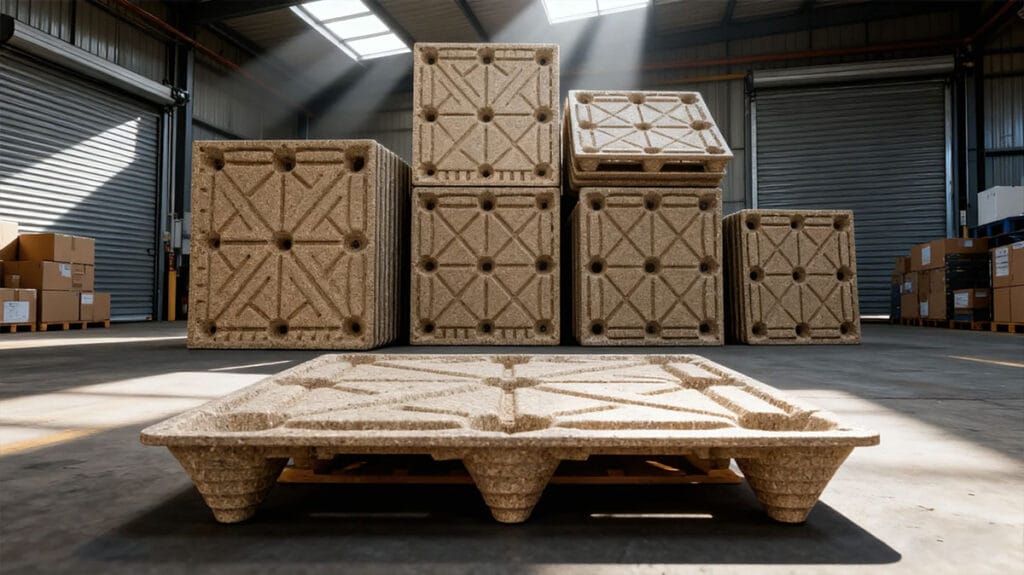
Standard pallets follow established dimensions defined by industry organizations to ensure universal compatibility across global supply chains. The most common sizes include the 48 by 40 inch GMA pallet widely used in North America, the 1200 by 800 mm Euro pallet prevalent in European markets, and the 45 by 45 inch pallet common in Asian markets. Manufacturers produce these standard options in high volumes using automated processes, resulting in consistent quality and lower unit costs typically ranging from $8 to $15 per unit for wooden pallets. The ubiquity of standard pallets means replacement parts are readily available, and virtually any pallet service provider can perform repairs quickly and inexpensively.
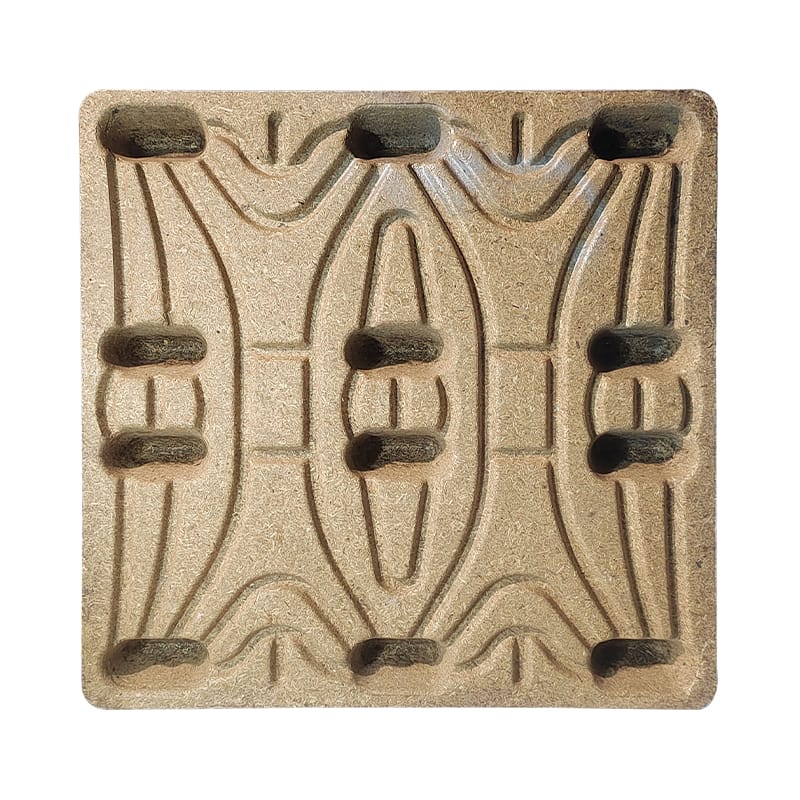
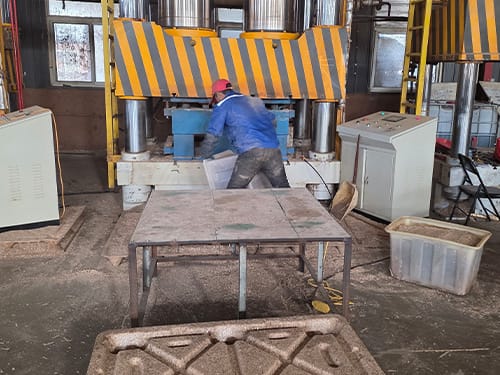
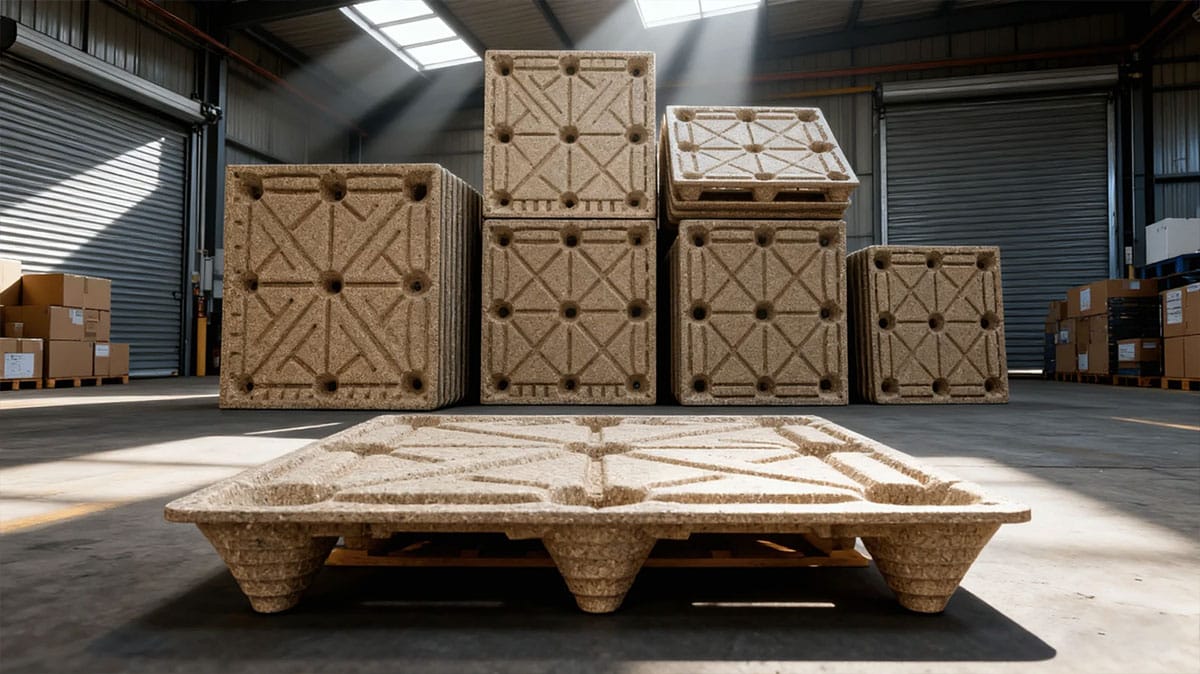
Custom made pallets represent engineered solutions designed specifically for individual applications. These specialized pallets incorporate precise dimensions tailored to product specifications, load requirements, and handling equipment. Custom designs may include specialized features such as reinforced construction for extreme loads, integrated tracking technology for supply chain visibility, or branded surfaces for marketing purposes. The custom design process involves collaboration between engineering teams and customers to develop solutions that optimize space utilization, minimize product damage, and enhance operational efficiency. While custom pallets typically cost 30 to 100 percent more than standard equivalents, they often deliver superior total cost of ownership through improved performance and reduced waste.
The decision matrix between standard and custom made pallets depends on multiple factors. Standard pallets excel when products fit within conventional size parameters, load requirements fall within standard specifications, and supply chain partners use compatible handling equipment. Approximately 65 percent of shipping applications can be adequately served by standard pallets without significant compromise. Custom pallets become necessary when products have unique dimensions exceeding standard boundaries, require specialized protection features, or need to interface with proprietary handling systems. Companies that properly match pallet choice to application requirements report 20 to 40 percent improvement in operational efficiency.
Cost Analysis: Breaking Down the True Cost Comparison
Upfront investment represents only one component of the true cost equation. Standard pallets benefit from economies of scale, with manufacturers producing thousands of identical units daily. This production efficiency results in lower unit costs, typically ranging from $8 to $15 for wooden standard pallets and $15 to $40 for plastic options. Custom pallets require design engineering, specialized tooling, and smaller production runs, increasing costs to $12 to $30 for basic custom designs and $30 to $100 or more for complex engineered solutions. However, standard pallet costs can increase significantly when modifications become necessary to make them fit unique applications. Improperly sized standard pallets often require additional packaging materials, void fillers, and reinforcement that add $5 to $15 per shipment in consumable costs.
The comprehensive cost analysis must consider total cost of ownership over the pallet lifecycle. Custom made pallets often deliver superior TCO despite higher upfront costs through improved space utilization, reduced product damage, and enhanced operational efficiency. Companies using properly engineered custom pallets report 15 to 40 percent reduction in product damage rates, translating to annual savings of $50,000 to $500,000 depending on volume. Custom designs optimized for warehouse racking can increase storage density by 20 to 35 percent, effectively reducing real estate costs and enabling more inventory within existing facilities. Standard pallets may require additional handling equipment, specialized storage configurations, or supplemental packaging to achieve comparable results, often at higher total costs.
Volume considerations significantly impact the break even point between options. For low volume applications under 500 units annually, standard pallets typically prove more economical due to minimal design costs. However, as volumes increase, custom pallets become increasingly competitive through volume discounts that reach 30 to 50 percent for orders exceeding 1,000 units. High volume custom applications often achieve cost parity with standard pallets when factoring in reduced damage, improved efficiency, and lower consumable costs. Companies shipping 2,000 or more units annually should conduct detailed TCO analysis to determine the optimal solution for their specific situation.
Custom Made Pallets Specifications
| Item No. | Size (LWH mm) | Dynamic Load (KG) | Static Load (KG) | Entry Type |
|---|---|---|---|---|
| 1 | 1000*1000*100 | 2000 | 4000 | Four-way Entry |
| 2 | 1000*1000*130 | 2000 | 4000 | Four-way Entry |
| 3 | 1050*1050*130 | 2000 | 4000 | Four-way Entry |
| 4 | 1100*1100*130 | 2000 | 4000 | Four-way Entry |
| 5 | 1200*800*130 | 2000 | 4000 | Four-way Entry |
| 6 | 1200*1000*135 | 2000 | 4000 | Four-way Entry |
| 7 | 1200*1100*135 | 2000 | 4000 | Four-way Entry |
| 8 | 1200*1200*135 | 2000 | 4000 | Four-way Entry |
| 9 | 1300*1100*140 | 2000 | 4000 | Four-way Entry |
| 10 | 1300*1300*140 | 2000 | 4000 | Four-way Entry |
| 11 | 1320*1150*140 | 2000 | 4000 | Four-way Entry |
Performance Comparison: Load Capacity and Durability
Standard pallets offer predictable load capacities based on established engineering standards. A standard 48 by 40 inch wooden pallet typically supports static loads of 4,000 to 4,600 pounds and dynamic loads of 2,000 to 2,800 pounds under normal handling conditions. These specifications serve general applications well but may fall short for specialized requirements. Custom made pallets can be engineered to exceed these standard specifications significantly, with heavy duty designs supporting static loads exceeding 10,000 pounds and dynamic loads of 5,000 pounds or more. The ability to specify exact load requirements allowscustom made pallets to incorporate appropriate safety factors based on application specifics rather than generic standards. This precision engineering eliminates over engineering in light applications while providing necessary margin for heavy duty use, optimizing both performance and material usage.
Service life varies dramatically based on design, material selection, and usage patterns. Standard wooden pallets typically last 2 to 5 years under normal commercial use, while plastic standard pallets can achieve 10 to 15 years of service. Custom pallets can be engineered for extended service life through optimized construction, material selection, and protective features. Custom wooden pallets designed for durability can achieve 5 to 8 years of service, while custom metal pallets may last 15 to 20 years or more. The ability to match design to specific usage patterns significantly impacts longevity. Custom pallets designed for high frequency turnover applications may incorporate reinforced components that extend service life by 50 to 100 percent compared to standard alternatives.
Independent testing reveals significant performance differences under demanding conditions. Standard pallets tested in cold chain environments showed 25 percent higher failure rates at temperatures below 32 degrees Fahrenheit compared to custom designed cold chain pallets. Custom pallets engineered for outdoor storage with pressure treated materials demonstrated 80 percent longer service life in wet environments compared to untreated standard alternatives. Forklift impact testing revealed that custom pallets with reinforced fork entries showed 60 percent lower damage rates under repetitive handling. These performance advantages compound over time, resulting in lower replacement costs, reduced downtime, and fewer operational disruptions.
Space Optimization and Warehouse Efficiency
Warehouse space represents one of the most significant operational costs for distribution operations. Custom made pallets designed specifically for product dimensions and storage configurations can increase storage density by 20 to 40 percent compared to standard pallets. This optimization reduces the number of pallet positions required, effectively increasing warehouse capacity without physical expansion. A 100,000 square foot warehouse utilizing custom made pallets can store the equivalent inventory of a 125,000 to 140,000 square foot facility using standard pallets. This space optimization translates to potential annual savings of $50,000 to $200,000 in real estate costs depending on location and market rates. Custom designs can also optimize vertical storage by ensuring precise compatibility with automated storage and retrieval systems, enabling full utilization of vertical cube space.
Transportation costs represent another major expense where custom made pallets can deliver substantial savings. Standard pallets may leave unused space in shipping containers and trailers due to dimensional mismatches between pallet size and product dimensions. Custom made pallets designed to match product footprint precisely can reduce void space by 15 to 30 percent, increasing shipping efficiency and reducing freight costs per unit. Companies using custom made pallets report average transportation cost reductions of 8 to 12 percent due to improved load configuration. Additionally, custom designs can optimize weight distribution to maximize payload while staying within legal weight limits, reducing the number of shipments required for large volumes.
Modern distribution facilities increasingly rely on automated handling systems that require precise dimensional tolerances. Standard pallets may not perfectly interface with automated equipment, requiring adjustments or resulting in system inefficiencies. Custom made pallets engineered specifically for automated systems ensure perfect compatibility with conveyor systems, automated storage and retrieval systems, robotic handling equipment, and stretch wrapping machines. This precise integration reduces system downtime, improves throughput by 10 to 25 percent, and extends equipment life by reducing wear and tear caused by misaligned loads. Facilities with high levels of automation typically achieve ROI on custom made pallets investments within 12 to 18 months through improved equipment performance.
Industry-Specific Requirements and Compliance
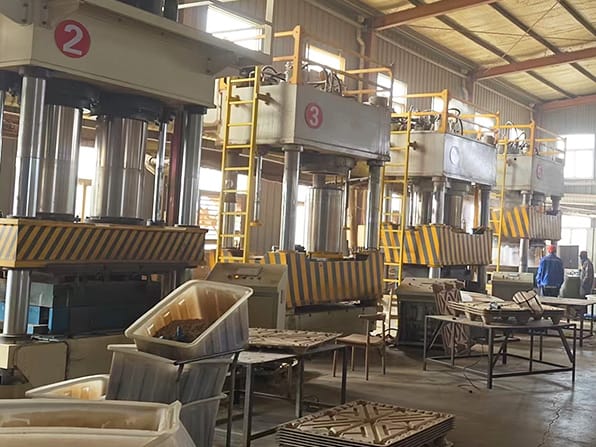
Regulated industries face stringent requirements that standard pallets may not adequately address. Food industry applications require FDA approved materials, smooth surfaces for easy cleaning, and resistance to bacterial contamination. Pharmaceutical operations demand GMP compliance, traceability documentation, and clean room compatibility. Custom made pallets can be engineered with these specific requirements in mind, incorporating features such as smooth non porous surfaces, rounded corners for easy cleaning, integrated tracking for traceability, and documentation for regulatory compliance. Companies in regulated industries report 30 to 50 percent fewer compliance related issues when using purpose designed custom pallets compared to attempting to adapt standard solutions.
Manufacturing and heavy industry applications often exceed the capabilities of standard pallets. Automotive components, industrial machinery, and construction materials require specialized support that standard designs cannot provide. Custom made pallets can incorporate reinforced construction, specialized materials, and engineered support points to handle extreme loads safely. Heavy duty custom pallets support loads exceeding 10,000 pounds while maintaining dimensional stability and structural integrity. These specialized designs enable manufacturers to handle larger, heavier products more efficiently while reducing workplace incidents related to pallet failure. Companies handling heavy products report 60 to 80 percent reduction in pallet related incidents when switching to custom engineered solutions.
International shipping introduces additional complexity through varying dimensional standards and phytosanitary requirements. Standard pallets designed for domestic markets may not comply with international sizing standards or may require expensive modifications to meet export requirements. Custom made pallets can be designed from the outset to comply with international standards such as EPAL specifications for European markets or ISO standards for global trade. Custom export pallets incorporate proper certification, appropriate sizing for destination markets, and features that facilitate customs clearance. Companies using export optimized custom pallets report 40 to 60 percent fewer customs delays and reduced product damage during international transportation.
Branding and Marketing Opportunities
Custom made pallets offer unique branding opportunities that standard solutions cannot provide. Branded pallets display company logos, colors, and messaging throughout the supply chain, creating continuous brand exposure at every touchpoint. Companies using branded custom made pallets report increased brand recognition among supply chain partners and end customers. The branding value extends beyond mere visibility, as consistent presentation reinforces quality perceptions and professionalism. Custom pallets can incorporate codes linking to product information, sustainability messaging, or promotional content, transforming logistics equipment into interactive marketing channels.
Standard pallets provide no inherent security features, making products vulnerable to theft during transportation and storage. Custom made pallets can incorporate security features such as integrated tracking, tamper evident seals, specialized locking mechanisms, and tagging for real time monitoring. These security features reduce shrinkage rates by 50 to 70 percent according to loss prevention studies. Custom designs can also include features that make products more difficult to remove from pallets without proper equipment, increasing the time and effort required for theft and acting as a deterrent. Companies transporting high value products consistently report return on investment on security enhanced custom made pallets within 6 to 12 months through reduced losses.
Custom made pallets contribute to improved customer experience through better product protection and presentation. Products arriving on properly designed custom made pallets experience 20 to 40 percent less damage, reducing returns and improving customer satisfaction. Custom designs can include features that facilitate easy product removal, proper storage at customer locations, and compatibility with customer receiving equipment. Retail customers receiving products on custom designed display pallets report faster shelf placement times and reduced handling labor. These customer experience improvements translate to higher customer retention rates and increased repeat business.
Lead Time and Supply Chain Considerations
Standard pallets offer immediate availability from stock at most distributors, with typical delivery times of 1 to 5 business days. This immediate availability makes standard pallets ideal for urgent requirements and fluctuating demand patterns. Custom made pallets require design, prototyping, and production time that extends lead times to 3 to 12 weeks depending on complexity. Simple custom designs may be produced within 3 weeks, while complex engineered solutions can take up to 12 weeks from initial consultation to delivery. Companies implementing custom pallet programs must plan inventory requirements carefully to account for these extended lead times or establish safety stock to bridge production gaps.
The different lead time characteristics impact inventory management strategies. Standard pallet availability enables just in time inventory approaches with minimal safety stock requirements. Custom made pallets typically require larger safety stock positions or strategic inventory buffers to ensure continuous supply during production lead times. However, once custom made pallets are in production, manufacturers can maintain inventory buffers for repeat orders, reducing lead times for subsequent orders to 2 to 4 weeks. Companies often implement hybrid approaches using standard pallets for variable demand and custom pallets for established stable volume requirements.
Supply chain disruptions have highlighted the importance of resilience in pallet sourcing strategies. Standard pallets offer supply advantages through multiple supplier sources and widespread availability, reducing dependency on any single manufacturer. Custom made pallets typically involve deeper supplier relationships and more specialized production capabilities, potentially creating single points of failure. However, custom pallets can be designed for increased durability and repairability, reducing replacement frequency and extending service life. Leading companies implement dual sourcing strategies for critical custom pallets and maintain emergency stock of standard pallets to ensure business continuity during supply disruptions.
Environmental Impact and Sustainability
Custom made pallets often demonstrate superior environmental performance through optimized material usage. By engineering pallets specifically for load requirements rather than using one size fits all standard specifications, custom designs typically use 15 to 30 percent less material while maintaining or improving performance. This material reduction translates directly to lower environmental impact in terms of resource consumption, manufacturing energy, and transportation emissions. Companies prioritizing sustainability report that custom pallets help them achieve corporate environmental goals while delivering operational benefits. Life cycle assessments consistently show that properly engineered custom pallets have lower environmental footprints than standard pallets used in applications for which they were not designed.
The extended service life of custom made pallets contributes significantly to sustainability objectives. By lasting 50 to 100 percent longer than standard alternatives in demanding applications, custom pallets reduce the frequency of replacement and the associated environmental impacts of manufacturing new pallets. Many custom pallets are designed for repairability with replaceable components, extending service life further and supporting circular economy principles. Companies using durable custom pallets report 40 to 60 percent reduction in pallet replacement frequency, directly reducing waste generation and resource consumption over time.
Material selection and design characteristics affect the recyclability of pallets at end of life. Custom made pallets can be engineered from single materials or easily separable components to facilitate recycling. Manufacturers can specify recycled content in custom pallets to support circular material flows. Standard pallets, while widely recyclable, may incorporate mixed materials or treatments that complicate recycling processes. Forward thinking companies work with suppliers to design custom pallets with explicit end of life plans, ensuring materials can be recovered and reused at the end of service life rather than becoming waste.
Making the Decision: A Framework for Choosing the Right Pallet
The decision between custom made and standard pallets should begin with a systematic evaluation of your specific requirements. Key assessment criteria include product dimensions and weight characteristics, load requirements, handling equipment specifications, storage configurations, regulatory compliance needs, and cost considerations. Document each criterion with specific measurable requirements rather than general statements. This structured assessment provides the foundation for objective decision making and helps identify which aspects of your operation truly require customization versus where standard solutions will adequately meet needs.
Once requirements are documented, conduct a comprehensive cost benefit analysis comparing total cost of ownership for both options. Include all relevant cost factors including unit price, shipping costs, storage costs, damage rates, replacement frequency, labor costs, and opportunity costs. Quantify benefits such as improved efficiency, increased storage density, reduced damage, and enhanced brand visibility. Custom made pallets typically demonstrate clear return on investment when annual volumes exceed 2,000 units, load requirements exceed standard specifications, or when unique features provide operational advantages that outweigh additional costs.
For companies considering transitioning from standard to custom pallets, a phased implementation approach minimizes risk and maximizes learning. Begin with a pilot program testing custom pallets for a specific product line or application segment. Monitor performance metrics including damage rates, handling efficiency, and total costs. Use pilot results to refine custom designs and quantify benefits before broader implementation. Companies following this phased approach typically achieve 25 to 35 percent better outcomes in full scale implementation compared to immediate enterprise wide rollouts. The pilot approach also allows identification of potential issues and development of solutions before larger investments.
Many leading companies recognize that both standard and custom made pallets have appropriate applications within their operations. Hybrid strategies utilize standard pallets for commodity products with standard dimensions while employing custom pallets for unique or high value items. This approach balances the cost effectiveness of standard solutions with the performance advantages of custom designs. Companies implementing hybrid strategies typically achieve 80 to 90 percent of the benefits of full custom pallet implementation while maintaining the flexibility and cost advantages of standard pallets for appropriate applications.
Choosing between custom made pallets and standard pallets requires careful consideration of your specific operational requirements, cost structure, and strategic objectives. By evaluating total cost of ownership, performance requirements, and long term benefits, you can make informed decisions that optimize your supply chain efficiency while controlling costs. The optimal solution often involves thoughtful combination of both approaches rather than an exclusive commitment to either option, allowing you to leverage the strengths of each where they provide the greatest value to your operation.
FAQ
How much more expensive are custom made pallets compared to standard pallets?
Custom made pallets typically cost 30 to 100 percent more than standard equivalents depending on complexity and volume. Basic custom designs may add 20 to 40 percent to unit costs, while complex engineered solutions can double or triple standard pricing. However, total cost of ownership often favors custom pallets for high-volume or specialized applications due to reduced damage, improved efficiency, and longer service life. Request comprehensive quotes that break down design, tooling, and production costs to make accurate comparisons.
Can I get custom made pallets with my company branding?
Yes, custom made pallets can incorporate company logos, colors, and other branding elements. Branding options include heat-stamped logos, painted surfaces, or integrated color materials during manufacturing. Some advanced options include printed codes that link to product information or promotional content. Branding typically adds 5 to 15 percent to unit costs depending on the complexity and permanence of the branding method. Consider branding for high-value products or when pallets remain visible throughout your supply chain.
Are custom made pallets recyclable at the end of their service life?
Yes, most custom made pallets are designed with recyclability in mind. Wooden custom pallets can be recycled into mulch, biomass fuel, or new pallet components. Plastic custom pallets are recyclable into new plastic products through standard recycling streams. Metal custom pallets have high scrap value and are easily recycled. Some custom designs use hybrid materials that may require specialized recycling processes. Specify your end-of-life preferences during design to ensure appropriate material selection and easy recyclability when the pallets reach end of service.