

Table of Contents
Introduction
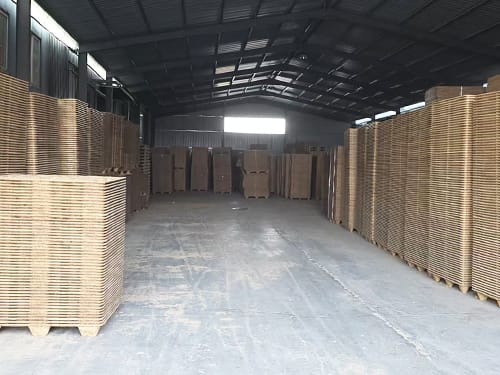
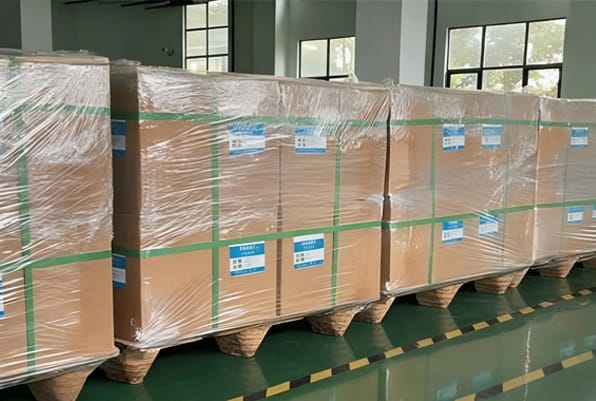
If you are managing export logistics, warehouse distribution, or cross-border supply chains, you already know that every kilogram matters. Freight pricing models are changing, sustainability pressure is increasing, and storage density is becoming a key performance metric. This is why lightweight pallets are rapidly becoming one of the most searched and discussed topics in modern logistics planning.
You are no longer just choosing a pallet. You are choosing transportation efficiency, regulatory compliance, environmental positioning, and total lifecycle cost.
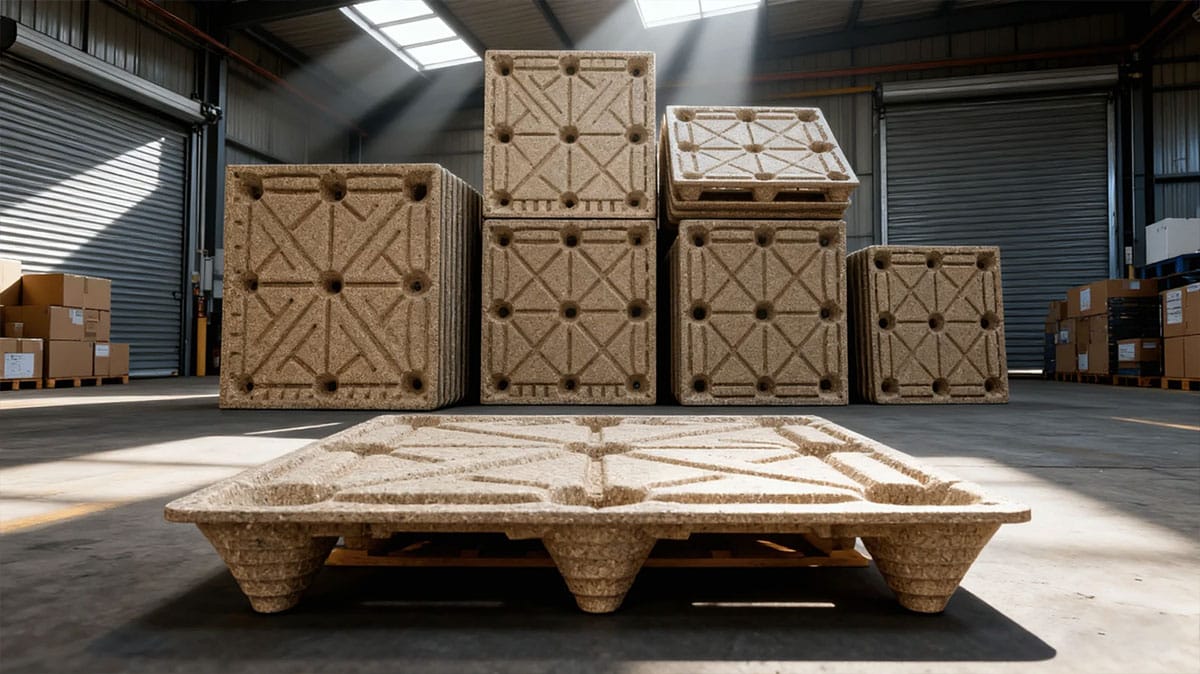
Today, more companies are moving away from traditional heavy pallet systems and toward engineered molded fiber pallet structures. These are not basic wooden pallets and not plastic. Instead, they are single-press molded structural pallets made from plant fiber, combining strength, consistency, and low weight.
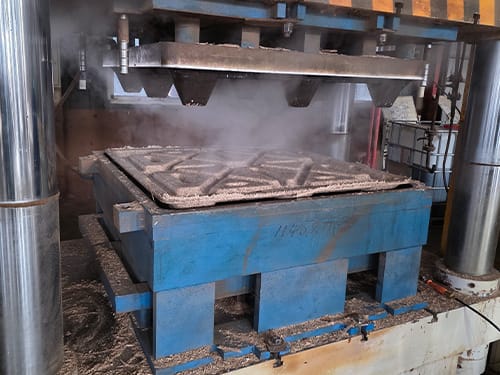
According to global trade compliance frameworks like ISPM 15 international phytosanitary standards, export packaging materials must meet strict pest control requirements. Molded fiber pallets solve this naturally because they are heat-pressed at high temperature during production.
At the same time, sustainability reporting is becoming mandatory in many regions. Organizations referencing frameworks like global supply chain sustainability initiatives are pushing companies to reduce logistics emissions and packaging waste.
If you are evaluating lightweight pallet options, this guide will help you understand how molded lightweight pallets can directly solve your operational problems.
The Real Cost Problem: Heavy Pallets Are Quietly Draining Your Budget
You might already optimize freight routes and container loading plans. But many companies overlook pallet weight as a major cost driver.
Consider these real operational impacts:
- Air freight pricing depends heavily on weight
- Ocean container load limits cap total cargo per container
- Warehouse automation systems perform better with consistent pallet weights
- Workers experience less fatigue with lighter materials
- Return logistics costs drop significantly
In logistics efficiency research such as transport cost optimization studies, packaging weight repeatedly shows up as a hidden but measurable expense factor.
If your pallet weighs 18–25 kg versus a molded pallet at roughly 9–12 kg, that difference multiplies across thousands of shipments.
What Makes Molded Lightweight Pallets Structurally Different
Your molded pallet is not assembled from planks. It is engineered.
Your pallet structure is created using:
- Plant fiber raw material
- High temperature compression molding
- Single cycle structural formation
- Uniform density distribution
- Integrated load bearing geometry
This matters because traditional pallets fail at joint connections. Molded pallets distribute stress evenly across the entire structure.
Your pallet advantages include:
✔ One-time compression molding
✔ Stable load structure
✔ Moisture resistant
✔ Pest resistant
✔ Mold resistant
✔ Export ready without fumigation
✔ Fully recyclable
✔ Stackable (up to 60% space saving)
✔ 30–50% lower total cost vs solid wood lifecycle
Case Study: How Lightweight Molded Pallets Reduced Export Cost by 22%
Let’s look at a practical scenario you can relate to.
Company Profile
- Industry: Industrial components exporter
- Shipping Method: Mixed ocean + air
- Annual Shipments: ~8,000 pallets
- Original Pallet Type: Heavy assembled wood pallets
Problems They Faced
- High air freight surcharges
- Frequent fumigation delays
- Mold damage during humid transport
- High storage space consumption
After Switching to Molded Lightweight Pallets
| Metric | Before | After |
|---|---|---|
| Average pallet weight | 21 kg | 11 kg |
| Annual fumigation cost | High | Eliminated |
| Container load utilization | 87% | 95% |
| Storage stack height | Limited | Increased |
| Damage claim rate | 3.2% | 1.1% |
Final Result
Total logistics cost dropped approximately 22% across the first 12 months.
This improvement came mainly from weight reduction, better stacking density, and removal of export treatment procedures.
Your Double-Layer Molded Grid Pallet: Designed for Real Logistics Flexibility
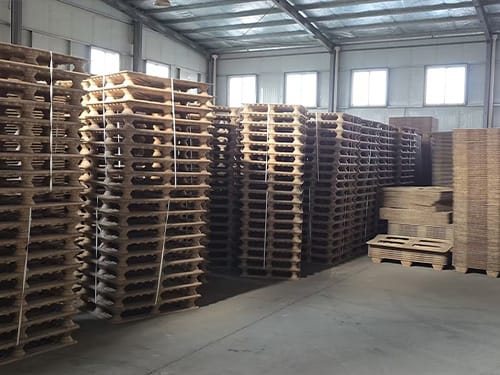
Your product configuration is especially useful if you handle mixed transport and storage environments.
Key Structural Features
- Double-layer square grid panel design
- Molded panel + molded legs assembled via interlocking system
- Screw reinforced for structural integrity
- Can be separated into two compact parts for transport
Why This Matters for You
If you ship pallets to overseas warehouses, this design allows:
- Lower shipping cost per pallet unit
- Easier bulk pallet transport
- Faster warehouse reassembly
- Reduced return logistics cost
Because the pallet uses plant fiber compression molding, it maintains strength while staying lightweight.
How Lightweight Pallets Improve Carbon Reporting Metrics
Many companies are now tracking Scope 3 emissions. Packaging weight directly impacts transport emissions.
Frameworks such as green logistics and emissions reduction models emphasize reducing deadweight during cargo movement.
If you reduce pallet weight by 40–50%, you reduce:
- Fuel consumption per shipment
- Carbon emission per ton transported
- Packaging disposal waste
For companies preparing ESG reports, lightweight molded pallets support measurable improvement.
Warehouse Efficiency: Why Lightweight Matters More Than You Think
You might think pallet weight mainly affects shipping. But warehouse efficiency is also affected.
Forklift Energy Consumption
Lighter pallets = lower lifting energy.
Worker Handling Safety
Reduced repetitive strain injury risk.
Automation Compatibility
Uniform molded pallets provide predictable dimensions and weight consistency.
Data Comparison: Lightweight Molded vs Traditional Pallets
| Feature | Molded Lightweight Pallet | Traditional Wood Pallet |
|---|---|---|
| Weight | Low | High |
| Export Compliance | Natural compliance | Requires treatment |
| Moisture Resistance | High | Medium |
| Pest Risk | Very Low | Medium |
| Stackability | High | Medium |
| Customization | High | Limited |
| Lifecycle Cost | Lower | Higher |
Customization: Why One Size Never Fits Modern Supply Chains
You don’t ship the same product every day. Your pallet shouldn’t be fixed either.
Your molded pallet can be customized for:
- Rack storage compatibility
- Conveyor system compatibility
- Container load optimization
- Product footprint matching
- Export region regulations
This aligns with flexible supply chain design trends discussed in modern supply chain resilience strategies.
Practical Implementation Guide: How You Can Transition to Lightweight Pallets
Step 1: Audit Your Current Logistics Data
Track:
- Average pallet weight
- Damage rate
- Storage density
- Export treatment cost
Step 2: Identify High-Impact Shipping Routes
Air freight routes often show fastest ROI.
Step 3: Test With Partial Deployment
Start with one product line or region.
Step 4: Measure Results Quarterly
Track cost, damage, and handling time improvements.
Export Advantages: Why Molded Lightweight Pallets Simplify Global Trade
Because molded pallets are heat processed during production, they avoid pest risk.
This eliminates treatment processes required by many countries under international wood packaging rules.
Benefits include:
- Faster customs clearance
- Reduced documentation complexity
- Lower export preparation labor
Space Saving Impact: The Hidden Warehouse Multiplier
Your stackable molded pallet design can save up to 60% storage space when empty.
For companies paying high warehouse rent, this becomes a major financial lever.
If you store 10,000 empty pallets annually, stack efficiency alone can reduce warehouse footprint significantly.
Total Cost of Ownership: The Metric That Actually Matters
Purchase price is not real cost.
You should calculate:
- Transport cost per trip
- Storage cost per pallet footprint
- Export compliance cost
- Damage replacement cost
- Labor handling cost
Over a full lifecycle, molded lightweight pallets often outperform heavier alternatives.
Future Trends: Why Lightweight Packaging Is Becoming Standard
Industry trends you should watch:
1. Carbon Disclosure Requirements
Companies must report supply chain emissions.
2. Freight Pricing Based on Efficiency Metrics
Weight and volume optimization is becoming mandatory.
3. Automation Growth
Uniform pallets improve robotic handling success rates.
Conclusion
If you are trying to reduce logistics cost, improve export reliability, and support sustainability goals, lightweight molded pallets are one of the most practical upgrades you can implement.
You are not just switching packaging materials.
You are optimizing:
- Freight efficiency
- Warehouse density
- Export compliance
- Carbon reporting metrics
- Supply chain resilience
FAQ
Are lightweight molded pallets strong enough for heavy cargo?
Yes. Compression molding creates uniform density and load distribution. Many designs handle industrial loads reliably.
Do molded pallets require fumigation?
No. High temperature production eliminates pest risks.
Can molded pallets be customized?
Yes. Size, load rating, structure, and stacking design can all be customized.
Are molded pallets environmentally friendly?
Yes. They are recyclable and made from plant fiber materials.
Are they suitable for rack systems?
Yes, when engineered for rack load requirements.
How much cost can lightweight pallets save?
Many companies see 15–30% logistics lifecycle cost reduction depending on shipping mode.