
Table of Contents
If you are responsible for procurement, logistics, warehousing, or export operations, choosing the right industrial pallets is not a small decision. Pallets sit at the foundation of your supply chain. They influence freight costs, product safety, warehouse efficiency, sustainability performance, and even compliance with international shipping standards.
Yet many companies still select pallets based primarily on unit price. That approach often ignores total lifecycle cost, operational compatibility, and long-term risk exposure. In this guide, you will find a detailed, practical comparison of wood, plastic, and molded industrial pallets, built around real evaluation criteria used in professional logistics environments.
The goal is simple: help you make a smarter, data-driven decision that reduces total cost while improving operational performance.
What Are Industrial Pallets and Why They Matter in Modern Logistics
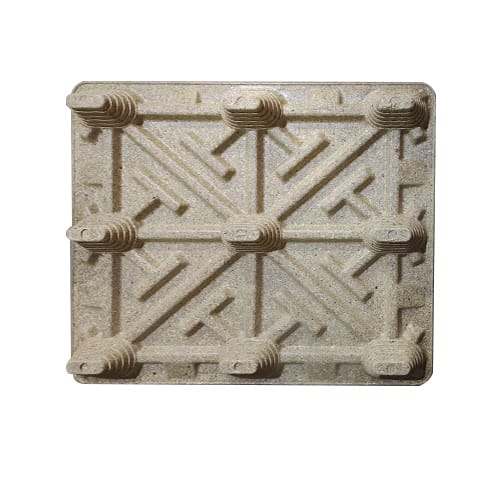
Industrial pallets are load-bearing platforms designed for heavy-duty material handling, storage, and transport. Unlike light-duty retail pallets, industrial pallets are engineered for higher weight capacity, repeated handling, and integration with warehouse systems.
In modern logistics environments, pallets affect:
- Freight cost per shipment
- Warehouse density and storage efficiency
- Product damage rate
- Automation compatibility
- Export compliance
- Sustainability performance
According to industry insights published by Inbound Logistics, warehouse space utilization improvements of even 10 percent can significantly reduce operating overhead and delay the need for facility expansion. Pallet selection directly impacts that efficiency.
When you evaluate industrial pallets strategically rather than transactionally, you begin to see their influence on your entire cost structure.
Key Evaluation Criteria for Comparing Industrial Pallets
Before comparing materials, it is important to define how industrial pallets should be evaluated. Procurement decisions based purely on purchase price tend to overlook operational realities.
The most relevant criteria include:
Load capacity and structural integrity
The pallet must support static and dynamic loads without warping or failure.
Weight and freight impact
Heavier pallets increase shipping costs, especially in long-distance or air freight operations.
Durability and lifecycle
Repeated use, moisture exposure, and handling stress affect replacement frequency.
Storage and stackability
Nestable or stackable designs reduce warehouse footprint.
Export compliance
International shipping standards such as ISPM 15 require pest-free materials or treatment.
Environmental performance
Sustainability reporting and ESG commitments increasingly influence material selection.
Total cost of ownership
The true cost includes purchase price, freight impact, damage rates, storage efficiency, and disposal.
When industrial pallets are analyzed under these criteria, material differences become more visible and measurable.
Wood Industrial Pallets: Advantages and Limitations

Wood remains one of the most widely used materials for industrial pallets. Its popularity is driven by accessibility and relatively low upfront cost.
Advantages include:
- Lower initial purchase price
- High load-bearing capacity
- Easy repair in closed-loop systems
However, wood pallets present operational challenges.
Weight
A standard heavy-duty wooden industrial pallet typically weighs between 20 and 25 kilograms. This weight directly increases freight costs.
Compliance
Wood pallets used in international shipments often require heat treatment or fumigation under ISPM 15 standards. These processes introduce additional costs and potential shipping delays.
Moisture sensitivity
Wood absorbs moisture, which can weaken structure and increase contamination risk.
Damage rate
Industry studies commonly report pallet-related product damage rates between 3 and 5 percent in export conditions when wood pallets are reused multiple times.
Storage inefficiency
Traditional wood pallets are rarely nestable, meaning they occupy significant warehouse space when empty.
Wood pallets may be suitable for heavy domestic, closed-loop logistics where repair is practical. However, for export-focused or space-constrained operations, their limitations become more costly.
Plastic Industrial Pallets: Performance and Trade-Offs
Plastic industrial pallets are known for durability and hygiene. They are commonly used in industries where cleanliness and moisture resistance are critical.
Advantages include:
- Resistance to moisture and chemicals
- Consistent dimensions
- Long service life in closed-loop systems
However, trade-offs exist.
Upfront investment
Plastic industrial pallets can cost significantly more than wood alternatives. In high-volume operations, this affects capital allocation.
Weight
Depending on design, plastic pallets may weigh between 15 and 22 kilograms, lighter than wood but heavier than molded fiber alternatives.
Environmental concerns
Plastic production relies on petroleum-based materials. Recycling infrastructure varies, and end-of-life disposal can be complex.
Freight impact
For one-way export shipments, the higher purchase cost may not be recoverable.
Plastic pallets are ideal in long-term reuse systems where durability offsets initial cost. For export-oriented or single-use scenarios, economic efficiency becomes less favorable.
Molded Industrial Pallets: Structure, Efficiency and Innovation
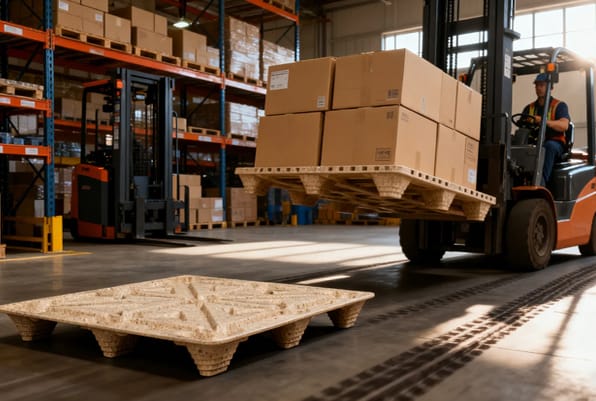
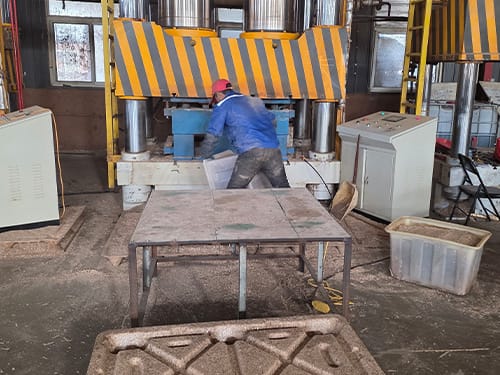
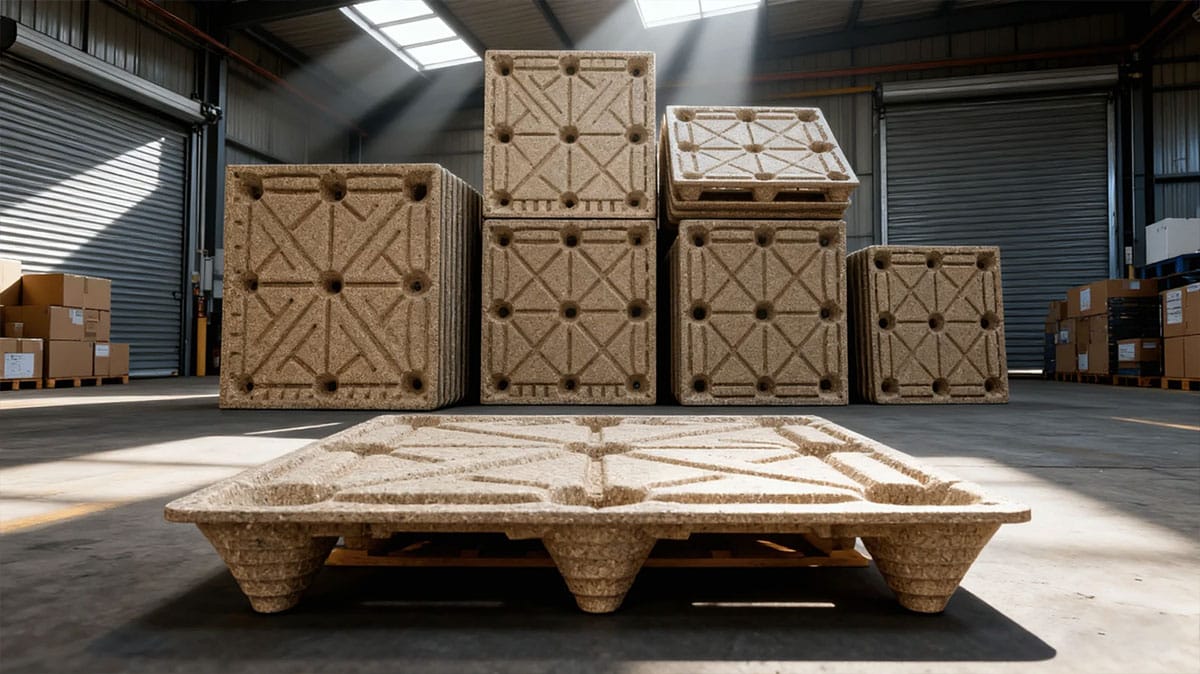
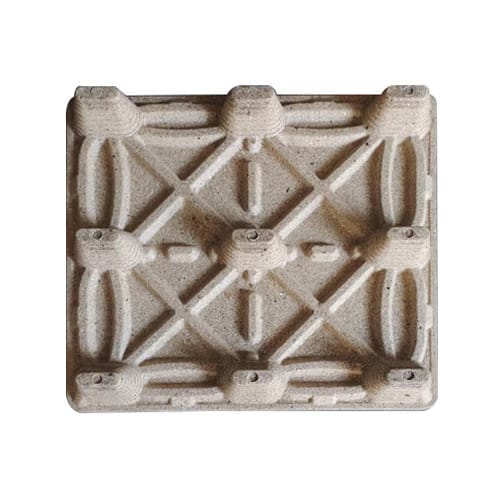
Molded industrial pallets are manufactured through a high-pressure compression process using plant fibers. The pallet is formed in a single piece, creating uniform structural strength without nails or fasteners.
Key characteristics include:
Lightweight structure
Molded industrial pallets typically weigh between 9 and 12 kilograms, depending on size and load rating. This represents a significant reduction compared to wood and many plastic options.
Export-ready design
Because the material undergoes heat and pressure during production, molded pallets generally meet international phytosanitary requirements without additional fumigation.
Nestable configuration
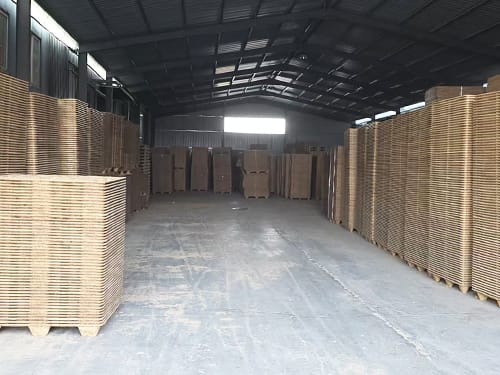
Many molded pallet designs allow vertical nesting, reducing empty storage space by up to 50 percent or more compared to traditional wood pallets.
Consistent strength
Single-piece molding distributes stress evenly, reducing structural weak points.
Sustainability
Made from recycled or renewable plant fibers, molded pallets align with circular economy principles.
For companies managing export operations or optimizing warehouse density, molded industrial pallets often provide measurable cost and efficiency advantages.
Industrial Pallets Comparison Table
The following comparison summarizes key operational metrics. Actual performance depends on manufacturer specifications and usage conditions.
| Criteria | Wood Pallets | Plastic Pallets | Molded Pallets |
|---|---|---|---|
| Average Weight | 20–25 kg | 15–22 kg | 9–12 kg |
| Fumigation Required | Yes (export) | No | No |
| Nestable | No | Limited | Yes |
| Damage Rate (export use) | 3–5% | 1–3% | 1–2% |
| Initial Cost | Low | High | Moderate |
| Lifecycle Cost | Moderate to High | Moderate | Low |
| Sustainability Profile | Renewable but treated | Petroleum-based | Renewable fiber |
This table illustrates why many export-oriented supply chains are re-evaluating their pallet strategy.
Cost Analysis: Which Industrial Pallet Is Most Economical
To understand which industrial pallets are most economical, you must analyze total cost of ownership.
Initial purchase price
Wood appears cheapest per unit. Plastic is highest. Molded typically falls between the two.
Freight cost
Reducing pallet weight by 10 kilograms per unit across thousands of shipments can generate substantial annual savings. In air freight scenarios, weight reduction has an even greater impact.
Damage and replacement
Higher damage rates increase product loss, return handling, and replacement expenses.
Warehouse space
Nestable molded pallets reduce empty storage space, improving warehouse density and potentially delaying expansion investment.
When companies conduct a full cost-per-shipment analysis rather than unit price comparison, molded industrial pallets frequently demonstrate lower overall logistics expenditure.
Sustainability and Environmental Impact Comparison
Environmental performance increasingly influences procurement decisions.
Wooden Pallets
Renewable but often treated with chemicals for compliance. Disposal may require special handling.
Plastic Pallets
Durable but derived from fossil fuels. Recycling is possible but not universal.
Molded Pallets
Manufactured from recycled or renewable plant fiber. Lightweight structure reduces transportation-related emissions.
According to circular economy research from the Ellen MacArthur Foundation, material efficiency and weight reduction play a critical role in lowering logistics-related carbon emissions. Lightweight industrial pallets directly support that goal.
If your organization tracks Scope 3 emissions in transportation, pallet weight and material composition are relevant variables.
Case Scenarios: Choosing the Right Industrial Pallet
Export-oriented manufacturers
If your products move through international supply chains, avoiding fumigation delays and reducing freight weight are major advantages. Molded industrial pallets often align best with this model.
Closed-loop internal distribution
If pallets circulate within a controlled system and are retrieved after each shipment, plastic pallets may provide long-term durability benefits.
Heavy machinery transport
For extremely high static loads, reinforced wood pallets may still serve specialized needs, though engineered molded solutions are increasingly capable of supporting substantial weights.
High-density automated warehouses
Uniform dimensions and nestability improve compatibility with automated systems. Molded industrial pallets offer strong advantages here.
The correct choice depends on your logistics architecture, not just material preference.
How to Choose the Right Industrial Pallets for Your Business
To make a confident decision, follow a structured evaluation process:
- Audit your current pallet-related costs, including freight, storage, and damage.
- Identify whether your system is closed-loop or export-heavy.
- Calculate total shipment weight differences between pallet types.
- Evaluate compliance requirements for international shipping.
- Consider warehouse density and empty pallet storage costs.
- Engage with a manufacturer capable of customizing pallet dimensions to your load profile.
When industrial pallets are tailored to your operational requirements rather than selected off the shelf, cost optimization becomes more achievable.
Conclusion
Industrial pallets are not interchangeable commodities. They are strategic logistics assets. When you evaluate wood, plastic, and molded industrial pallets through the lens of total cost, compliance, sustainability, and operational efficiency, material differences become economically significant.
If your goal is to reduce freight expenses, improve warehouse density, simplify export compliance, and align with sustainability targets, molded industrial pallets deserve serious consideration.
The right pallet decision does more than support your cargo. It strengthens your entire supply chain foundation.
FAQ
Which industrial pallet is strongest?
Load capacity depends on design and engineering. All three materials can support heavy loads when properly specified.
Are molded industrial pallets suitable for heavy-duty use?
Yes, compression-molded pallets are engineered for uniform strength and can be designed for high load ratings.
Do wood pallets always require heat treatment?
For international shipments, untreated wood typically requires compliance measures under phytosanitary standards.
Which industrial pallet saves the most warehouse space?
Nestable molded pallets generally offer the highest space savings for empty storage.
Are plastic pallets more environmentally friendly?
They are durable and reusable, but their petroleum-based origin may limit sustainability advantages compared to fiber-based alternatives.
Need Help Choosing the Right Industrial Pallets?
If you’re unsure which industrial pallets are best suited for your logistics operations, export shipments, or warehouse system, our experts are ready to assist you. We help you evaluate load capacity, shipping efficiency, compliance requirements, and total cost of ownership to ensure you select the most effective solution.
Contact us today for a personalized consultation and discover how custom molded industrial pallets can reduce logistics costs, improve storage efficiency, and streamline your supply chain. Don’t let inefficient pallet choices increase your expenses—get in touch now and build a stronger, smarter logistics foundation.