
Inhaltsverzeichnis
Einleitung
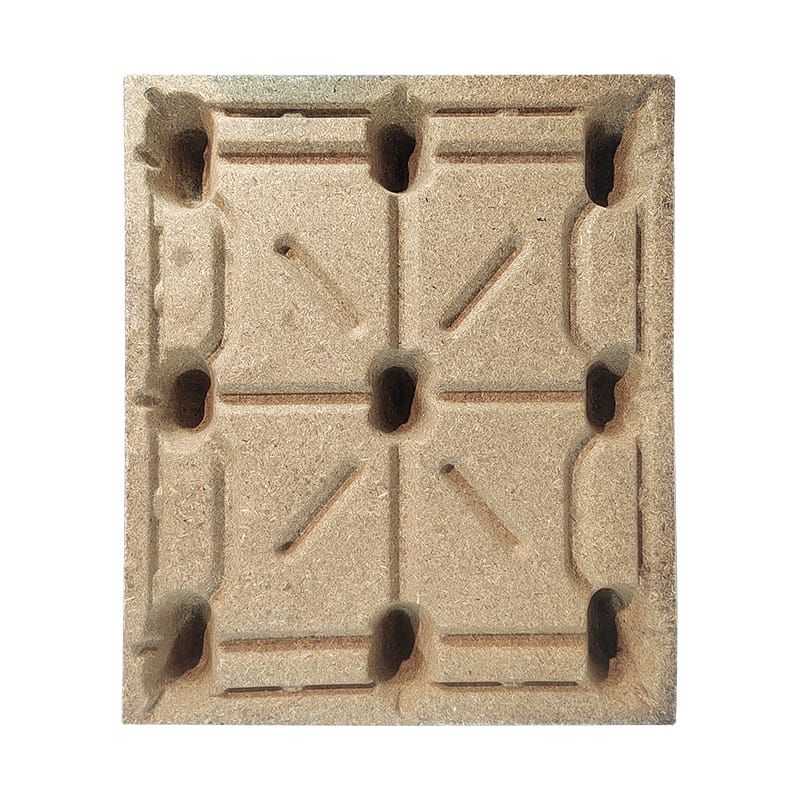
Die Auswahl der richtigen Abmessungen von Paletten ist nicht einfach eine Frage der Auswahl der bekanntesten Größe Palettenlänge und - breite beeinflussen Produktunterstützung, Gabelstaplerhandling, Lagerlagerung, Stapelstabilität, Fördererkompatibilität und die Menge an nutzbarem Raum, die während eines Logistikbetriebs zur Verfügung steht.
Für den industriellen Versand sind die Palettenabmessungen in der Regel diejenigen, die eng mit der Ladung übereinstimmen und gleichzeitig mit den Geräten und Lagersystemen kompatibel bleiben, die die Ladung bewältigen.
Eine zu kleine Palette kann es Kartons oder Produkten ermöglichen, das Deck zu überhängen. Eine unnötig große Palette kann wertvollen Lager- und Transportraum verbrauchen, ohne zusätzliche Unterstützung zu bieten. Selbst relativ kleine Dimensionsinkongruenzen werden wichtig, wenn die gleiche Konfiguration über eine große Anzahl von Sendungen wiederholt wird.
Der allgemeine Begriff eines Palette Geradlinig ist, aber die Auswahl seiner Abmessungen erfordert einen genaueren Blick auf die gesamte Anwendung Produkt-Fußabdruck, Lastverteilung, Gabelzugang, Rack-Unterstützung, Stapelmuster, und Handhabungsmethode sollten alle überprüft werden, bevor die endgültige Größe bestätigt wird.
In diesem Leitfaden wird erläutert, wie die Abmessungen von Paletten aus industrieller und logistischer Sicht bewertet werden können, anstatt die Palettengröße einfach als feste Zahl zu behandeln.
Warum spielen die Abmessungen von Paletten eine Rolle?
Die Palettenabmessungen bestimmen viel mehr als die Bodenfläche unter einem Produkt.
Sie beeinflussen die Effektivität einer Palette als Teil einer Einheitslast.
Eine geeignete Palettengrundfläche sollte ausreichend Unterstützung für die Ladung bieten, ohne übermäßig ungenutzten Raum zu schaffen. Es sollte auch zu den Handhabungsgeräten, dem Lagersystem und der Transportkonfiguration passen, die während des gesamten Verteilungszyklus verwendet werden.
Eine schlechte Dimensionsauswahl kann zu mehreren praktischen Problemen führen:
- Produktüberhang
- Ungenutzte Palettenoberfläche
- Ineffizientes Stapeln
- Verminderte Lagerdichte
- Ungeeignete Gabelstaplereinfahrt
- Schwierigkeit mit Racks
- Fördermittelinkompatibilität
- Unbeständige Stücklasten
- Unnötige Anpassungen der Verpackung
Aus diesem Grund sollten die Abmessungen von Paletten normalerweise zusammen mit dem Produkt- und Logistikprozess und nicht erst nach der endgültigen Verpackung ausgewählt werden.
Wie werden die Palettenabmessungen normalerweise angegeben?
Palettenabmessungen werden im Allgemeinen anhand von Länge und Breite beschrieben, wobei die Höhe hinzugefügt wird, wenn es auf die gesamte Strukturhülle ankommt.
Diese drei Messungen beschreiben jedoch nicht alles, was für den industriellen Einsatz erforderlich ist.
Länge und Breite
Länge und Breite bestimmen den primären Palettenfußabdruck.
Beispielsweise können industriell Pressholzpalettengrößen Konfigurationen wie: umfassen
- 1050 × 1050 mm
- 1100 × 900 mm
- 1100 × 1100 mm
- 1200 × 1000 mm
- 1200 × 1100 mm
- 1200 × 1200 mm
- 1300 × 1100 mm
Die richtige Größe hängt von der Ladung ab und nicht von der Anzahl selbst.
Eine 1200 × 1000 mm Palette ist nicht automatisch besser geeignet als eine 1100 × 1100 mm Palette, nur weil sie eine größere Oberfläche hat.
Gesamthöhe
Palettenhöheneinflüsse:
- Gabeleinstieg
- Gesamtlasthöhe
- Stapelung
- Lagerräumung
- Fördererverträglichkeit
- Leerpalettenverschachtelung
In der Großmengenlogistik kann ein relativ kleiner Unterschied in der Palettenhöhe wichtig werden, wenn beladene Einheiten gestapelt oder leere Paletten in großen Mengen gelagert werden.
Fork-Entry-Abmessungen
Gabelöffnungen sind ein weiteres wichtiges Maßmerkmal.
Die Außenabmessungen von Paletten passen zwar perfekt zur Ladung, die Palette kann jedoch dennoch ungeeignet sein, wenn die verfügbare Öffnung nicht mit der Umschlagausrüstung übereinstimmt.
Die Bewertung des Gabeleintritts sollte Folgendes umfassen:
- Öffnungshöhe
- Öffnungsbreite
- Abstand zwischen Tragkonstruktionen
- Anflugrichtung
- Abstand um geformte Beine oder Kufen
Diese Messungen sind besonders wichtig für die häufige industrielle Handhabung.
Standardpalettenabmessungen vs. anwendungsspezifische Abmessungen
Die Standardisierung bietet offensichtliche Vorteile Durchgängige Größen können die Lagerplanung, die Materialhandhabung und das Verpackungsdesign vereinfachen.
Standardpalettenabmessungen sollten jedoch nicht für jedes Produkt automatisch als korrekt behandelt werden.
Wenn Standardabmessungen gut funktionieren
Ein Standard - oder häufig verwendeter Palettenfußabdruck kann praktisch sein, wenn:
- Kartonabmessungen passen bereits effizient zum Deck
- Lagerstandorte sind auf dieser Grundfläche ausgerichtet
- Gabelstapler und Förderbänder sind kompatibel
- Produktüberhang ist minimal
- Rackabstand ist angemessen
- Stapelmuster bleiben stabil
Unter diesen Bedingungen kann eine Änderung der Palettenabmessungen nur einen geringen Mehrwert bieten.
Wenn eine andere Größe mehr Sinn macht
Kundenspezifische oder anwendungsspezifische Abmessungen von Paletten werden nützlicher, wenn das Produkt nicht effizient zu den üblichen Fußabdrücken passt.
Typische Beispiele sind:
- Industriemaschinen
- Großcontainern
- Schüttgüter
- Langkomponenten
- Blechprodukte
- Ungewöhnliche Kartonkonfigurationen
- Ausrüstung mit konzentrierten Stützpunkten
Das Ziel ist nicht die Anpassung um ihrer selbst willen.
Ziel ist eine bessere Frachtunterstützung und eine effizientere Logistik.
Beginnen Sie mit dem Produkt-Fußabdruck
Das Produkt sollte eine der ersten Referenzen sein, die bei der Bewertung der Palettenabmessungen verwendet werden.
Wenn zuerst die Palette ausgewählt wird und die Verpackung anschließend zwangsweise passt, kann es zu ineffizienten Konfigurationen kommen.
Messen Sie das komplette verpackte Produkt
Arbeiten Sie nicht allein aus den Abmessungen des unverpackten Produkts.
Die Palette muss die Versandkonfiguration aufnehmen, einschließlich:
- Kartons
- Schutzverpackung
- Eckschutz
- Gurte
- Umhüllung
- Behältern
- Zwischenverpackungsschichten
Der vollständige palettierte Fußabdruck kann sich erheblich von den Abmessungen des Produkts selbst unterscheiden.
Überprüfen Sie den Kontaktbereich
Ein Produkt kann optisch den größten Teil der Palette einnehmen, während es nur einen kleinen Teil des Decks berührt.
Maschinen mit mehreren Füßen sind ein gutes Beispiel.
In diesem Fall sollte die Auswahl der Abmessungen von Paletten sowohl die Gesamtfläche als auch die genaue Lage der tragenden Kontaktpunkte umfassen.
Dies hilft festzustellen, ob Stützrippen, Gitter, Kufen oder geformte Strukturbereiche richtig positioniert sind.
Warum der Palettenüberhang kontrolliert werden sollte
Überhang entsteht, wenn Ladung über den Außenrand der Palette hinausgeht.
Eine kleine Menge kann harmlos erscheinen, verändert aber die Art und Weise, wie die Last unterstützt wird.
Reduzierte Kantenunterstützung
Wenn Kartons über das Deck hinausragen, erhalten ihre Kanten keine direkte Unterstützung mehr von der Palette.
Dies kann die Verformung der Verpackung erhöhen, wenn mehrere Schichten gestapelt werden.
Größere Belastung durch Auswirkungen
Auch überhängende Produkte sind eher zu kontaktieren:
- Nachbarpalettenladungen
- Lagerstrukturen
- Gabelstaplerkomponenten
- Ladeausrüstung
- Sonstige Fracht
Die Palette kann unbeschädigt bleiben, während das Produkt selbst anfällig wird.
Stapelprobleme
Überhang kann dazu führen, dass gestapelte palettierte Lasten weniger konsistent sind.
Wenn jede Last eine etwas andere Produktfläche hat, wird die Ausrichtung schwieriger und vertikale Kräfte übertragen sich möglicherweise nicht gleichmäßig.
Aus diesem Grund sollten die Abmessungen von Paletten normalerweise den gesamten Ladungsbedarf unterstützen, wo immer dies möglich ist.
Eine übergroße Palette kann auch ineffizient sein
Überhang vermeiden heißt nicht, die größte verfügbare Palette auszuwählen.
Übermäßiger Palettenbereich führt zu anderen Problemen.
Ungenutzter Deckraum
Wenn das Produkt nur einen kleinen Teil des Decks einnimmt, bietet die verbleibende Palettenoberfläche nur einen geringen funktionalen Mehrwert.
Die Folge kann eine geringere Platzauslastung sein.
Lagerauswirkungen
Übergroße Paletten belegen größere Lagerpositionen und Bereitstellungsbereiche.
Bei Wiederholung über viele Lasten hinweg kann ungenutzter Deckraum die Produktmenge reduzieren, die in derselben Anlage gelagert werden kann.
Handhabung Clearance
Eine größere Grundfläche kann das Manövrieren auch in Umgebungen mit begrenztem Gang oder begrenzter Geräteräumigkeit erschweren.
Die besten Abmessungen von Paletten gleichen daher die Ladungsunterstützung mit einer effizienten Nutzung des verfügbaren Raums aus.
Vergleichen Sie die Abmessungen gängiger Industriepaletten
Unterschiedliche Fußabdrücke können unterschiedlichen Produkten und Handhabungsanforderungen entsprechen.
| Palettendimension | Potenzielle Anwendungsmerkmale | Auswahlpriorität |
|---|---|---|
| 1050 × 1050 mm | Kompakte quadratische Grundfläche | Produktpassung und Handhabungsfreigabe |
| 1100 × 900 mm | Rechteckige Industrielasten | Verpackungsanordnung |
| 1100 × 1100 mm | Quadratische Einheitslasten | Ausgewogene Deckauslastung |
| 1200 × 1000 mm | Größere Rechtecklasten | Frachtstandfläche und -handhabung |
| 1200 × 1100 mm | Breitere Industrielasten | Produktunterstützung |
| 1200 × 1200 mm | Große Quadratlasten | Lastverteilung und Speicherplatz |
| 1300 × 1100 mm | Erweiterte industrielle Präsenz | Kompatibilität von Ausrüstung und Lager |
Diese Dimensionen sollten als Gestaltungsoptionen und nicht als Rangfolge behandelt werden.
Die richtige Wahl hängt davon ab, wie gut die Palette zur Ladung und zum umliegenden Logistiksystem passt.
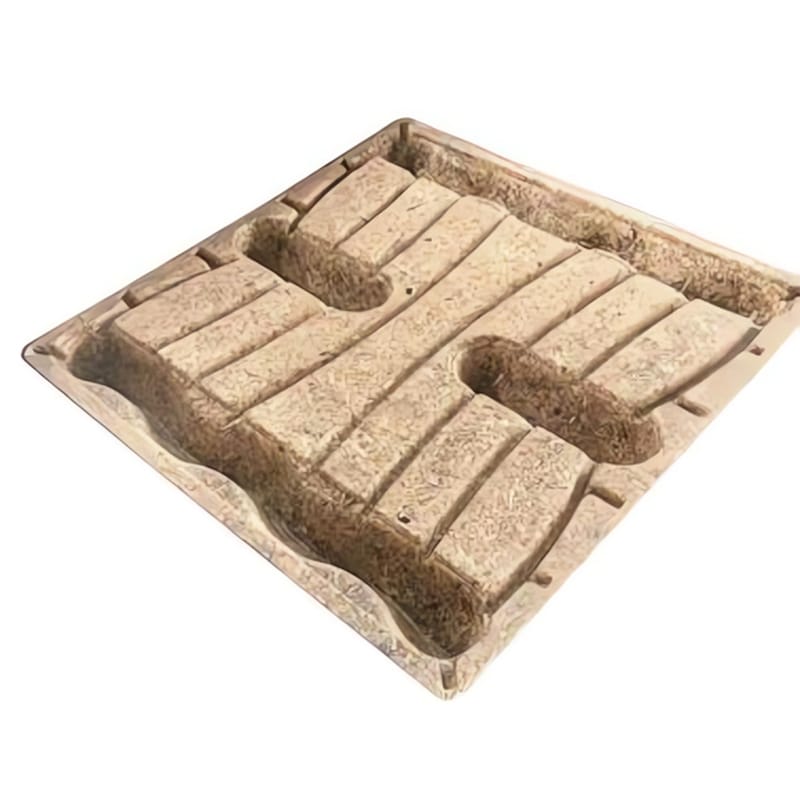
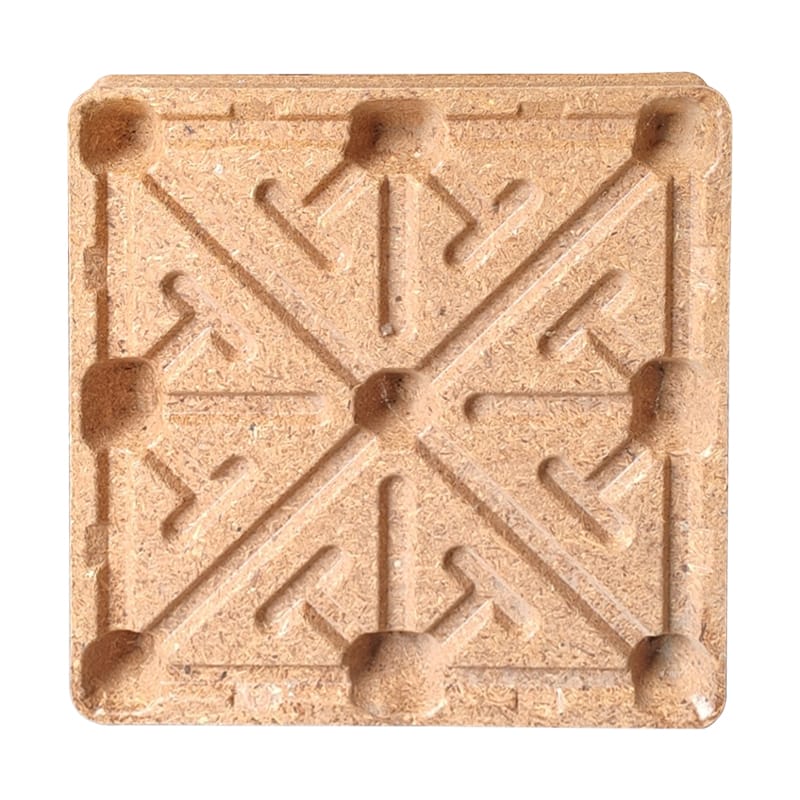
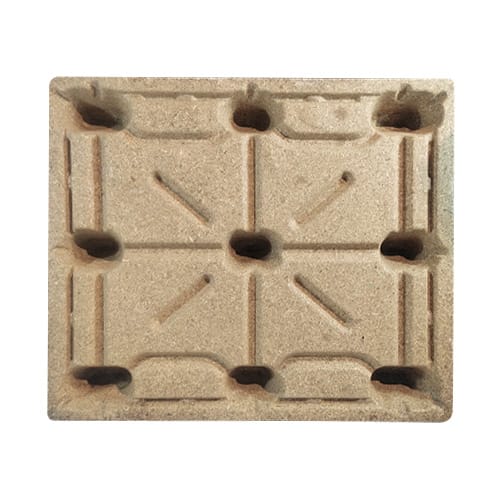
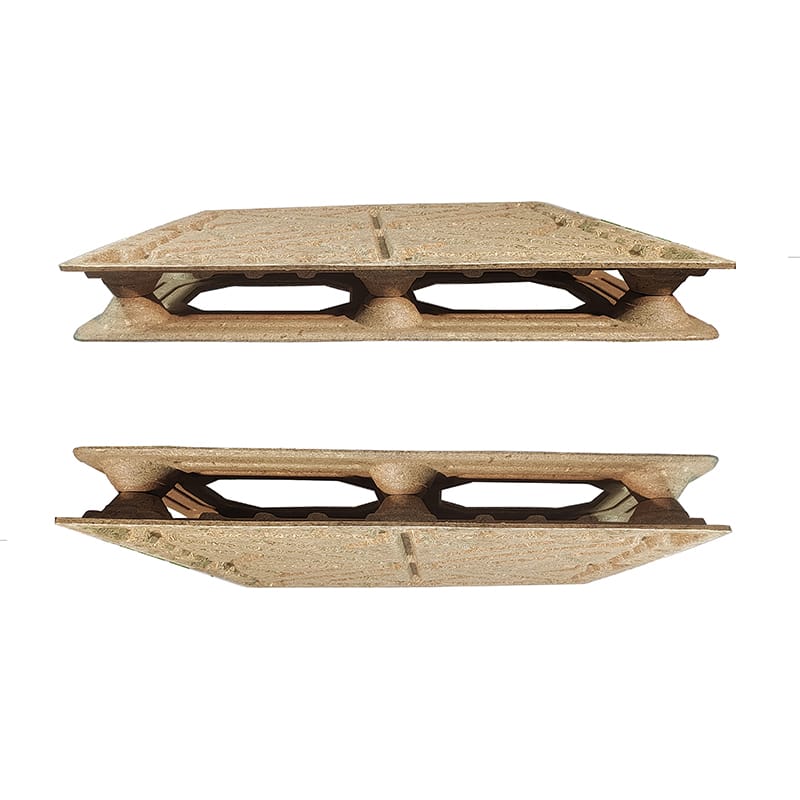
Xinyi Pallets Doppelstock-Gitterpalettenserie Enthält mehrere Pressholzpalettenabmessungen, die für unterschiedliche industrielle Lastabdrücke konzipiert sind, sodass Größe zusammen mit Deckstruktur verglichen werden kann, anstatt nur Abmessungen zu berücksichtigen.
Wie Palettenabmessungen die Lastverteilung beeinflussen
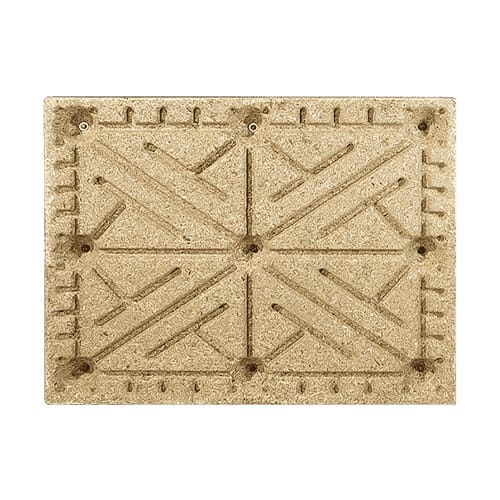
Länge und Breite beeinflussen die Lage der strukturellen Stütze unter der Ladung.
Dies wird besonders bei schweren oder konzentrierten Lasten wichtig.
Verteilte Lasten
Gleichmäßig über das Deck angeordnete Kartons neigen dazu, den Druck auf eine größere Oberfläche zu verteilen.
In diesem Fall sollten Palettenabmessungen ein effizientes Kartonmuster unterstützen, ohne einen übermäßigen Überhang zuzulassen.
Konzentrierte Lasten
Eine Maschine, ein Tank, eine Trommel oder eine große Industriekomponente können Gewicht durch mehrere begrenzte Kontaktbereiche übertragen.
Bei diesen Lasten erhöht eine Vergrößerung der Palette nicht automatisch die praktische Lastunterstützung.
Wenn die kritischen Kontaktpunkte zwischen strukturellen Stützen positioniert sind, kann es dennoch zu erheblichen lokalen Belastungen auf der Palette kommen.
Der sinnvollere Ansatz besteht darin, sowohl Abmessungen als auch Strukturgeometrie an die Ladung anzupassen.
Off-Center-Ladungen
Wenn der schwerste Teil des Produkts nahe an einer Kante sitzt, können Palettenabmessungen das Gleichgewicht beim Gabelstaplerhandling beeinflussen.
Manchmal verbessert die Änderung der Produktausrichtung auf derselben Palette die Lastverteilung, ohne dass eine andere Palettengröße erforderlich ist.
Aus diesem Grund sollte das Palettenlayout überprüft werden, bevor die Spezifikation fertiggestellt wird.
Abmessungen der Paletten und Gabelstaplerkompatibilität
Eine Industriepalette verbringt einen erheblichen Teil ihres Arbeitslebens damit, sich um sie zu kümmern, anstatt einfach auf einem Boden zu sitzen.
Abmessungen müssen daher den Gabelstaplerbetrieb aufnehmen.
Einstiegsrichtung
Eine Palette kann je nach Struktur einen Zwei- oder Vier-Wege-Eingang ermöglichen.
Der Vier-Wege-Eingang kann in stark frequentierten Lagern eine größere Flexibilität bieten, die Öffnungen müssen jedoch weiterhin mit der eigentlichen Ausrüstung funktionieren.
Gabelabstand
Der Abstand zwischen den Strukturelementen unter dem Deck muss ausreichend Platz für die Gabeln lassen.
Wenn der Abstand ungeeignet ist, müssen Bediener den Gabelstapler möglicherweise wiederholt neu positionieren, was die Handhabungszeit und die Wahrscheinlichkeit eines Aufpralls erhöht.
Eintrittshöhe
Die Gabelöffnung muss außerdem für ausreichend vertikalen Abstand sorgen.
Wiederholter Kontakt zwischen Gabelblättern und Palettenstrukturen kann Bereiche um Beine, Kufen oder Deckabschnitte beschädigen.
Bei der Bewertung von Abmessungen von Paletten sollten daher die äußere Länge und Breite niemals überprüft werden, ohne die internen Handhabungsabmessungen zu überprüfen.
Wie Palettenabmessungen die Regallagerung beeinflussen
Die Rack-Kompatibilität ist ein weiterer Grund, warum die Palettengröße sorgfältig abgewogen werden sollte.
Eine auf einem Lagerboden ruhende Palette erhält breiten Halt Eine über Zahnstangenbalken gestellte Palette darf nur an ausgewählten Stellen abgestützt werden.
Strahlposition
Die Beziehung zwischen Palettenbreite, -länge und Zahnstangenbalken beeinflusst die nicht unterstützte Spannweite.
Eine Änderung der Abmessungen kann daher die strukturelle Leistung verändern, selbst wenn die Ladung genau gleich bleibt.
Palettenausrichtung
Die Richtung, in der die Palette in das Rack gelangt, ist wichtig.
Wenn eine Palette aus mehreren Richtungen angefahren werden kann, sollten Lagerverfahren bei Bedarf die richtige Rackausrichtung definieren.
Lastverteilung in Regalen
Schwere Produkte sollten so positioniert werden, dass die Palettenstruktur die Last effektiv auf unterstützte Bereiche überträgt.
Eine große Palette mit schlechter Lastpositionierung kann weniger effektiv funktionieren als eine kleinere Palette, deren Struktur und Stützkonfiguration gut aufeinander abgestimmt sind.
Bei Rack-Anwendungen sollten Größe und Tragfähigkeit immer gemeinsam besprochen werden.
Abmessungen von Paletten für Förderer und Automatisierung
Automatisierte Lager legen noch größeren Wert auf die Maßkonsistenz.
Kleine Unterschiede kann ein Gabelstaplerführer oft manuell ausgleichen Förderer und automatisierte Handhabungsgeräte arbeiten zuverlässiger, wenn Paletten innerhalb vorhersehbarer Toleranzen bleiben.
Kontaktbereiche des Förderers
Die Unterseite der Palette muss einen angemessenen Kontakt mit dem Fördersystem herstellen.
Die Breite der Palette und der untere Strukturabstand sollten auf Folgendes abgestimmt sein:
- Rollenpositionen
- Kettenstandorte
- Übertragungsabschnitte
- Stützintervalle
Gesamthöhe
Die Höhe beeinflusst die Art und Weise, wie die Last mit Sensoren, Stopps, Übertragungen und anderen automatisierten Komponenten interagiert.
Dimensionswiederholbarkeit
Für automatisierte Operationen kann der wiederholte Empfang von Paletten mit leicht unterschiedlichen Abmessungen zu Positionierungsproblemen führen.
Die Fertigungskonsistenz wird daher zu einer funktionalen Anforderung und nicht nur zu einer Qualitätspräferenz.
Sollten die Palettenabmessungen mit den Kartonabmessungen übereinstimmen?
In vielen Fällen sollte die Beziehung auf Ebene der Schicht und nicht auf Karton für Karton bewertet werden.
Eine nützliche Palettenanordnung sollte es den Kartons ermöglichen, ein stabiles Muster zu bilden und gleichzeitig das Deck effektiv zu nutzen.
Kartonanordnung
Überlegen Sie, ob Kartons gedreht oder anders angeordnet werden können.
Eine kleine Änderung der Kartonausrichtung kann Folgendes ermöglichen:
- Vollständigere Deckdeckung
- Weniger Überhang
- Besseres Ineinandergreifen
- Ausgewogenere Gewichtsverteilung
Auch die Ladungshöhe spielt eine Rolle
Die Optimierung von Länge und Breite bei gleichzeitiger Nichtberücksichtigung der Höhe kann zu einer hohen, instabilen Einheitslast führen.
Palettenabmessungen sollten daher mit der vollständigen dreidimensionalen Lastkonfiguration bewertet werden.
Verpackungen können manchmal angepasst werden
Wenn eine Produktlinie noch entwickelt wird, können Verpackungsmaße und Palettenmaße manchmal gemeinsam optimiert werden.
Das ist im Allgemeinen effizienter, als jede Komponente selbstständig zu gestalten.
Ändert Palettenmaterial die besten Abmessungen?
Das Material bestimmt die Palettenabmessungen nicht selbst, aber die Herstellungsmethode kann sich auf die Bandbreite der verfügbaren praktischen Strukturen auswirken.
Traditionelle Holzpaletten
Die traditionelle Board-and-Runner-Konstruktion kann an viele Fußabdrücke angepasst werden.
Bei zunehmenden Abmessungen müssen die Dicke des Bretts, die Befestigungspositionen, der Läuferabstand und die Holzeigenschaften berücksichtigt werden.
Geformte Holzpaletten
Formholz- oder Pflanzenfaserpaletten verwenden geformte Strukturgeometrie und verlassen sich nicht nur auf separate Bretter und Befestigungselemente.
Deckbereiche, Stützbeine, Rippen und Gitterstrukturen können in die Form integriert werden.
Dadurch kann der Palettenhersteller Abmessungen und Strukturgeometrie gemeinsam betrachten.
Eine größere geformte Palette erfordert beispielsweise möglicherweise eine andere Rippe oder Stützanordnung, anstatt einfach die Deckoberfläche zu verlängern.
Materielle Effizienz
Das Ziel sollte nicht sein, die größte Menge an Material zu verwenden.
Eine effiziente Palette nutzt ihr Material dort, wo strukturelle Unterstützung erforderlich ist.
Dies wird immer wichtiger, wenn die Abmessungen zunehmen oder die Belastungsbedingungen anspruchsvoller werden.
Palettenhöhe und Leere Aufbewahrungseffizienz
Länge und Breite erhalten in der Regel die größte Aufmerksamkeit, die Palettenhöhe kann jedoch die Speichereffizienz stark beeinflussen.
Gestapelte leere Paletten
Bei nicht nestbaren Paletten bestimmt die Gesamthöhe, wie viel vertikalen Raum ein Stapel leerer Paletten einnimmt.
Selbst ein bescheidener Höhenunterschied wird erheblich, wenn viele Einheiten gestapelt werden.
Nistbare Paletten
Einige Pressholzpalettenstrukturen ermöglichen es, dass leere Einheiten teilweise ineinander passen.
Bei diesen Designs ist das nützliche Maß nicht nur die Höhe der einzelnen Paletten, sondern auch, wie viel zusätzliche Höhe jede Palette zu einem verschachtelten Stapel hinzufügt.
Dadurch kann der Speicherbedarf für leere Paletten reduziert werden.
Allerdings sollte die Verschachtelungseffizienz niemals die Anforderungen an die Lastleistung ersetzen. Die Palette muss die eigentliche Ladung weiterhin sicher tragen.
Wann sollten Sie benutzerdefinierte Palettenabmessungen in Betracht ziehen?
Kundenspezifische Abmessungen können nützlich sein, wenn vorhandene Größen ein wiederkehrendes Logistikproblem verursachen.
Sie sind dann am sinnvollsten, wenn ein messbarer betrieblicher Grund für die Änderung vorliegt.
Übergroße Industrieprodukte
Große Maschinen, Bleche, Geräte oder Komponenten erhalten möglicherweise keine ausreichende Unterstützung durch Standard-Fußabdrücke.
Wiederholte Verpackungsmuster
Wenn eine großvolumige Kartonanordnung ständig einen wesentlichen Teil des Palettendecks verschwendet, kann die Anpassung der Abmessungen die Auslastung verbessern.
Spezialisierte Handhabungssysteme
Förderer, Gestelle, Produktionslinien oder automatisierte Systeme erfordern möglicherweise eine besondere Palettengeometrie.
Konzentrierte Laststandorte
Die Anpassung sowohl der Palettenabmessungen als auch der Tragkonstruktionen kann dazu beitragen, die Strukturverstärkung an den tatsächlichen Tragflächen des Produkts auszurichten.
Der breitere Xinyi-Leitfaden zum Palettenarten Veranschaulicht auch, warum die Palettenstruktur zusammen mit den Abmessungen ausgewählt werden sollte, insbesondere beim Vergleich von einstöckigen, doppelstöckigen und anderen industriellen Konfigurationen.
Welche Informationen sollten einem Palettenhersteller zur Verfügung gestellt werden?
Die bloße Nachfrage nach einer bestimmten Länge und Breite führt möglicherweise nicht zur besten Palettenspezifikation.
Für industrielle Anwendungen genügend Informationen bereitstellen, damit der Hersteller verstehen kann, wie die Palette tatsächlich verwendet wird.
Nützliche Details sind:
- Produktabmessungen
- Komplette verpackte Abmessungen
- Gesamtgewicht der Stücklast
- Produktkontaktstellen
- Schwerpunkt, sofern relevant
- Kartonanordnung
- Erforderliche Gabeleintrittsrichtung
- Gabelstaplerabmessungen
- Speicherverfahren
- Rack-konfiguration
- Fördereranforderungen
- Stapelbedingungen
- Umweltbelastung
- Handhabungsfrequenz
Bei ungewöhnlichen Belastungen können Fotografien oder einfache technische Zeichnungen diese Anforderungen deutlich klarer machen.
Häufige Fehler bei der Auswahl der Abmessungen von Paletten
In der industriellen Logistik tauchen immer wieder mehrere Dimensionsfehler auf.
Auswahl der Palette vor der Messung des verpackten Produkts
Produktspezifikationen dürfen keine Schutzverpackungen oder Sekundärbehälter umfassen.
Verwenden Sie nach Möglichkeit die endgültigen Versandabmessungen.
Angenommen, eine größere Palette ist sicherer
Zusätzliche Deckfläche bietet nicht automatisch eine bessere strukturelle Unterstützung.
Unterstützen Sie Geometrie.
Gabelöffnungen ignorieren
Die Außenabmessungen können korrekt aussehen, während die Innenabstände für die Handhabung von Geräten ungeeignet bleiben.
Ignorieren der Rack-Unterstützung
Eine Palette, die zur Zahnstangenöffnung passt, kann immer noch eine ungeeignete, nicht unterstützte Spannweite haben.
Erlauben eines regelmäßigen Produktüberhangs
Ein anhaltender Überhang kann die Verpackungsunterstützung verringern und Produkte Stößen aussetzen.
Optimierung der Palette, aber nicht des Lastmusters
Manchmal löst eine Änderung der Kartonausrichtung das Problem der Raumnutzung effektiver als eine Änderung der Palettengröße.
Eine praktische Checkliste zur Auswahl der Palettendimension

Bevor Sie die endgültigen Abmessungen bestätigen, lesen Sie diese Punkte.
Frachtfit
- Wie groß ist die endgültige verpackte Länge und Breite?
- Wird das komplette Produkt unterstützt?
- Gibt es einen vermeidbaren Überhang?
- Gibt es übermäßig viel ungenutzten Deckraum?
Belastungsmerkmale
- Wird das Gewicht gleichmäßig verteilt?
- Gibt es konzentrierte Anlaufstellen?
- Ist der Schwerpunkt ausgeglichen?
- Passt die strukturelle Unterstützung zu schweren Bereichen?
Handhabungsausrüstung
- Sind Gabelöffnungen groß genug?
- Ist die erforderliche Einfahrtrichtung verfügbar?
- Funktioniert die Palette mit vorhandenen Gabelstaplern?
- Werden Förderer die untere Geometrie richtig handhaben?
Lagerung
- Passt die Palette zu Lagerpositionen?
- Ist die Rack-Unterstützung mit der Grundfläche kompatibel?
- Können geladene Paletten passend gestapelt werden?
- Wie effizient können leere Paletten gelagert werden?
Logistik
- Nutzt der Footprint den verfügbaren Platz effizient?
- Ist dimensionale Konsistenz wichtig für die Automatisierung?
- Bleibt die Palette während der wiederholten Handhabung geeignet?
- Würde ein benutzerdefinierter Fußabdruck ein wiederkehrendes Betriebsproblem lösen?
Wenn diese Fragen klare Antworten haben, wird die Auswahl der Abmessungen von Paletten zu einer praktischen technischen Entscheidung und nicht zu einem einfachen Größenvergleich.
Schlussfolgerung
Die besten Abmessungen von Paletten werden nicht durch eine universelle Größe bestimmt.
Sie werden durch die Beziehung zwischen der Palette, der Ladung und dem sie umgebenden Logistiksystem bestimmt.
Der Produkt-Fußabdruck sollte der Ausgangspunkt sein. Bewerten Sie von dort aus die Lastverteilung, den Zugang zu Gabelstaplern, die Unterstützung des Gestells, die Förderkompatibilität, die Lagerdichte, das Stapeln und die Handhabung leerer Paletten.
Standardabmessungen können hochwirksam sein, wenn sie diesen Anforderungen entsprechen. Benutzerdefinierte Abmessungen lohnen sich, wenn eine wiederkehrende Nichtübereinstimmung zu Überhängen, Platzverschwendung, schlechter struktureller Unterstützung oder Inkompatibilität der Ausrüstung führt.
Am wichtigsten ist, dass Sie die Länge und Breite der Palette nicht getrennt von der Palettenstruktur bewerten.
Zwei Paletten können identische Außenabmessungen haben, funktionieren jedoch sehr unterschiedlich, da ihre Deckgeometrie, Rippen, Beine, Kufen, Gabelöffnungen und Stützbereiche unterschiedlich sind.
Die Auswahl der Abmessungen von Paletten aus dieser breiteren Perspektive schafft eine bessere Grundlage für zuverlässige Handhabung, effiziente Lagerung und konsistenten Industrieversand.
FAQ
Was sind die gängigsten Abmessungen von Paletten?
Die Palettenabmessungen variieren je nach Anwendung, Produktstandfläche, Materialhandhabungssystem und Lagermethode. Zu den gängigen Industrieformaten gehören quadratische und rechteckige Designs wie 1100 × 1100 mm und 1200 × 1000 mm, aber die beste Größe sollte immer der tatsächlichen Belastung entsprechen.
Wie wähle ich die richtigen Maße von Paletten aus?
Beginnen Sie mit dem endgültigen Produkt-Fußabdruck Überprüfen Sie auf Überhang, ungenutzten Deckraum, Lastverteilung, Gabelstapleröffnungen, Gestellunterstützung, Fördererkompatibilität und Lageranforderungen Die besten Palettenabmessungen unterstützen die Ladung effizient, ohne unnötigen Logistikraum zu schaffen.
Sollten Produkte über die Palette hinausragen?
Der Produktüberhang lohnt sich im Allgemeinen zu minimieren, da nicht unterstützte Paketkanten stärker Stößen und Verformungen ausgesetzt sind Eine Palette sollte eine ausreichende Deckunterstützung bieten und gleichzeitig eine übermäßige ungenutzte Fläche vermeiden. Auch die Belastbarkeit und die Verpackungsfestigkeit sollten vor der endgültigen Dimensionierung berücksichtigt werden.
Beeinflussen Palettenabmessungen die Tragfähigkeit?
Ja. Durch Ändern der Palettenlänge oder -breite ändern sich die Spannweiten zwischen den Stützbereichen und können sich die Bewegungen der Kräfte durch Deck, Rippen, Kufen oder Beine ändern. Zwei Paletten aus ähnlichem Material können daher aufgrund von Abmessungen und Strukturgeometrie unterschiedliche Leistungen erbringen.
Können Palettenabmessungen angepasst werden?
Palettenabmessungen können angepasst werden, wenn Standardgrößen nicht effizient zum Produkt oder zum Handhabungssystem passen. Eine individuelle Größenbestimmung ist am nützlichsten für ungewöhnliche Ladungsfußabdrücke, konzentrierte Lasten, spezielle Förderbänder, Rackkonfigurationen oder sich wiederholende Verpackungsmuster, die Platz auf dem Deck verschwenden.